Semaglutide vs Tirzepatide: What the Head-to-Head Trials Show
Last updated: September 30, 2026 · 7 min read · By the Grey Peptides Editorial Board

- Tirzepatide beat semaglutide in both trials that compared them directly: on HbA1c and weight in type 2 diabetes 3, and on weight in obesity, 20.2% against 13.7% over 72 weeks 4.
- Semaglutide has the longer outcomes record: 20% fewer heart attacks, strokes and cardiovascular deaths than placebo in people without diabetes 7. Tirzepatide's outcome trial showed it was no worse than dulaglutide 9.
- Their side effects are the same kind: mostly gastrointestinal, mostly mild to moderate, concentrated in the escalation weeks 3 4.
- Stopping either brings most of the weight back: two-thirds within a year after semaglutide 11, and 14% regained within a year after tirzepatide 12.
What is different about them
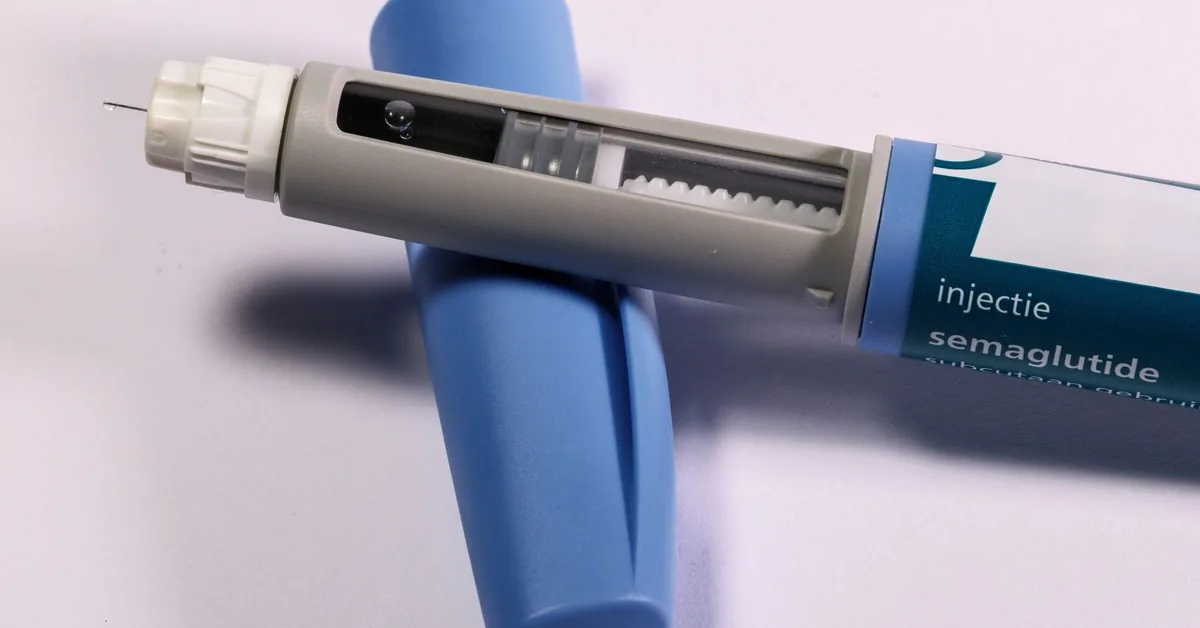
Semaglutide (Ozempic, Wegovy) activates one receptor, the GLP-1 receptor. Tirzepatide (Mounjaro, Zepbound) activates two: the GLP-1 receptor and the receptor for GIP, another gut hormone involved in insulin release.1,2 Both carry a fatty-acid chain that binds to albumin in the blood, which is why both are injected once a week: semaglutide's half-life is about a week and tirzepatide's about five days.1,2
Why adding GIP produces more weight loss is not settled, and the explanations that circulate online run ahead of the evidence. What can be measured is the outcome, and for that there are now two trials that gave both drugs to comparable people.
The two head-to-head trials
SURPASS-2 (type 2 diabetes). 1,879 adults on metformin were randomised to tirzepatide 5, 10 or 15 mg or semaglutide 1 mg, the diabetes dose, for 40 weeks. HbA1c fell by 2.01, 2.24 and 2.30 percentage points with tirzepatide and by 1.86 with semaglutide, and every tirzepatide dose was superior. Weight fell by 1.9 to 5.5 kg more with tirzepatide. Gastrointestinal side effects were similar: nausea in 17 to 22% on tirzepatide and 18% on semaglutide. Serious adverse events were reported in 5 to 7% on tirzepatide and 3% on semaglutide.3
SURMOUNT-5 (obesity without diabetes). 751 adults were randomised to the maximum dose they tolerated of tirzepatide (10 or 15 mg) or semaglutide (1.7 or 2.4 mg) for 72 weeks, open label. Weight fell by 20.2% with tirzepatide and 13.7% with semaglutide, and waist circumference by 18.4 cm against 13.0 cm. The most common adverse events in both groups were gastrointestinal, mostly mild to moderate and mostly during dose escalation. The trial was funded by Lilly, which makes tirzepatide.4
The pivotal trials, and why they are not a comparison
Before SURMOUNT-5, comparisons leaned on each drug's placebo-controlled trial. In STEP 1, 1,961 adults without diabetes lost 14.9% of their weight over 68 weeks on semaglutide 2.4 mg against 2.4% on placebo, and half of those on semaglutide lost at least 15%.5 In SURMOUNT-1, 2,539 adults lost 15.0%, 19.5% and 20.9% on tirzepatide 5, 10 and 15 mg over 72 weeks against 3.1% on placebo, and half or more of those on the two higher doses lost at least 20%.6
Setting those numbers side by side is tempting and unreliable: the trials enrolled different people, ran for different lengths and handled missed doses differently. That is why the head-to-head result, not the difference between two pivotal trials, is the one to quote.
Hearts, kidneys, liver and sleep
Weight is a surrogate; outcome trials count events. In SELECT, 17,604 adults with cardiovascular disease and overweight or obesity but no diabetes received semaglutide 2.4 mg or placebo for a mean of 40 months. Cardiovascular death, heart attack or stroke occurred in 6.5% on semaglutide and 8.0% on placebo, a hazard ratio of 0.80; more people stopped semaglutide because of adverse events, 16.6% against 8.2%.7 Wegovy's label now includes reducing that risk, and an accelerated approval for the liver disease MASH with moderate to advanced fibrosis; Ozempic's includes cardiovascular risk reduction in type 2 diabetes with heart disease, and slowing kidney decline in type 2 diabetes with chronic kidney disease.8,1
Tirzepatide's cardiovascular trial, SURPASS-CVOT, compared it with dulaglutide rather than placebo in 13,165 adults with type 2 diabetes and atherosclerotic disease. The composite of cardiovascular death, heart attack or stroke occurred in 12.2% on tirzepatide and 13.1% on dulaglutide (hazard ratio 0.92): no worse, and not statistically better.9 Mounjaro's label now includes reducing major cardiovascular events in type 2 diabetes at high risk, and Zepbound's includes treating moderate to severe obstructive sleep apnoea in adults with obesity.2,10
Side effects and warnings
The side effects are the same family. In the placebo-controlled weight trials behind the labels, nausea affected 44% on Wegovy against 16% on placebo, and 25 to 29% on Zepbound against 8%.8,10 Those figures come from different trials; in the trial that compared the drugs directly, gastrointestinal events were the most common in both groups and mostly mild to moderate.4
The labels share their warnings: a boxed warning about thyroid C-cell tumours seen in rodents, and warnings about pancreatitis, gallbladder disease, acute kidney injury from dehydration, severe gastrointestinal reactions, low blood sugar when combined with insulin or sulfonylureas, and aspiration of stomach contents during general anaesthesia or deep sedation.8,10 Tirzepatide's labels add one the semaglutide labels do not: it lowers exposure to oral contraceptives, and people who use them are advised to switch to a non-oral method, or add a barrier method, for four weeks after starting and after each dose increase.2,10 In February 2026 both the Wegovy and Zepbound labels removed their warning about suicidal behaviour and ideation.8,10
How each is started
Both start low and climb in four-week steps to limit gastrointestinal effects. Semaglutide for weight starts at 0.25 mg weekly and reaches 2.4 mg after 16 weeks; tirzepatide starts at 2.5 mg and rises in 2.5 mg steps, each after at least four weeks, to a maximum of 15 mg.8,2 Our titration planner lays out each label's steps with dates. Semaglutide also comes as a daily tablet for weight (Wegovy tablets); Lilly's oral option, Foundayo, is not tirzepatide but a different molecule, orforglipron.
What happens when people stop
Both drugs work only while they are taken. In the STEP 1 extension, 327 people who stopped semaglutide after 68 weeks, having lost 17.3% of their weight, regained 11.6 percentage points within a year, two-thirds of the loss, and most of the improvements in cardiometabolic risk factors reverted.11 In SURMOUNT-4, 670 people who had lost 20.9% over 36 weeks on tirzepatide were randomised to continue or switch to placebo: over the next year those who continued lost a further 5.5%, while those switched to placebo regained 14.0%.12
Switching and combining
Combining them is not an option the labels allow: Wegovy's says that using it with any other GLP-1 receptor agonist is not recommended, and Zepbound's says the same of tirzepatide.8,10 Switching from one to the other is a prescriber's decision; no label gives a dose conversion between them. For cash prices, which both manufacturers publish and which depend on dose and on refill timing, see our GLP-1 transition planner, which lists them with the date they were read.
Frequently asked questions
Is tirzepatide better than semaglutide?
In the two trials that compared them directly, tirzepatide lowered weight and HbA1c more: 20.2% against 13.7% weight loss over 72 weeks in obesity. Semaglutide has more outcome evidence, including a 20% reduction in heart attacks, strokes and cardiovascular deaths in people without diabetes.
Do they work the same way?
Not quite. Semaglutide activates the GLP-1 receptor; tirzepatide activates the GLP-1 and GIP receptors. Both are given once a week.
Will I regain weight after stopping either one?
Most people do. A year after stopping semaglutide, people in STEP 1 had regained two-thirds of their loss; in SURMOUNT-4, people switched from tirzepatide to placebo regained 14% within a year.
Can I take semaglutide and tirzepatide together?
No. Both labels say combining them with another GLP-1 receptor agonist is not recommended.
Which has fewer side effects?
Their side effects are similar and mostly gastrointestinal. In the head-to-head trials nausea rates were close, and most events were mild to moderate and occurred during dose escalation.
Can I use these with BPC-157 or other research peptides?
No study has tested those combinations, and the research peptides themselves have little or no human safety data. Our interaction checker shows what each rating rests on.
Related on Grey Peptides
- Semaglutide encyclopedia entry
- Tirzepatide encyclopedia entry
- GLP-1 titration planner
- GLP-1 transition planner
- Compare the two entries side by side
- GLP-1 drug interactions
Sources
- Novo Nordisk. OZEMPIC (semaglutide) injection, US prescribing information: indications (glycemic control; MACE reduction in type 2 diabetes with established CV disease; kidney outcomes in type 2 diabetes with CKD); elimination half-life approximately 1 week. DailyMed version of June 10, 2026, read September 30, 2026.
- Eli Lilly and Company. MOUNJARO (tirzepatide) injection, US prescribing information: GIP and GLP-1 receptor agonist; indications including MACE reduction in type 2 diabetes at high risk; half-life approximately 5 days; start 2.5 mg, increase in 2.5 mg steps after at least 4 weeks; oral contraceptive advice. DailyMed version of September 2, 2026, read September 30, 2026.
- Frías, J. P. et al. (2021). Tirzepatide versus Semaglutide Once Weekly in Patients with Type 2 Diabetes. New England Journal of Medicine, 385(6), 503-515. PMID: 34170647 · doi:10.1056/NEJMoa2107519
- Aronne, L. J. et al. (2025). Tirzepatide as Compared with Semaglutide for the Treatment of Obesity. New England Journal of Medicine, 393(1), 26-36. PMID: 40353578 · doi:10.1056/NEJMoa2416394
- Wilding, J. P. H. et al. (2021). Once-Weekly Semaglutide in Adults with Overweight or Obesity. New England Journal of Medicine, 384(11), 989-1002. PMID: 33567185 · doi:10.1056/NEJMoa2032183
- Jastreboff, A. M. et al. (2022). Tirzepatide Once Weekly for the Treatment of Obesity. New England Journal of Medicine, 387(3), 205-216. PMID: 35658024 · doi:10.1056/NEJMoa2206038
- Lincoff, A. M. et al. (2023). Semaglutide and Cardiovascular Outcomes in Obesity without Diabetes. New England Journal of Medicine, 389(24), 2221-2232. PMID: 37952131 · doi:10.1056/NEJMoa2307563
- Novo Nordisk. WEGOVY (semaglutide) injection and tablets, US prescribing information: indications (MACE reduction; weight; MASH with F2-F3 fibrosis, accelerated approval); nausea 44% vs 16% placebo; warnings; coadministration with other GLP-1 receptor agonists not recommended; Suicidal Behavior and Ideation warning removed 02/2026; escalation 0.25 mg to 2.4 mg over 16 weeks. DailyMed version of June 30, 2026, read September 30, 2026.
- Nicholls, S. J. et al. (2025). Cardiovascular Outcomes with Tirzepatide versus Dulaglutide in Type 2 Diabetes. New England Journal of Medicine, 393(24), 2409-2420. PMID: 41406444 · doi:10.1056/NEJMoa2505928
- Eli Lilly and Company. ZEPBOUND (tirzepatide) injection, US prescribing information: indications (weight; moderate to severe obstructive sleep apnea in adults with obesity); nausea 25-29% vs 8% placebo; warnings; coadministration with any GLP-1 receptor agonist not recommended; Suicidal Behavior and Ideation warning removed 02/2026. DailyMed version of September 2, 2026, read September 30, 2026.
- Wilding, J. P. H. et al. (2022). Weight regain and cardiometabolic effects after withdrawal of semaglutide: The STEP 1 trial extension. Diabetes, Obesity and Metabolism, 24(8), 1553-1564. PMID: 35441470 · doi:10.1111/dom.14725
- Aronne, L. J. et al. (2024). Continued Treatment With Tirzepatide for Maintenance of Weight Reduction in Adults With Obesity: The SURMOUNT-4 Randomized Clinical Trial. JAMA, 331(1), 38-48. PMID: 38078870 · doi:10.1001/jama.2023.24945
This article compares published trials and US labels. It is not medical advice and does not recommend either drug for anyone; the choice, the dose and any switch are decisions for a prescriber.
New guides and rule changes, by email
One short email when a peptide's legal status moves — an FDA or PCAC decision, a WADA list change, an enforcement action — plus new guides and tools. At most one a week, and none when nothing changes. The newsletter has not started sending yet: your first email will be its first issue.
We keep your email address and the page you signed up from, nothing else. How it works · Privacy · RSS instead