What Is 'GLP-3'? Decoding the Gray-Market Code Names for Retatrutide, Tirzepatide and Semaglutide
Last updated: September 26, 2026 · 10 min read · By the Grey Peptides Editorial Board
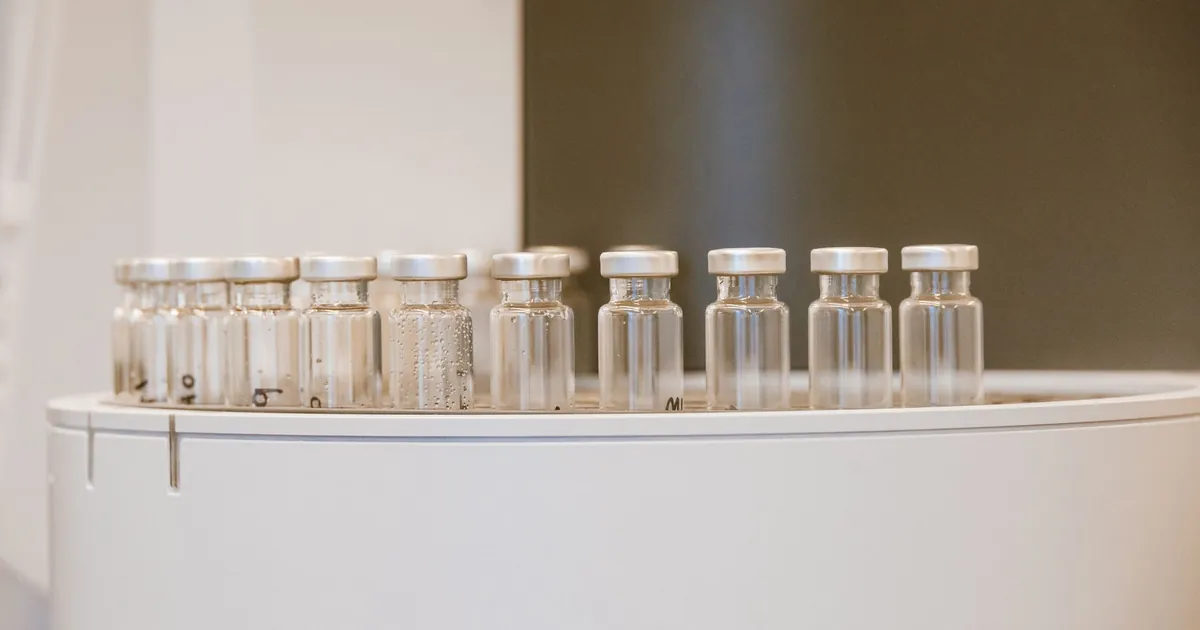

- "GLP-3" is not a hormone. It is a seller's nickname for retatrutide, and the number counts the three receptors the drug activates: GIP, GLP-1 and glucagon.
- "GLP-2" on a tirzepatide listing borrows the name of a real and different hormone. The approved GLP-2 drug, teduglutide, treats short bowel syndrome 3.
- Retatrutide is not approved in any country (as of September 26, 2026). Every vial sold as retatrutide, under any name, comes from outside the regulated supply.
- In the one published test-purchase study of semaglutide sold without a prescription, all three vials that arrived were judged probably substandard or falsified, and each held 28.6% to 38.7% more drug than its label said 15.
Three numbers that are not hormones
Look up retatrutide on a peptide store and it is often listed as "GLP-3", "GLP-3 RT" or "Reta GLP-3". Tirzepatide turns up as "GLP-2" or "GLP-TZ", and semaglutide as "GLP-1" or "Sema". Laid side by side, the numbers look like a product line, each one newer and stronger than the last. They are nothing of the kind. They count the hormone receptors each drug switches on: semaglutide one, tirzepatide two, retatrutide three.
The trouble is that the shorthand runs into real biology. The body makes a hormone called GLP-1 and a second, different hormone called GLP-2. Both are cut from the same precursor protein, proglucagon, which also yields glucagon and oxyntomodulin, and each of these peptides works through its own receptor 1. GLP-2 is not a stronger GLP-1. Its best-known job is making the lining of the intestine grow, and drugs that copy it have been developed for short bowel syndrome, a condition in which too little working gut remains to absorb food 2. There is no hormone called GLP-3.
So a vial marked "GLP-2" uses the name of a real hormone class for a drug that does not belong to it. One GLP-2 analogue, teduglutide, has been FDA-approved since December 2012, sold as Gattex, for adults with short bowel syndrome. In its pivotal trial, 63% of patients on teduglutide cut the volume of intravenous feeding and fluids they needed by more than 20%, against 30% on placebo 3. Teduglutide has nothing in common with tirzepatide except three letters of a nickname.
None of this makes the nicknames hard to decode. Anyone who follows these drugs knows what "Reta" means. The problem is what the names hide: which molecule, from where, in what amount, and whether any regulator has ever looked at it. The rest of this page takes each name in turn.
The decoder: every nickname we could verify
These are the listing names we found in FDA warning letters or on seller listings on September 26, 2026. We describe listings but do not name or link to any seller, which is the rule for everything on this site. Statuses are as of September 26, 2026. Evidence grades come from our dataset and follow the rubric on our methodology page.
| Listing names | Molecule | Receptors it activates | Status, as of September 26, 2026 | Evidence | Identity risk |
|---|---|---|---|---|---|
| "GLP-1", "Sema", "SEMA" | Semaglutide | GLP-1 | FDA-approved: Ozempic (2017), Rybelsus (2019), Wegovy (2021) | High | "GLP-1" names a whole class of drugs, not one molecule. |
| "GLP-2", "Tirz", "GLP-TZ" | Tirzepatide | GIP and GLP-1 | FDA-approved: Mounjaro (May 2022), Zepbound (November 2023) | High | Borrows the name of GLP-2, a different hormone with its own approved drug. |
| "GLP-3", "Reta", "RETA", "GLP-3 RT" | Retatrutide | GIP, GLP-1 and glucagon | Investigational. Not approved in any country; Lilly plans a US filing in the first quarter of 2027 | Medium | No approved product exists anywhere to compare a vial against. |
| "CagriLean" | Cagrilintide with semaglutide | Amylin and GLP-1 | Not approved. FDA application filed December 18, 2025 | High | A two-drug combination; the nickname says nothing about how much of each is in the vial. |
Two names from the same FDA letters, mazdutide and survodutide, were sold under their own nonproprietary names, so they need no decoding here. Each has its own encyclopedia entry.
Semaglutide, sold as "GLP-1" or "Sema"
Evidence grade: High
Semaglutide is Novo Nordisk's once-weekly GLP-1 receptor agonist. Its designers started from human GLP-1, changed two of its amino acids and attached a fatty-acid chain to a lysine, so the molecule binds albumin in the blood and lasts long enough to be injected once a week 4. In the STEP 1 trial, adults with overweight or obesity lost 14.9% of their body weight over 68 weeks on weekly semaglutide, against 2.4% on placebo 5.
In the US it is approved as Ozempic for type 2 diabetes (2017), as Rybelsus, a tablet for type 2 diabetes (2019), and as Wegovy for chronic weight management (2021). On the Wegovy and Ozempic labels the first dose is 0.25 mg a week for four weeks, a starting step the labels describe as not therapeutic. Our GLP-1 titration planner lays out every step after it.
As a label, "GLP-1" is the least specific name in the family. Liraglutide, dulaglutide, exenatide and semaglutide are all GLP-1 receptor agonists. A vial that names the receptor instead of the molecule does not tell you which of them, if any, is inside it.
Tirzepatide, sold as "GLP-2", "Tirz" or "GLP-TZ"
Evidence grade: High
Tirzepatide is Eli Lilly's dual agonist: a single peptide, modified with a fatty acid, that activates both the GIP receptor and the GLP-1 receptor and was designed for once-weekly injection 6. In SURMOUNT-1, adults with obesity lost 15.0%, 19.5% and 20.9% of their body weight after 72 weeks on 5 mg, 10 mg and 15 mg, against 3.1% on placebo 7.
It is FDA-approved as Mounjaro for type 2 diabetes (May 2022) and as Zepbound for chronic weight management (November 2023). The first dose on both labels is 2.5 mg a week for four weeks, again a starting step rather than a treatment dose.
Calling tirzepatide "GLP-2" is the worst of the three nicknames because it is not merely vague. It is wrong in a specific way. GLP-2 medicines exist and treat a different disease, so the same three letters now point at two unrelated families of drugs. The GIP half of tirzepatide, the part that actually distinguishes it from semaglutide, appears nowhere in the name.
Retatrutide, sold as "GLP-3", "Reta" or "GLP-3 RT"
Evidence grade: Medium
Retatrutide, which Lilly developed under the code LY3437943, is a single peptide that activates three receptors: GIP, GLP-1 and glucagon 8. Structural studies show how the one molecule binds all three receptors. Like semaglutide and tirzepatide, it carries a fatty-acid chain on a lysine, at a different position in the chain 9.
In the phase 2 obesity trial, which enrolled 338 adults, body weight fell by 8.7% at 1 mg, 17.1% at 4 mg, 22.8% at 8 mg and 24.2% at 12 mg after 48 weeks, against 2.1% on placebo 10. Phase 3 results followed in 2026, and our retatrutide hub goes through them trial by trial.
Status, as of September 26, 2026: retatrutide is not approved in any country. Lilly has said it plans to file a Biologics License Application with the FDA in the first quarter of 2027. Outside clinical trials, the only lawful route in the US is Lilly's pre-approval expanded-access program, which is open to a narrow group of patients.
That makes "GLP-3" different from the other two names in one way that matters. For semaglutide and tirzepatide a genuine product exists, so a copy can at least be compared with it. For retatrutide there is nothing to compare against. Whatever a vial sold as retatrutide contains, it came from outside the regulated supply. Lilly's own position is blunt: on August 12, 2026 it filed six lawsuits against US businesses selling retatrutide, and it said it had reported more than 14,000 websites, advertisements, social media posts and product listings marketing the drug in more than 100 countries 11.
Why sellers use code names
No seller we found explains its naming, so this section keeps to what the public record shows about where the pressure comes from.
The "research use only" label does not protect a product that is plainly sold for people. On December 10, 2024 the FDA sent warning letters to online sellers of semaglutide, retatrutide and other GLP-1-type peptides labelled for research use only. The agency said the sellers' websites and social media showed the products were intended as drugs for human use 12,13. One of those letters quotes the listings by name: "RETA" for retatrutide, "SEMA" for semaglutide and "CagriLean" for cagrilintide with semaglutide 12.
Compounding is no way around it for retatrutide either. In a warning letter dated September 9, 2025, the FDA explained why: retatrutide has no USP or NF monograph, is not a component of any FDA-approved drug and appears on neither of the bulk-substance lists, so neither compounding pathway, section 503A nor section 503B, applies to it 14.
Put those together and a nickname does a specific job. It keeps the drug's name, the word regulators, platforms and payment companies search for, off the listing while still telling buyers exactly what is meant. Lilly's August 2026 statement asks online platforms, payment processors and shipping companies to cut these sellers off 11, and code names make that kind of filtering harder. That is our reading of the incentives. The sellers do not say it.
What testing has found in products sold online
For semaglutide there is published test-purchase data. A 2024 study by researchers at the University of Pécs in Hungary and the University of California San Diego went through 1,080 search-engine results, found 59 illegal online pharmacy websites selling semaglutide without a prescription, and placed test orders with six of them 15. Three injection vials arrived. None of the three Ozempic pens they ordered was ever delivered. All three vials were judged probably substandard or falsified: each failed 59% to 63% of the packaging checks the team applied, and each held 28.6% to 38.7% more semaglutide than its label stated 15.
More drug is not better drug. A vial carrying a third more peptide than its label says makes every carefully measured dose a third larger than intended, and nothing on the vial tells you so. The same study found no peptide-like impurities in those samples, which is a useful reminder that a clean purity result and a correct amount answer two different questions.
For retatrutide, a laboratory can check whether a sample's mass and sequence match the published molecule and how much of it is present. What no test can supply is an approved product whose manufacture, sterility and dose a regulator has reviewed, because none exists. Our verification guide explains what a lab report can and cannot establish.
What a coded listing can and cannot tell you
A nickname tells you what the seller wants you to think is in the vial. It does not tell you what is in it. Only an independent test of that batch can say that, and even a genuine test says nothing about sterility unless sterility was tested.
"Research use only" is a legal disclaimer, not a quality grade. The FDA has said in writing that the phrase does not change what a product is when it is marketed for people 12.
The legal picture differs by molecule. Semaglutide and tirzepatide are prescription medicines with approved versions, and our GLP-1 hub tracks their list prices and access routes (prices re-read September 25, 2026). Retatrutide has no approved version anywhere. In the US, outside a clinical trial or Lilly's expanded-access program, there is no lawful way to get it (as of September 26, 2026).
Frequently asked questions
Is GLP-3 a real hormone?
No. The body makes GLP-1 and GLP-2, both cut from the precursor proglucagon, but there is no GLP-3. "GLP-3" is a seller's nickname for retatrutide that counts the three receptors it activates.
Is tirzepatide a GLP-2 drug?
No. Tirzepatide activates the GIP and GLP-1 receptors. GLP-2 is a different gut hormone, and teduglutide, an FDA-approved GLP-2 analogue, treats short bowel syndrome. "GLP-2" on a tirzepatide listing is a nickname, and an inaccurate one.
What does "Reta" or "GLP-3 RT" mean on a vial?
Both refer to retatrutide, Eli Lilly's investigational triple agonist. It is not approved in any country (as of September 26, 2026), so no vial sold under any name is an approved product.
Does "research use only" make these products legal to sell?
Not when they are marketed for people. The FDA's December 2024 warning letters said the sellers' websites and social media showed their "research use only" products were intended as drugs for human use.
Can a lab test prove a "GLP-3" vial is real retatrutide?
A lab can measure whether a sample matches retatrutide's published structure and how much is present. That does not make it an approved product: there is no regulator-reviewed retatrutide to compare it with, and identity says nothing about sterility.
When could retatrutide be approved?
Lilly has said it plans to file a Biologics License Application with the FDA in the first quarter of 2027 (as of September 26, 2026). Any approval would come after the FDA reviews that filing.
Related on Grey Peptides
- The retatrutide hub: trials, status and access
- Retatrutide encyclopedia entry
- Tirzepatide encyclopedia entry
- Semaglutide encyclopedia entry
- Teduglutide, the approved GLP-2 drug
- Semaglutide vs tirzepatide
- GLP-1 hub: prices and access routes
- GLP-1 titration planner
Sources
- Gasbjerg, L. S. et al. (2026). Proglucagon-derived peptides: human physiology and therapeutic potential. Physiological Reviews, 106(1), 529–586. PMID: 40720286
- Drucker, D. J. et al. (2017). Discovery, characterization, and clinical development of the glucagon-like peptides. Journal of Clinical Investigation, 127(12), 4217–4227. PMID: 29202475
- Jeppesen, P. B. et al. (2012). Teduglutide reduces need for parenteral support among patients with short bowel syndrome with intestinal failure. Gastroenterology, 143(6), 1473–1481.e3. PMID: 22982184
- Lau, J. et al. (2015). Discovery of the once-weekly glucagon-like peptide-1 (GLP-1) analogue semaglutide. Journal of Medicinal Chemistry, 58(18), 7370–7380. PMID: 26308095
- Wilding, J. P. H. et al. (2021). Once-weekly semaglutide in adults with overweight or obesity. New England Journal of Medicine, 384(11), 989–1002. PMID: 33567185
- Coskun, T. et al. (2018). LY3298176, a novel dual GIP and GLP-1 receptor agonist for the treatment of type 2 diabetes mellitus: from discovery to clinical proof of concept. Molecular Metabolism, 18, 3–14. PMID: 30473097
- Jastreboff, A. M. et al. (2022). Tirzepatide once weekly for the treatment of obesity. New England Journal of Medicine, 387(3), 205–216. PMID: 35658024
- Coskun, T. et al. (2022). LY3437943, a novel triple glucagon, GIP, and GLP-1 receptor agonist for glycemic control and weight loss: from discovery to clinical proof of concept. Cell Metabolism, 34(9), 1234–1247.e9. PMID: 35985340
- Li, W. et al. (2024). Structural insights into the triple agonism at GLP-1R, GIPR and GCGR manifested by retatrutide. Cell Discovery, 10(1), 77. PMID: 39019866
- Jastreboff, A. M. et al. (2023). Triple-hormone-receptor agonist retatrutide for obesity: a phase 2 trial. New England Journal of Medicine, 389(6), 514–526. PMID: 37366315
- Eli Lilly and Company (August 12, 2026). Lilly calls on online platforms, payment companies and regulators to shut down the illegal retatrutide black market. News release. Cited without a link: we name manufacturers but do not link to them.
- U.S. Food and Drug Administration (December 10, 2024). Warning letter 694608 to an online seller of GLP-1-type peptides labelled for research use only; it quotes the listing names "RETA", "SEMA" and "CagriLean". FDA warning letter
- U.S. Food and Drug Administration (December 10, 2024). Warning letter 695663: semaglutide and retatrutide sold as research chemicals only. FDA warning letter
- U.S. Food and Drug Administration (September 9, 2025). Warning letter on compounded retatrutide: why neither section 503A nor section 503B applies. FDA warning letter
- Ashraf, A. R. et al. (2024). Multifactor quality and safety analysis of semaglutide products sold by online sellers without a prescription: market surveillance, content analysis, and product purchase evaluation study. Journal of Medical Internet Research, 26, e65440. PMID: 39509151
This article is for education. It is not medical or legal advice, and it is not a guide to buying anything. Retatrutide is investigational; semaglutide and tirzepatide are prescription medicines.
New guides and rule changes, by email
One short email when a peptide's legal status moves — an FDA or PCAC decision, a WADA list change, an enforcement action — plus new guides and tools. At most one a week, and none when nothing changes. The newsletter has not started sending yet: your first email will be its first issue.
We keep your email address and the page you signed up from, nothing else. How it works · Privacy · RSS instead