Humanin and the SHLPs: mitochondria-derived peptides explained
Last updated: October 3, 2026 · 8 min read · By the Grey Peptides Editorial Board
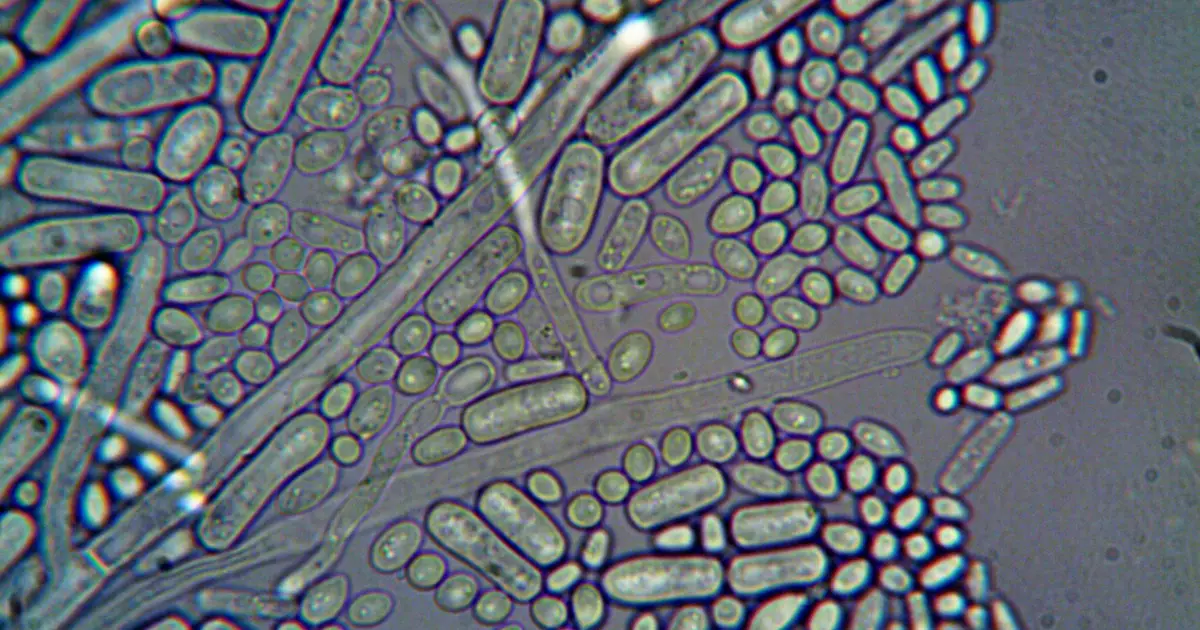

- Mitochondrial DNA was thought to encode only 13 proteins plus RNAs. Hidden inside its ribosomal RNA genes are instructions for small peptides: humanin, six small humanin-like peptides (SHLPs) and MOTS-c.
- In cells and animals these peptides protect cells and improve insulin sensitivity, and levels of humanin and SHLP2 in the blood fall with age.
- In people they have only been measured. None has been given in a published trial, none is approved, and products sold online are untested research chemicals.
Peptides hidden in mitochondrial DNA
Mitochondria, the cell's power plants, carry a small genome of their own, inherited from the mother. For decades it was thought to encode 13 proteins plus the RNA molecules needed to make them. Then researchers found short stretches within its ribosomal RNA genes that could also be read as instructions for tiny peptides. A 2013 review described mitochondria as senders of signals back to the rest of the cell, and presented humanin as the first small peptide encoded in mitochondrial DNA and the founder of a new class 1.
The family is now called mitochondria-derived peptides. Humanin and six small humanin-like peptides (SHLP1 to SHLP6) are encoded in the 16S ribosomal RNA region, and MOTS-c in the 12S region 2 3. Together they suggest that mitochondria do not just make energy; they may also send hormone-like messages about the cell's metabolic state.
| Peptide | Encoded in | Size | Best human evidence | Grade |
|---|---|---|---|---|
| Humanin | 16S rRNA region | 24 amino acids | Levels measured in muscle, blood and eye disease; never given to people | Low |
| SHLP2 | 16S rRNA region | 26 amino acids | Circulating levels fall with age; placental expression; never given to people | Medium |
| SHLP6 | 16S rRNA region | See entry | Cell, zebrafish and placental studies only | Low |
| SHLP1, 3, 4, 5 | 16S rRNA region | Not stated here | Known almost entirely from the 2016 screen | On the SHLP family page |
| MOTS-c | 12S rRNA region | 16 amino acids | Levels measured with exercise; a genetic variant linked to diabetes; never given to people | Low |
Humanin: found in surviving neurons
Humanin was identified in 2001 in neurons that had survived in the brain of a person with Alzheimer's disease, and it remains the most studied of the family 4. It is 24 amino acids long. In cell studies it suppressed neuronal death caused by amyloid-beta and by familial Alzheimer's disease genes 5, acting through a receptor complex that switches on the JAK2-STAT3 pathway and raises an inhibitor of cell death 6.
Its effects extend beyond the brain. Infused into the brains of rats, humanin improved whole-body insulin sensitivity through the hypothalamus, and potent analogues given intravenously reproduced the effect 7. A screen of mitochondria-derived peptides identified humanin as an inducer of autophagy, the cell's recycling process, and in mice it reduced misfolded protein build-up in muscle 8. Much of the animal work uses HNG, an analogue with a glycine substitution that makes it far more potent, and many findings belong to that analogue rather than to natural humanin 9.
Recent humanin findings
Humanin research keeps turning up new roles. In 2025, researchers found that human macrophages produce humanin after engulfing dying neutrophils, and that it helps inflammation resolve; humanin was also detected in gum fluid from people with periodontitis after inflammation began 10. In blood-vessel cells exposed to high glucose, the analogue [Gly14]-humanin restored the protective enzyme SIRT6 and reduced oxidative stress and cell senescence 11. And biophysical studies found that humanin and its variants can form amyloid-like fibrils, with differences between variants that are poorly and well secreted, a reminder that a peptide's behaviour depends heavily on its exact sequence and handling 12. All three are laboratory findings.
The SHLPs: six more from the same region
In 2016, Cobb and colleagues searched the region of mitochondrial DNA around humanin and found six more potential peptides, which they named small humanin-like peptides. The six differed in their effects on cell viability, so the team focused on SHLP2 and SHLP3, which shared humanin's protective effects: in cells they reduced programmed cell death and reactive oxygen species and improved mitochondrial metabolism, and they enhanced the maturation of fat-cell precursors. Infused into the brain during clamp studies, SHLP2 increased glucose uptake and suppressed glucose production by the liver, suggesting it acts as an insulin sensitiser both in the body and in the brain. Like humanin, circulating SHLP2 fell with age 2.
Research since has been sparse. In placentas from women with gestational diabetes, expression of all six SHLP transcripts was significantly lower than in placentas from women with normal blood sugar 13. In zebrafish larvae exposed to copper, SHLP6 reduced malformations and oxidative stress and improved survival 14. Four of the six, SHLP1, 4 and 5 among them, are known almost entirely from the 2016 screen, which is why our SHLP family page gathers them in one place rather than giving each its own entry.
MOTS-c: the 12S cousin
MOTS-c, named in 2015, is a 16-amino-acid peptide encoded in the 12S ribosomal RNA gene that regulates insulin sensitivity and metabolic balance, acting mainly on skeletal muscle in mice 3. In mice of different ages, it improved physical performance, and treatment started late in life increased physical capacity 15. Our MOTS-c entry covers its studies in detail. It is the family member most heavily marketed for exercise and weight, and like the others, it has not been tested as a treatment in people.
What the human studies show: measurement, not treatment
Every human study of these peptides measures them; none gives them. In 55 men with impaired glucose regulation, humanin protein in thigh muscle rose 35% after 12 weeks of resistance training 16. People with age-related macular degeneration had lower plasma humanin than controls, and the analogue HNG reduced inflammatory proteins in retinal cells carrying their mitochondria 17. In 140 children with septic shock, serum humanin was higher in those with multiple organ failure, but the association disappeared after adjusting for age and illness severity 18. In a 2025 case-control study, humanin and MOTS-c gene transcripts in blood were lower in Alzheimer's disease than in people with subjective cognitive decline, but plasma protein levels did not distinguish Alzheimer's from milder impairment 19.
For MOTS-c, a variant of mitochondrial DNA found in East Asian populations changes one amino acid of the peptide, and in a meta-analysis of 27,527 people, men carrying it had more type 2 diabetes 20. That is one of the more intriguing links between a mitochondrial peptide and human disease, and it comes from genetics, not from giving the peptide.
These studies are useful for understanding biology. They do not show that taking any of these peptides would help, and some findings, such as the sepsis association, vanished on proper adjustment.
Analogue programmes
Because natural humanin is relatively weak and short-lived, researchers have made analogues. HNG, with a single glycine substitution, is the best known and the one most used in animal studies 9; in retinal cells carrying mitochondria from people with macular degeneration it protected against mitochondrial damage and cell death, which the authors proposed as a route to treating dry macular degeneration 21. None of these programmes has published a human trial, and none has reached approval. MOTS-c analogues are in early development as well.
What is being sold
Humanin, HNG, SHLP2 and MOTS-c are sold online as research peptides, marketed for longevity, insulin sensitivity, brain health and exercise. The pitch draws on the genuine excitement of the science: peptides that decline with age, made by our own mitochondria. But a peptide falling with age does not mean that injecting it reverses ageing, and the animal results that support the marketing often come from potent analogues rather than the natural peptides. None of these products has been tested in people, their purity is unverified, and for athletes all are prohibited: MOTS-c is named on WADA's List under S4.4.1, metabolic modulators, and humanin and the SHLPs fall under the S0 catch-all for non-approved substances 22.
Why the gap between biology and treatment is so wide
Mitochondria-derived peptides are a young field. Measuring them reliably in blood is difficult, some studies disagree, and the relationships between levels and disease may reflect the disease rather than cause it. Several family members are known from a single paper. Turning any of them into a medicine would need a stable form, a target disease, dose-finding and controlled trials, none of which has been published. For now, the most honest description is a promising line of basic research, not a supplement.
The bottom line
As of October 3, 2026, humanin, the SHLPs and MOTS-c are peptides encoded in mitochondrial DNA with protective and metabolic effects in cells and animals, and some interesting associations in human biomarker and genetic studies. None has been given to people in a published trial, none is approved, and research products sold under their names have no human safety data. Our article on FOXO4-DRI covers another ageing peptide with the same gap between mouse studies and a market.
Frequently asked questions
What is humanin?
Humanin is a 24-amino-acid peptide encoded in mitochondrial DNA, found in 2001 in neurons that survived Alzheimer's disease. In cells and animals it protects against cell death and improves insulin sensitivity. It has not been given to people in a published trial.
What is SHLP2?
SHLP2 is one of six small humanin-like peptides named in 2016. In cells it reduced cell death and improved mitochondrial metabolism, and infused into rodent brains it improved insulin sensitivity. Its blood levels fall with age.
Are mitochondrial peptides safe to take?
Unknown. None has been tested in people, none is approved, and research products sold under their names are unverified.
What is the difference between humanin and MOTS-c?
Both are mitochondria-derived peptides, but humanin comes from the 16S ribosomal RNA gene and MOTS-c from the 12S gene. MOTS-c acts mainly on muscle metabolism in mice; humanin was first studied for protecting neurons.
Related on Grey Peptides
Sources
- Lee, C., et al. (2013). Humanin: a harbinger of mitochondrial-derived peptides? Trends Endocrinol Metab, 24(5), 222-8. PMID: 23402768
- Cobb, L. J., et al. (2016). Naturally occurring mitochondrial-derived peptides are age-dependent regulators of apoptosis, insulin sensitivity, and inflammatory markers. Aging (Albany NY), 8(4), 796-809. PMID: 27070352
- Lee, C., et al. (2015). The mitochondrial-derived peptide MOTS-c promotes metabolic homeostasis and reduces obesity and insulin resistance. Cell Metab, 21(3), 443-54. PMID: 25738459
- Gong, Z., et al. (2022). Cardio-protective role of Humanin in myocardial ischemia-reperfusion. Biochim Biophys Acta Gen Subj, 1866(2), 130066. PMID: 34896254
- Niikura, T., et al. (2004). Humanin: after the discovery. Mol Neurobiol, 30(3), 327-40. PMID: 15655255
- Hashimoto, Y., et al. (2014). Apollon/Bruce is upregulated by Humanin. Mol Cell Biochem, 397(1-2), 147-55. PMID: 25138702
- Muzumdar, R. H., et al. (2009). Humanin: a novel central regulator of peripheral insulin action. PLoS One, 4(7), e6334. PMID: 19623253
- Kim, S. J., et al. (2022). Humanin-induced autophagy plays important roles in skeletal muscle function and lifespan extension. Biochim Biophys Acta Gen Subj, 1866(1), 130017. PMID: 34624450
- Gong, Z., et al. (2015). Central effects of humanin on hepatic triglyceride secretion. Am J Physiol Endocrinol Metab, 309(3), E283-92. PMID: 26058861
- Maraux, M., et al. (2025). HUMANIN produced by human efferocytic macrophages promotes the resolution of inflammation. Cell Death Dis, 16(1), 656. PMID: 40877234
- Li, M., et al. (2024). [Gly14]-Humanin ameliorates high glucose-induced endothelial senescence via SIRT6. Sci Rep, 14(1), 30924. PMID: 39730568
- Morris, D. L., et al. (2025). Humanin variants aggregate to produce different fibril morphologies. J Biol Chem, 301(7), 110403. PMID: 40543583
- Dagli, S., et al. (2026). Altered placental expression of small humanin-like peptides in gestational diabetes mellitus. Ups J Med Sci, 131. PMID: 42453115
- Thamarai Kannan, H., et al. (2025). SHLP6: a novel NLRP3 and Cav1 modulating agent in Cu-induced oxidative stress and neurodegeneration. Front Mol Neurosci, 18, 1553308. PMID: 40292418
- Reynolds, J. C., et al. (2021). MOTS-c is an exercise-induced mitochondrial-encoded regulator of age-dependent physical decline and muscle homeostasis. Nat Commun, 12(1), 470. PMID: 33473109
- Gidlund, E. K., et al. (2016). Humanin skeletal muscle protein levels increase after resistance training in men with impaired glucose metabolism. Physiol Rep, 4(23). PMID: 27923980
- Nashine, S., et al. (2022). Effect of Humanin G (HNG) on inflammation in age-related macular degeneration (AMD). Aging (Albany NY), 14(10), 4247-4269. PMID: 35576057
- Atreya, M. R., et al. (2024). SERUM HUMANIN IN PEDIATRIC SEPTIC SHOCK-ASSOCIATED MULTIPLE-ORGAN DYSFUNCTION SYNDROME. Shock, 61(1), 83-88. PMID: 37917869
- Rodríguez-Esparragón, F., et al. (2025). Insights into the Biomarker Potential of Humanin and Mots-c Expression and Telomere Length in Alzheimer's Disease. Int J Mol Sci, 26(22). PMID: 41303353
- Zempo, H., et al. (2021). A pro-diabetogenic mtDNA polymorphism in the mitochondrial-derived peptide, MOTS-c. Aging (Albany NY), 13(2), 1692-1717. PMID: 33468709
- Nashine, S., et al. (2017). Humanin G (HNG) protects age-related macular degeneration (AMD) transmitochondrial ARPE-19 cybrids from mitochondrial and cellular damage. Cell Death Dis, 8(7), e2951. PMID: 28726777
- Grey Peptides encyclopedia entries for humanin, SHLP2, SHLP6 and MOTS-c: status (research-only) and WADA 2026 and 2027 status (MOTS-c named under S4.4.1; humanin, SHLP2 and SHLP6 S0 inferred). Read October 3, 2026.
Educational information, not medical advice. Each dose in this guide names its source, an approved label or a published study. None is a recommendation for you. An unapproved compound has no established safe or effective human dose, and products sold for “research use only” are not made or tested for people. Talk to a doctor before acting on anything on this site, including before you start, stop or change any medicine or dose.
New guides and rule changes, by email
One short email when a peptide's legal status moves — an FDA or PCAC decision, a WADA list change, an enforcement action — plus new guides and tools. At most one a week, and none when nothing changes. The newsletter has not started sending yet: your first email will be its first issue.
We keep your email address and the page you signed up from, nothing else. How it works · Privacy · RSS instead