Pentadeca Arginate (PDA): Is It Really 'BPC-157 2.0'?
Last updated: October 1, 2026 · 11 min read · By the Grey Peptides Editorial Board
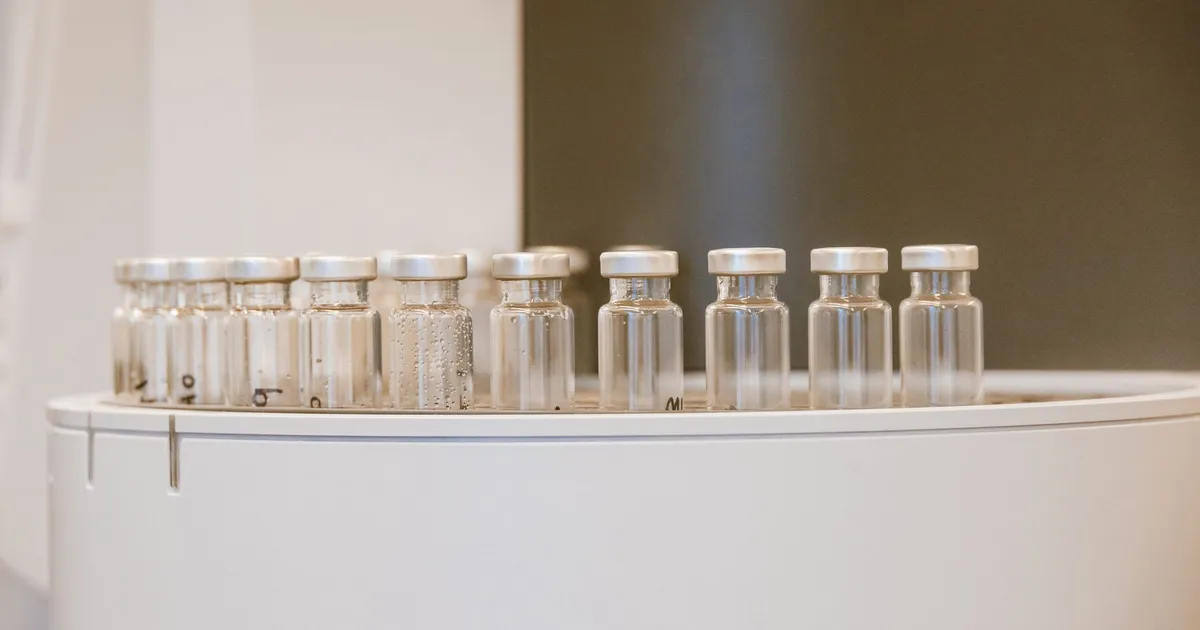

- PDA is described by the pages that sell it as BPC-157's own 15-amino-acid sequence prepared as an arginine salt instead of the usual acetate. A salt changes what the peptide is paired with in the vial, not the peptide 1.
- PubMed holds no study of pentadeca arginate or BPC-157 arginate. Every benefit claimed for PDA is borrowed from BPC-157 research, which we grade Low 2.
- FDA treats a peptide's free base and its acetate as different active ingredients, and in July 2026 it put a separate vote to each form of BPC-157. An arginate form was never nominated, evaluated or voted on 4 9.
- The stability pitch solves a problem BPC-157's own developers say it does not have: they describe BPC-157 as stable in human gastric juice for more than 24 hours 3.
The short answer
Pentadeca arginate, sold as PDA, is presented as an upgraded BPC-157: more stable, better absorbed by mouth, and, for compounding pharmacies, a way around BPC-157's regulatory problems. On the evidence available as of October 1, 2026, it is none of those things in any demonstrated sense.
The pages that sell it describe the same 15-amino-acid chain as BPC-157, made as an arginine salt rather than an acetate 1. No published study has examined it 2. Its stability claim repeats a property BPC-157's developers already claim for BPC-157 3. And FDA's own documents treat each salt form of a peptide as a separate active ingredient, which leaves an arginate form outside even the July 2026 committee review that covered BPC-157's free base and acetate 4.
PDA is BPC-157 with a different label, and it carries BPC-157's thin evidence and unresolved legal status with it.
What PDA is said to be
BPC-157 is a pentadecapeptide, a chain of fifteen amino acids: GEPPPGKPADDAGLV. The name "pentadeca arginate" says exactly that, fifteen and arginate, and the pages that sell or describe PDA say the same: the BPC-157 sequence, prepared with arginine as its counter-ion instead of acetate, the form BPC-157 is usually sold in 1.
A counter-ion is the small partner that balances a peptide's electrical charge in a dry powder. Peptides made for sale are often supplied as salts, and the choice of partner affects how the powder behaves: how readily it dissolves, how it handles moisture, how it is weighed. It does not change the sequence of amino acids, and that sequence is what every BPC-157 study tested.
Two descriptions in circulation get this wrong. Some call the change from acetate to arginate "one amino acid substitution". It is not: acetate is not an amino acid, and no amino acid in the chain is swapped. Others list PDA's molecular formula as C62H98N16O22, which is the formula of BPC-157 itself 1. A salt with arginine would add arginine's atoms to that formula, so the figure describes the peptide without its partner, which is to say, BPC-157.
There is also a source of honest confusion. Dozens of BPC-157 papers mention L-arginine, because the research group behind BPC-157 often studies it alongside the nitric oxide system. In those experiments L-arginine is a separate substance given to rats next to BPC-157, as in a 2022 study of heart injury that gave BPC-157, L-arginine and a nitric oxide blocker alone or together 5. None of that work is about an arginine salt of BPC-157.
Why a different salt is not a different peptide
BPC-157's chain carries three acidic side groups, one glutamic acid and two aspartic acids, and one basic group, a lysine. A basic partner such as arginine can pair with the acidic groups; acetate, an acid, pairs with the basic ones. Either way the chain is the same chain.
A salt's counter-ion separates from the peptide once the powder dissolves. What a reconstituted vial, a capsule or an injection delivers to the body is the fifteen-amino-acid chain, plus some free arginine or acetate. The arithmetic limits the arginine: even if all three acidic groups carried one, it would come to about 0.37 milligrams per milligram of peptide, a fraction of a milligram at the doses sold, and arginine is an ordinary amino acid in food. Whatever PDA does, the arginine is not a plausible source of a new effect.
A salt can still matter in the vial. Different salts of the same drug can differ in how stable the dry powder is, how hygroscopic it is, and how much of the weight on the label is peptide rather than partner. Those are reasonable things to test. Nobody has published such a test for BPC-157's arginate 2. The figure circulating in marketing, that PDA is "1,000 times more stable" than BPC-157 acetate in acid, appears in no peer-reviewed paper we could find.
One practical consequence is worth spelling out. If PDA and BPC-157 acetate are sold by weight, the same number of milligrams may hold different amounts of the actual peptide, because arginine weighs more than acetate. Without a lab report stating peptide content, a buyer cannot know which.
What the evidence actually covers
We searched PubMed as of October 1, 2026 for "pentadeca arginate", "BPC-157 arginate" and "BPC 157 arginate". Each search returned nothing 2. There is no animal study, no cell study and no human study of PDA as such.
Everything said about PDA's effects therefore comes from BPC-157, and BPC-157's own record is mostly animal work. A 2026 review written from a drug-development standpoint sums it up: more than three decades of preclinical research, no approved formulation, no validated dosing regimen, no completed phase II trial, and human data from fewer than 30 people across three uncontrolled pilot studies, none using a standardised pharmaceutical preparation 6. The same review reports a plasma half-life under 30 minutes in animals and in a two-person human pilot, alongside effects in animals that last much longer, a gap it calls a disconnect with real consequences for dosing 6.
The human safety data are correspondingly small. The two-person pilot gave intravenous BPC-157 at a private clinic and reported no changes in heart, liver, kidney, thyroid or glucose markers 7. Two people is not a safety profile, and the product in that study was BPC-157, not an arginate salt.
FDA reached the same place by a different road. Reviewing BPC-157 for the compounding committee, its staff noted that the nominations had not even said whether they meant the free base or the acetate 4, and across the meeting FDA repeatedly said it could not tell which form a published study had used 8. If the literature cannot tell those two apart, it says nothing at all about a third form that it never mentions.
The stability argument
The central pitch for PDA is that BPC-157 acetate breaks down in stomach acid and the arginate survives, making PDA the form to take by mouth. The trouble is that BPC-157's developers have said for years that BPC-157 itself survives stomach acid.
The group that first described BPC-157 calls it "native and stable in human gastric juice for more than 24 h", and presents that stability as one of its defining features 3. The independent 2026 review repeats that BPC-157 shows unusual stability in gastric juice and reports activity by oral, injected and topical routes 6. Those claims concern BPC-157 as studied, not an arginate.
So the marketing contradicts the parent literature it borrows from. Either BPC-157 is stable in gastric juice, as its developers say, in which case PDA solves nothing; or it is not, in which case the oral results PDA cites were never real either. Neither version gives PDA an advantage that has been shown.
What would settle it is unglamorous: the two salts side by side, in acid, at body temperature, measured by a validated method, and then in people, with blood levels. None of that exists. The 2026 review notes that BPC-157 lacks even basic pharmaceutical characterisation, permeability data and excipient compatibility studies 6, which is the work that comes before any claim about a better formulation.
The regulatory logic
PDA's appeal to compounders rests on an idea: that a different salt is a different substance, outside the restrictions on BPC-157. FDA's own documents show why that idea cuts the other way.
When FDA prepared BPC-157 for its Pharmacy Compounding Advisory Committee, its briefing stated that BPC-157 acetate and BPC-157 free base are different active ingredients. Because the nominations did not say which was meant, FDA evaluated both on its own initiative. It also recorded that neither form has a USP monograph or is a component of an approved drug, and that "BPC-157" is a common name, not an adopted drug name 4. The questions put to the committee on July 23, 2026 asked two separate votes: whether BPC-157 free base should go on the list, and whether BPC-157 acetate should 9. The committee recommended BPC-157 by 8 votes to 6, with 1 abstention, against FDA staff's advice; our PCAC hub records the full result 8.
An arginate appears nowhere in that process. If the free base and the acetate are different ingredients, an arginate is a third one, and it appears nowhere in FDA's review or in its list of nominated substances.
That matters because of how compounding law works. A 503A pharmacy may use a bulk drug substance only if it has a USP or National Formulary monograph, is a component of an approved drug, or appears on FDA's 503A bulks list; under FDA's interim policy, substances in Category 1 of its nominated-substances list are also tolerated while the list is built 10. PDA meets none of these. FDA's nominated-substances list, downloaded as of October 1, 2026, still reads "Updated May 14, 2026" and contains no entry for BPC-157 in any form, let alone an arginate 11. The Federal Register shows no FDA action on 503A bulk substances since July 1, 2026 12, and a search of FDA's website found no document that names pentadeca arginate at all 13.
So a pharmacy offering PDA is in at least as weak a position as one offering BPC-157, and arguably a weaker one. If FDA does act on the committee's recommendation, its documents name the free base and the acetate, and a decision on those two forms would not, on its face, cover an arginate. The renaming that was meant to step around BPC-157's status leaves PDA outside the one route that might eventually open for BPC-157.
The same logic runs through the rest of that meeting. TB-500 and KPV were also evaluated as separate free-base and acetate substances 9, so any other salt of them would sit outside the review in the same way.
In tested sport
WADA's Prohibited List names BPC-157 under S0, its section for substances with no approval for human therapeutic use 14. A test looks for the peptide, not the salt it was sold as, and PDA is described as the same peptide 1. An athlete who takes PDA should expect it to be treated as BPC-157.
Why PDA appeared
The pages describing PDA date its arrival on compounding menus and wellness sites to the period after FDA placed BPC-157 in Category 2, its category for nominated substances that raise significant safety risks 1. FDA's published summary of those risks says compounded BPC-157 may pose a risk of immunogenicity for certain routes of administration, may have complexities with peptide-related impurities and characterising the active ingredient, and that the agency has no, or only limited, safety information for the proposed routes 15.
Renaming a product when its main ingredient runs into regulatory trouble is a familiar move, and it works on readers more than on regulators. A new abbreviation sounds like a new molecule, and a technical suffix such as "arginate" sounds like an improvement. Neither changes the peptide in the vial.
The pattern is common enough in this market that we built a name decoder for it, with PDA among the names it covers.
What to ask if someone offers you PDA
Three questions cut through most of it.
- What is the sequence? If the answer is GEPPPGKPADDAGLV, the product is BPC-157, and everything on our BPC-157 entry applies to it: the evidence grade, the regulatory status and the anti-doping status.
- How much of the weight is peptide? A lab report should state peptide content, not just purity, because a salt's partner adds weight. Our COA decoder explains what a credible report contains.
- Under which legal route is it made? For a pharmacy, the honest answer as of October 1, 2026 is that there is no lawful 503A route for an arginate salt of BPC-157. For a research-chemical seller, the product is sold outside drug regulation entirely.
None of this tells you whether BPC-157 works for any particular condition; that question is open, and its evidence is mostly in animals. What it does tell you is that PDA adds nothing to the answer.
Frequently asked questions
Is pentadeca arginate the same as BPC-157?
As the pages selling it describe it, yes in every way that matters: the same 15-amino-acid sequence, GEPPPGKPADDAGLV, made as an arginine salt instead of an acetate. A salt changes the counter-ion in the powder, not the peptide.
Is PDA more stable than BPC-157?
No published study shows it. PubMed holds no study of PDA, and BPC-157's own developers already describe BPC-157 as stable in human gastric juice for more than 24 hours.
Can a pharmacy legally compound PDA?
As of October 1, 2026, no 503A route covers it. FDA treats a peptide's free base and acetate as different active ingredients, and its July 2026 committee review covered only those two forms of BPC-157; an arginate was never nominated, has no monograph, and is in no approved drug.
Has PDA been studied in people?
No. A PubMed search on October 1, 2026 for pentadeca arginate and BPC-157 arginate returned no records. The human data for BPC-157 itself come from fewer than 30 people in uncontrolled pilots.
Is PDA allowed in sport?
WADA names BPC-157 under S0 of its Prohibited List. Testing looks for the peptide, and PDA is described as the same peptide, so athletes should expect it to be treated as BPC-157.
Related on Grey Peptides
- BPC-157 encyclopedia entry
- Can a doctor prescribe BPC-157 in 2026?
- PCAC July 2026 hub
- Gray-market name decoder
- KLOW vs GLOW vs Wolverine
Sources
- Grey Peptides review of pages selling or describing PDA, read October 1, 2026. They describe PDA as BPC-157's sequence prepared as an arginine salt; some give it BPC-157's own molecular formula, and some date its appearance to after BPC-157 was placed in FDA's Category 2. Sellers are not named or linked.
- PubMed searches for "pentadeca arginate", "BPC-157 arginate" and "BPC 157 arginate", run October 1, 2026: no records for any of them. PubMed
- Sikiric, P. et al. (2024). New studies with stable gastric pentadecapeptide protecting gastrointestinal tract. Significance of counteraction of vascular and multiorgan failure of occlusion/occlusion-like syndrome in cytoprotection/organoprotection. Inflammopharmacology. PMID: 38980576
- U.S. Food and Drug Administration. Evaluation of BPC-157-Related Bulk Drug Substances (BPC-157 (Free Base) and BPC-157 Acetate) for Inclusion on the 503A Bulk Drug Substances List. Briefing document for the July 23-24, 2026 Pharmacy Compounding Advisory Committee, dated May 11, 2026; read October 1, 2026. FDA
- Barisic, I. et al. (2022). Stable Gastric Pentadecapeptide BPC 157 May Counteract Myocardial Infarction Induced by Isoprenaline in Rats. Biomedicines. PMID: 35203478
- Mateescu, D. M. et al. (2026). BPC-157 as an Investigational Peptide Therapeutic: Biopharmaceutical Challenges, Formulation Strategies, and Translational Development Barriers. Pharmaceutics. PMID: 42198317
- Lee, E. et al. (2025). Safety of Intravenous Infusion of BPC157 in Humans: A Pilot Study. Altern Ther Health Med. PMID: 40131143
- Grey Peptides. PCAC July 2026: what the committee voted, compound by compound, with the sources for each tally. Grey Peptides
- U.S. Food and Drug Administration. Questions for the Pharmacy Compounding Advisory Committee, July 23-24, 2026, with separate votes on the free base and the acetate of each substance; read October 1, 2026. FDA
- U.S. Food and Drug Administration. Interim Policy on Compounding Using Bulk Drug Substances Under Section 503A of the Federal Food, Drug, and Cosmetic Act. Guidance for industry, January 2025. Read September 30, 2026. FDA
- U.S. Food and Drug Administration. Bulk Drug Substances Nominated for Use in Compounding Under Section 503A (Categories 1, 2 and 3). Updated May 14, 2026; downloaded October 1, 2026, with no entry for BPC-157 or any arginate. FDA
- Federal Register. FDA documents on 503A bulk drug substances published since July 1, 2026: none. Checked October 1, 2026. Federal Register
- Search of fda.gov for "pentadeca arginate", "pentadecapeptide arginate" and "BPC-157 arginate", October 1, 2026: no FDA document found.
- World Anti-Doping Agency. The 2026 Prohibited List, in force January 1, 2026: S0, non-approved substances, which names BPC-157. WADA
- U.S. Food and Drug Administration. Certain Bulk Drug Substances for Use in Compounding that May Present Significant Safety Risks: BPC-157. Content current as of April 22, 2026; read September 30, 2026. FDA
Educational information, not medical advice. Each dose in this guide names its source, an approved label or a published study. None is a recommendation for you. An unapproved compound has no established safe or effective human dose, and products sold for “research use only” are not made or tested for people. Talk to a doctor before acting on anything on this site, including before you start, stop or change any medicine or dose. This article describes chemistry, evidence and regulatory status; it is not legal or medical advice.
New guides and rule changes, by email
One short email when a peptide's legal status moves — an FDA or PCAC decision, a WADA list change, an enforcement action — plus new guides and tools. At most one a week, and none when nothing changes. The newsletter has not started sending yet: your first email will be its first issue.
We keep your email address and the page you signed up from, nothing else. How it works · Privacy · RSS instead