Peptides That Raise Testosterone: Kisspeptin, Gonadorelin and hCG Compared
Last updated: October 1, 2026 · 10 min read · By the Grey Peptides Editorial Board
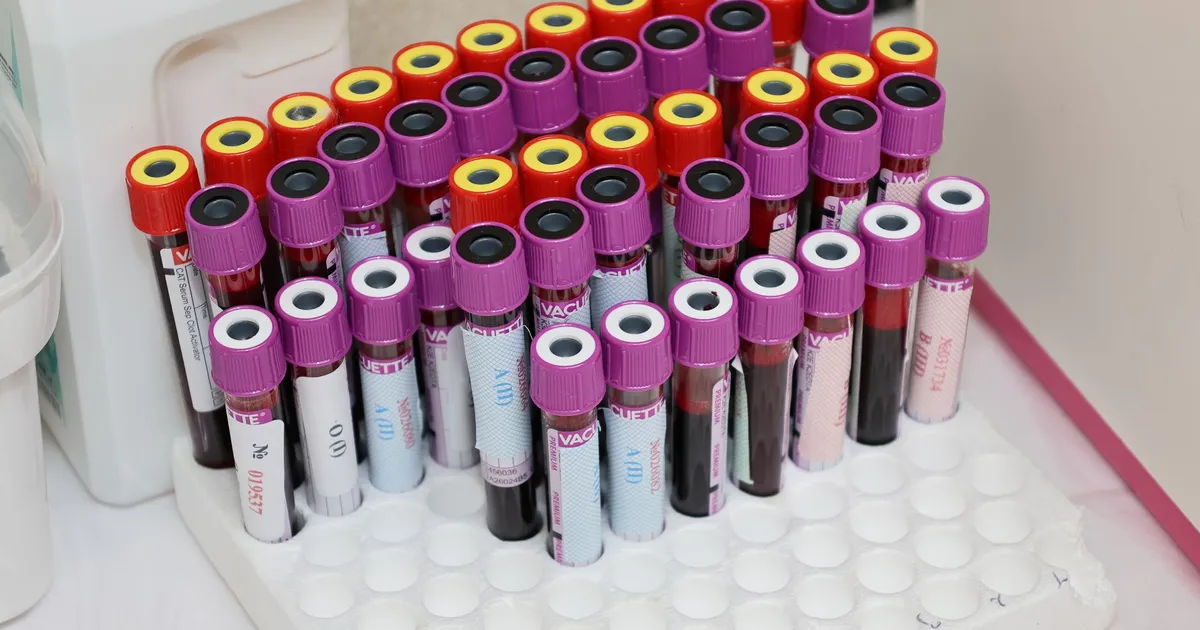

- The three act at different levels of one chain: kisspeptin on the brain's GnRH neurons, gonadorelin on the pituitary, hCG directly on the testis. Where a man's problem sits decides which, if any, can help.
- Rhythm matters as much as the molecule. Continuous GnRH shuts the pituitary down rather than stimulating it, and in a 2026 trial continuous kisspeptin lost its effect on LH and FSH within five days while intermittent dosing held for twelve.
- hCG has the clearest data for the question most men ask: in men given testosterone, low-dose hCG kept testicular testosterone near normal when it otherwise fell by 94%.
- hCG is approved, for selected men with hypogonadism caused by pituitary deficiency; its labels state in capitals that it has not been shown to work for weight loss. Gonadorelin's US human brands are discontinued. Kisspeptin is not approved in the US.
- All three are banned in male athletes at all times, in a WADA section of their own.
One chain, three places to push
Testosterone in men is the last step of a relay. Neurons in the hypothalamus release kisspeptin; kisspeptin drives GnRH neurons to release gonadotropin-releasing hormone in pulses; each GnRH pulse makes the pituitary release luteinising hormone (LH) and follicle-stimulating hormone (FSH); LH tells the Leydig cells of the testis to make testosterone, and FSH, together with the very high testosterone concentration inside the testis, supports sperm production.
The three peptides in this article push on that relay at different points. Kisspeptin acts at the top, on the GnRH neurons. Gonadorelin is GnRH itself, made synthetically, and acts on the pituitary. hCG skips the brain and pituitary entirely: it acts on the same receptor as LH, directly on the testis.
That ordering is the whole comparison in miniature. A peptide can only work if every step below the one it acts on still works. Kisspeptin needs functioning GnRH neurons, pituitary and testes; gonadorelin needs a functioning pituitary and testes; hCG needs only the testes. And none of them can help a man whose testes themselves have failed, which is why the first question a clinician asks is where in the chain the problem sits.
Side by side
Status columns are as of October 1, 2026. Evidence grades come from our encyclopedia and reflect all human evidence for each compound.
| Kisspeptin | Gonadorelin (GnRH) | hCG | |
|---|---|---|---|
| Acts on | GnRH neurons in the hypothalamus | The pituitary | The testis, through the LH receptor |
| Raises LH and FSH | Yes, in human studies | Yes, when given in pulses | No — it replaces the LH signal; it does not raise LH or FSH |
| Needs a working pituitary | Yes | Yes | No |
| Dosing rhythm | Continuous infusion lost its gonadotropin effect within 5 days; intermittent dosing held for 12 | Must be pulsatile; continuous exposure shuts the pituitary down | Injections every few days in the trials |
| US status | Not approved in the US; in clinical trials | US human brands discontinued; approved use today is veterinary | Approved for selected men with hypogonadism secondary to pituitary deficiency, and other uses |
| WADA 2027 | All three banned at all times in males, section S2.2.1 | ||
| Evidence grade | Medium | Medium | High |
Kisspeptin: the top of the chain, and the newest data
Kisspeptin's importance to human reproduction was established through people in whom mutations of its receptor cause reproductive failure, and the first study of giving it to men came from Waljit Dhillo's group. In six healthy men, a 90-minute intravenous infusion of kisspeptin-54 against a saline control raised average LH from 4.2 to 10.8 U/L, FSH from 3.2 to 3.9 U/L, and testosterone from 21.7 to 24.9 nmol/L. Its half-life in blood was about 28 minutes.1
The shorter form, kisspeptin-10, has been tested where it might matter clinically. In men with type 2 diabetes and low testosterone, a single intravenous dose raised LH much as it did in healthy men, and an 11-hour infusion raised LH from 3.9 to 20.7 IU/L and testosterone from 8.5 to 11.4 nmol/L, increasing the frequency of LH pulses.2 That is a study of a few men over hours, and it shows the axis in those men could still respond — not that kisspeptin is a treatment.
The 2026 data are the most useful for anyone tempted by kisspeptin as a long-term option, because they test whether the effect lasts. Subcutaneous kisspeptin-10 raised LH, FSH and testosterone in a dose-dependent way. But under continuous infusion for five days, LH and FSH fell back to the level seen with a dummy infusion, even though testosterone stayed raised; given for eight hours a day with a break, the rise in LH and FSH was still present on day 12.3 The axis adapts to a constant signal and keeps responding to an interrupted one. Kisspeptin is not approved in the US and remains in clinical trials; our kisspeptin-10 entry tracks the programme.
Gonadorelin: right molecule, and the rhythm is everything
Gonadorelin is ten amino acids identical to the body's own GnRH. Its effect depends on how it arrives. In pulses, it makes the pituitary release LH and FSH. Given continuously, it does the opposite: the pituitary stops responding. That second effect is not a side note. It is the basis of the long-acting GnRH agonists used to shut testosterone down in prostate cancer.
When pulsatile GnRH is delivered properly, by a pump that delivers it in pulses, it can do something remarkable. In 28 men with congenital hypogonadotropic hypogonadism who had responded poorly to at least six months of injected gonadotropins, switching to pulsatile GnRH produced sperm in 17 of them, 60.7%, after a median of about a year.4 That is a specialist treatment for a specific condition, run with a pump.
It is not what is sold as gonadorelin for men on TRT, which is typically injected once or twice a day. With a half-life measured in minutes, a daily injection is a brief spike, not a rhythm the pituitary reads as pulses, and we found no trial testing that use for preserving fertility on testosterone. Status matters too: gonadorelin's US human brands, Factrel and Lutrepulse, are listed as discontinued, and its approved use today is in cattle. Our gonadorelin entry carries the detail.
hCG: bypassing the brain, with the clearest data
hCG is a pregnancy hormone that happens to act on the same receptor as LH, so it stimulates the testis directly. Because it does not go through the hypothalamus or pituitary, it works whatever is happening above the testis, including when testosterone treatment has shut that signal down.
The key experiment answers the question men on TRT most often ask. Twenty-nine healthy men were given testosterone enanthate 200 mg weekly for three weeks, with either a placebo or hCG at 125, 250 or 500 IU every other day. Testosterone from outside suppressed LH to 5% and FSH to 3% of baseline, and in the placebo group testosterone inside the testis fell by 94%, from 1,234 to 72 nmol/L. With hCG, testicular testosterone rose in step with the dose: 25% below baseline at 125 IU, 7% below at 250 IU, and 26% above at 500 IU.5 For scale, testosterone inside the testis in these men was about 80 times the level in their blood, which is why blood testosterone can look normal on TRT while sperm production stops.
Two cautions keep that result in proportion. It ran for three weeks and measured hormone levels, not sperm counts or pregnancies. And hCG replaces the LH signal only; it does not restore FSH, and reviews list FSH as a separate option. A 2025 review in Nature Reviews Urology sets out the wider picture: testosterone treatment suppresses gonadotropins and drastically reduces testicular testosterone, recovery after stopping is slow and variable, exogenous gonadotropins including hCG and FSH may be used to preserve or restore sperm production in selected men, and testosterone is contraindicated in men actively trying to conceive.6
What hCG is actually approved for
hCG is an approved prescription drug, and its labels are specific. Both current US labels, Novarel and Pregnyl, list prepubertal cryptorchidism, selected cases of hypogonadotropic hypogonadism in males — hypogonadism secondary to a pituitary deficiency — and induction of ovulation in women.7 8 Using it to preserve fertility in a man on TRT is outside those indications: a recognised specialist practice, but not a labelled one.
Both labels also open their indications section with a statement in capital letters: hCG has not been demonstrated to be effective adjunctive therapy in the treatment of obesity, with no substantial evidence that it increases weight loss beyond calorie restriction, redistributes fat, or reduces hunger.7 That line exists because of the 'hCG diet', and it is the clearest statement on any label in this article.
Matching the peptide to the problem
Put the chain and the evidence together and the comparison becomes a question of fit, not strength.
- If the testes have failed (primary hypogonadism), none of the three can help, because each works by asking the testis to do more. Testosterone replacement is the treatment the Endocrine Society guideline describes for hypogonadism.9
- If the pituitary is the problem, gonadorelin and kisspeptin act above the broken step and cannot work; hCG, which acts below it, can — which is exactly the use its label describes.
- If the problem is above the pituitary, or the axis has been switched off by testosterone treatment, all three are mechanistically possible. Only hCG has controlled data on testicular testosterone in that setting, and only pulsatile GnRH by pump has data on inducing sperm production.
Which of those applies is established with blood tests — LH, FSH and testosterone measured together — not inferred from symptoms or from a product page.
If you are tested
WADA's 2027 list bans testosterone-stimulating peptides in males in a section of their own, S2.2.1, at all times in and out of competition: chorionic gonadotrophin, luteinising hormone, gonadorelin and its agonist analogues, and kisspeptin and its agonist analogues.10 They are sometimes marketed as the clean alternative to testosterone for athletes. Under the anti-doping rules, they are not an alternative at all. Our comparison with steroids, SARMs and TRT sets them beside the other classes.
The short version
Kisspeptin, gonadorelin and hCG all raise testosterone by asking the body to make more of its own, at three different points in one chain. Kisspeptin has careful human data from a small number of men and is not approved in the US. Gonadorelin works only in pulses, has pump data in a specialist condition, and is no longer marketed for human use in the US. hCG has the clearest evidence on the question men on TRT ask — keeping testicular testosterone up while testosterone is given — and an approved label that is narrower than the uses it is sold for.
None of that is a recommendation. It is the frame for the conversation that decides it: where in the chain the problem sits, measured rather than guessed.
Frequently asked questions
What is the best peptide to raise testosterone?
There is no single best one, because they act at different points. hCG acts on the testis and works even when the pituitary is suppressed; gonadorelin and kisspeptin act higher up and need a working pituitary. hCG also has the clearest controlled data. None can help when the testes themselves have failed.
Does hCG preserve fertility on TRT?
In a three-week trial in men given testosterone, low-dose hCG kept testosterone inside the testis close to normal when it otherwise fell by 94%. That measured hormone levels, not sperm or pregnancy, and hCG does not restore FSH. Using it this way is outside its label, though reviews describe it as an option for selected men.
Does gonadorelin work like hCG?
No. Gonadorelin is GnRH and acts on the pituitary, which then releases LH and FSH — but only if it arrives in pulses; continuous exposure shuts the pituitary down. hCG acts directly on the testis. Gonadorelin's US human brands are discontinued, and we found no trial of daily injections for preserving fertility on TRT.
Is kisspeptin approved?
No. It has human studies showing it raises LH, FSH and testosterone, including a 2026 trial in which intermittent dosing kept working for 12 days while continuous dosing lost its effect within five, but it is not approved in the US and remains in clinical trials.
Does hCG help with weight loss?
Its own labels say no: they state in capital letters that hCG has not been shown to be effective in treating obesity, to increase weight loss beyond calorie restriction, to redistribute fat or to reduce hunger.
Are these allowed in sport?
No. WADA bans chorionic gonadotrophin, LH, gonadorelin and its analogues, and kisspeptin and its analogues in males at all times, under section S2.2.1 of the 2027 list.
Related on Grey Peptides
Sources
- Dhillo, W. S. et al. (2005). Kisspeptin-54 stimulates the hypothalamic-pituitary gonadal axis in human males. The Journal of Clinical Endocrinology and Metabolism, 90(12), 6609-6615. PMID: 16174713
- George, J. T. et al. (2013). Exploring the pathophysiology of hypogonadism in men with type 2 diabetes: kisspeptin-10 stimulates serum testosterone and LH secretion in men with type 2 diabetes and mild biochemical hypogonadism. Clinical Endocrinology, 79(1), 100-104. PMID: 23153270
- Yeung, A. C. et al. (2026). Chronic subcutaneous kisspeptin-10 stimulates gonadotropin secretion for 12 days in healthy men. European Journal of Endocrinology, 195(2), 206-216. PMID: 42549827
- Huang, Z. et al. (2024). Pulsatile gonadotropin releasing hormone therapy for spermatogenesis in congenital hypogonadotropic hypogonadism patients who had poor response to combined gonadotropin therapy. Archives of Endocrinology and Metabolism, 68, e230101. PMID: 38739523
- Coviello, A. D. et al. (2005). Low-dose human chorionic gonadotropin maintains intratesticular testosterone in normal men with testosterone-induced gonadotropin suppression. The Journal of Clinical Endocrinology and Metabolism, 90(5), 2595-2602. PMID: 15713727
- Naelitz, B. D. et al. (2025). Testosterone replacement therapy and spermatogenesis in reproductive age men. Nature Reviews. Urology, 22(10), 703-719. PMID: 40346275
- Novarel (chorionic gonadotropin) prescribing information, Indications and Usage (DailyMed SPL version 41, effective August 27, 2025; read October 1, 2026). FDA
- Pregnyl (chorionic gonadotropin) prescribing information, Indications and Usage (DailyMed SPL version 11, effective December 2, 2025; read October 1, 2026). FDA
- Bhasin, S. et al. (2018). Testosterone Therapy in Men With Hypogonadism: An Endocrine Society Clinical Practice Guideline. The Journal of Clinical Endocrinology and Metabolism, 103(5), 1715-1744. PMID: 29562364
- World Anti-Doping Agency. World Anti-Doping Code International Standard: Prohibited List 2027, section S2.2.1. Dated August 26, 2026; in force January 1, 2027. WADA
This article is for education. It is not medical advice and not a guide to obtaining or using any of these drugs. Low testosterone and fertility problems are diagnosed with blood tests a clinician interprets; the right treatment depends on where in the chain the problem sits.
New guides and rule changes, by email
One short email when a peptide's legal status moves — an FDA or PCAC decision, a WADA list change, an enforcement action — plus new guides and tools. At most one a week, and none when nothing changes. The newsletter has not started sending yet: your first email will be its first issue.
We keep your email address and the page you signed up from, nothing else. How it works · Privacy · RSS instead