Semax and selank: the evidence behind Russia's nasal peptides
Last updated: October 2, 2026 · 4 min read · By the Grey Peptides Editorial Board
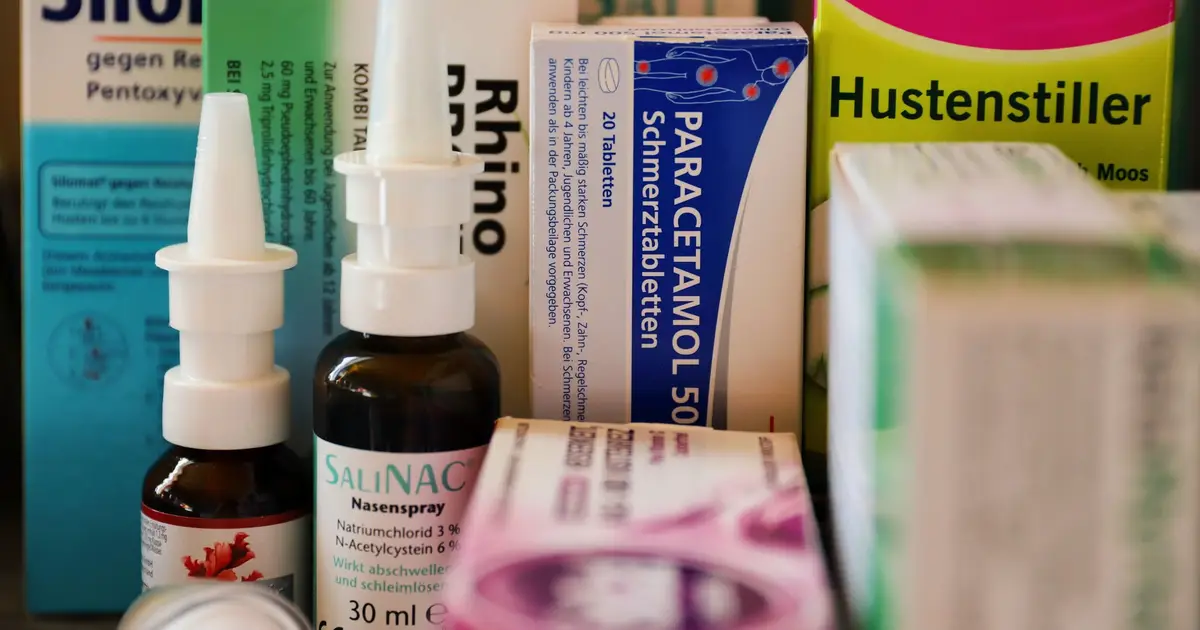

- Semax and selank are sibling peptides from Russian research, both seven amino acids long and both given as nasal drops. Semax is used in Russia for stroke and optic-nerve disease; selank is approved there for anxiety.
- Their human evidence is real but mostly small, open or comparative studies published in Russian journals; there are few placebo-controlled trials and almost none outside Russia.
- In the US, the FDA's compounding committee recommended semax 8 to 5 in July 2026, but the FDA had not acted at our last check. Selank was not reviewed. Neither is FDA-approved.
Two siblings with a shared tail
Semax Medium and selank Medium were both built the same way: a short fragment of a natural peptide (an ACTH fragment for semax, tuftsin for selank) with the same Pro-Gly-Pro tail added. Semax is Met-Glu-His-Phe-Pro-Gly-Pro; selank is Thr-Lys-Pro-Arg-Pro-Gly-Pro 1. Both are given as drops into the nose. In Russia semax is an approved medicine used in stroke and optic-nerve disease, and selank is approved for generalised anxiety and adjustment disorders; neither is approved by the FDA or the EMA 1.
In rats, a single nasal dose of semax raised levels of BDNF, a growth factor for nerve cells, and the activity of its receptor in the hippocampus 2. Selank's animal work points elsewhere, toward GABA and anxiety, and our entries list those studies.
Semax in people
Semax's human studies are mostly in stroke. In 110 patients studied about three or seven months after an ischaemic stroke, two 10-day courses of semax raised blood BDNF levels whatever the timing of rehabilitation 3. An earlier study gave semax to 30 patients in the acute phase of stroke on top of intensive therapy and compared them with 80 similar patients on conventional treatment; the authors reported only "some influence" on the speed of recovery 4. In 27 people with motor neuron disease, an open-label course did not change the course of the disease, though it improved quality of life 5. In 24 healthy volunteers, a single nasal dose changed resting-state brain-network activity on fMRI against placebo 6.
These are small studies, several without randomisation or blinding, and their outcomes are often surrogate measures such as BDNF levels or brain scans rather than disability or survival.
Selank in people
Selank's human trials compare it with Russian benzodiazepines. In 62 patients with generalised anxiety or neurasthenia, selank and medazepam had similar anti-anxiety effects on standard rating scales, and selank also had anti-fatigue effects 7. In 70 patients, adding selank to phenazepam made its benefit arrive sooner and reduced several of its side effects, including sedation and memory problems 8. Another study in 60 patients reported a pronounced anti-anxiety effect that lasted a week after the last dose, though its abstract reports no figures for the comparison 9. In healthy volunteers, selank and semax each changed brain connectivity on fMRI in partly different ways 10.
A US review of GABA-acting drugs called selank poorly studied and noted that it is sold to American consumers as a dietary supplement 11.
The safety signal people point to
One animal finding draws attention. In rats, semax on its own did not change dopamine, but given 20 minutes before d-amphetamine it dramatically increased amphetamine's effect on dopamine release and on behaviour 12. That is a single rat study, and it does not show that semax is dangerous to people; it is a reason for caution about combining semax with stimulants, about which there is no human data. Beyond that, the published human studies report few adverse effects, but most were too small and short to detect uncommon ones.
Where they stand in the US (as of October 2, 2026)
Semax was one of seven peptides the FDA's Pharmacy Compounding Advisory Committee considered in July 2026; FDA staff had proposed not adding it, and the committee voted 8 to 5 with one abstention to recommend it for the 503A list 13. At our last check on September 25, 2026, the FDA had not acted, so semax was not on the list 13. Selank was not among the substances reviewed. For athletes, neither is named on WADA's List, and whether they are caught by S0 depends on whether a Russian approval counts as current approval, which the List's text does not settle 1. Our PCAC page follows the semax vote.
Frequently asked questions
What is the difference between semax and selank?
Both are seven-amino-acid nasal peptides from Russian research with the same Pro-Gly-Pro tail. Semax, from an ACTH fragment, is used in Russia for stroke and optic-nerve disease; selank, from tuftsin, is approved there for anxiety.
Is semax FDA-approved?
No. The FDA's compounding committee recommended it 8 to 5 in July 2026, but at our last check on September 25, 2026 the FDA had not acted on the vote.
Does selank work for anxiety?
In Russian trials it had anti-anxiety effects similar to medazepam in 62 patients, and helped phenazepam work sooner in 70. These are small trials, and a US review called selank poorly studied.
Are semax and selank banned in sport?
Neither is named on WADA's List. Whether S0 applies depends on whether a Russian approval counts as current approval, which the List does not settle.
Related on Grey Peptides
Sources
- Grey Peptides dataset, semax and selank records (sequences, Russian approval status, WADA 2026 and 2027 review); read October 2, 2026.
- Dolotov, O. V., et al. (2006). Semax, an analog of ACTH(4-10) with cognitive effects, regulates BDNF and trkB expression in the rat hippocampus. Brain Res, 1117(1), 54-60. PMID: 16996037
- Gusev, E. I., et al. (2018). [The efficacy of semax in the tretament of patients at different stages of ischemic stroke]. Zh Nevrol Psikhiatr Im S S Korsakova, 118(3. Vyp. 2), 61-68. PMID: 29798983
- Gusev, E. I., et al. (1997). [Effectiveness of semax in acute period of hemispheric ischemic stroke (a clinical and electrophysiological study)]. Zh Nevrol Psikhiatr Im S S Korsakova, 97(6), 26-34. PMID: 11517472
- Serdiuk, A. V., et al. (2007). [The study of chronic partial denervation and quality of life in patients with motor neuron disease treated with semax]. Zh Nevrol Psikhiatr Im S S Korsakova, 107(4), 29-39. PMID: 18379501
- Lebedeva, I. S., et al. (2018). Effects of Semax on the Default Mode Network of the Brain. Bull Exp Biol Med, 165(5), 653-656. PMID: 30225715
- Zozulia, A. A., et al. (2008). [Efficacy and possible mechanisms of action of a new peptide anxiolytic selank in the therapy of generalized anxiety disorders and neurasthenia]. Zh Nevrol Psikhiatr Im S S Korsakova, 108(4), 38-48. PMID: 18454096
- Medvedev, V. E., et al. (2015). [Optimization of the treatment of anxiety disorders with selank]. Zh Nevrol Psikhiatr Im S S Korsakova, 115(6), 33-40. PMID: 26356395
- Medvedev, V. E., et al. (2014). [A comparison of the anxiolytic effect and tolerability of selank and phenazepam in the treatment of anxiety disorders]. Zh Nevrol Psikhiatr Im S S Korsakova, 114(7), 17-22. PMID: 25176261
- Panikratova, Y. R., et al. (2020). Functional Connectomic Approach to Studying Selank and Semax Effects. Dokl Biol Sci, 490(1), 9-11. PMID: 32342318
- Doyno, C. R., et al. (2021). Sedative-Hypnotic Agents That Impact Gamma-Aminobutyric Acid Receptors: Focus on Flunitrazepam, Gamma-Hydroxybutyric Acid, Phenibut, and Selank. J Clin Pharmacol, 61 Suppl 2, S114-S128. PMID: 34396551
- Eremin, K. O., et al. (2005). Semax, an ACTH(4-10) analogue with nootropic properties, activates dopaminergic and serotoninergic brain systems in rodents. Neurochem Res, 30(12), 1493-500. PMID: 16362768
- US FDA. Pharmacy Compounding Advisory Committee, July 23-24, 2026: briefing documents and votes; status as of September 25, 2026. FDA
Educational information, not medical advice. Each dose in this guide names its source, an approved label or a published study. None is a recommendation for you. An unapproved compound has no established safe or effective human dose, and products sold for “research use only” are not made or tested for people. Talk to a doctor before acting on anything on this site, including before you start, stop or change any medicine or dose.
New guides and rule changes, by email
One short email when a peptide's legal status moves — an FDA or PCAC decision, a WADA list change, an enforcement action — plus new guides and tools. At most one a week, and none when nothing changes. The newsletter has not started sending yet: your first email will be its first issue.
We keep your email address and the page you signed up from, nothing else. How it works · Privacy · RSS instead