Vosoritide's Phase 3 Hypochondroplasia Trial: 2.33 cm a Year Faster Growth Than Placebo
Published: October 5, 2026 · 3 min read · By Grey Peptides News Desk · ✓ Sourced
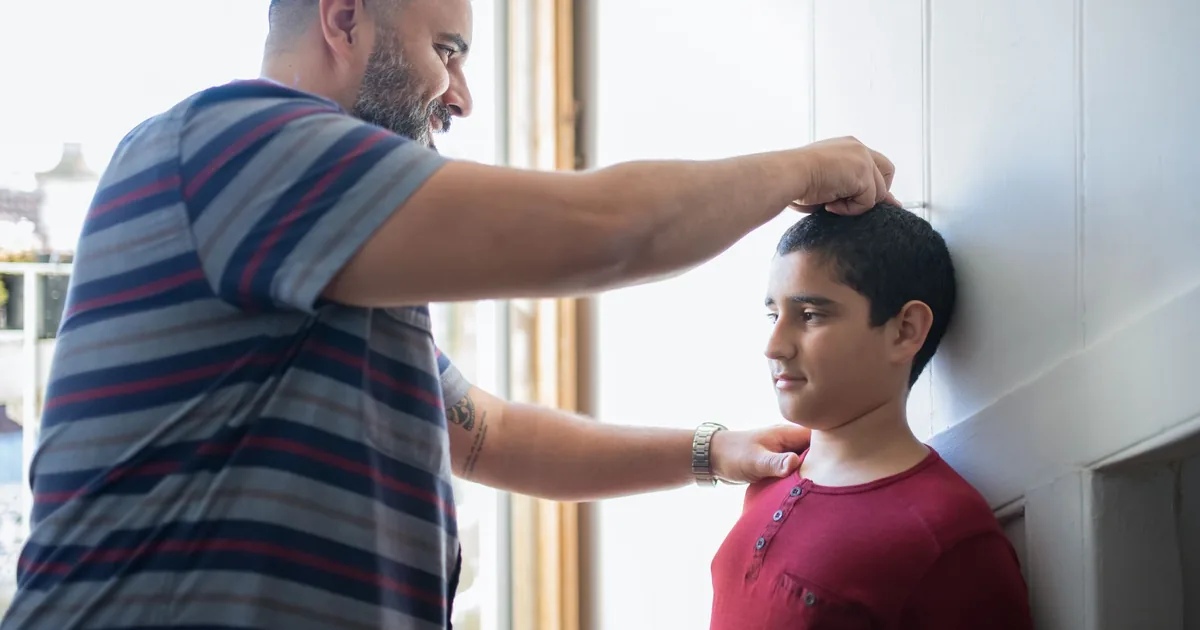
A phase 3 trial published in NEJM Evidence on September 9 tested vosoritide, the daily injection approved for achondroplasia, in 81 children with hypochondroplasia, a condition caused by changes in the same gene. After 52 weeks, yearly growth had risen by 1.95 cm on vosoritide and fallen by 0.39 cm on placebo, a difference of 2.33 cm a year, with no serious adverse events. It is one year of growth velocity in a small trial; whether it changes adult height is not known, and vosoritide is not approved for hypochondroplasia.
What the trial did
Hypochondroplasia is a skeletal condition caused, like achondroplasia, by changes in the FGFR3 gene, which brakes bone growth at the growth plates. The paper describes disproportionate short stature with a spectrum of clinical features, and notes it has no targeted treatment. Vosoritide, a modified form of C-type natriuretic peptide sold as Voxzogo, works against that brake and is approved for children with achondroplasia whose growth plates are still open.
The phase 3 trial randomised children aged 3 to under 18 with hypochondroplasia to a daily injection of vosoritide (41 children) or placebo (40), dosed by weight band, for 52 weeks. The primary end point was the change in annualised growth velocity, how many centimetres a year a child grows.
What it found
At 52 weeks, growth velocity had risen by an average of 1.95 cm a year from baseline on vosoritide and fallen by 0.39 cm a year on placebo. The difference, 2.33 cm a year (95% confidence interval 1.85 to 2.82), was statistically significant, and the trial tested it within a pre-set hierarchy designed to control false positives.
Adverse events were common in both groups, in 87.8% of children on vosoritide and 72.5% on placebo, but none was grade 3 or higher, none led a child to stop treatment, and there were no deaths. The abstract does not break down the events; in achondroplasia, injection-site reactions were the most common, and the Voxzogo label warns of short drops in blood pressure.
How it compares
The size of the effect is in the same range as in achondroplasia. The pivotal achondroplasia trial found 1.57 cm a year more growth than placebo in 121 children aged 5 to under 18, and an earlier single-arm hypochondroplasia study in 24 children found yearly growth up by 1.81 cm against an observation period. The trials differ in age range, design and size, so the figures should be read as consistent rather than ranked.
What it does not answer
A year of faster growth is not the same as a taller adult. In achondroplasia, vosoritide's approval rests on growth velocity under the FDA's accelerated pathway, and the label says continued approval may depend on confirmatory trials; the same question applies here, with less data. The abstract reports one year in 81 children, funded by the drug's maker.
Where it stands
Vosoritide is approved in the US and EU for achondroplasia only; this trial does not change its label. Our vosoritide entry covers the achondroplasia trials, the long-term extension and real-world data, the label's weight-band dosing and its blood-pressure precaution, and now carries this trial as a study.
Related on Grey Peptides
The achondroplasia trials, long-term growth data, label dosing and the blood-pressure precaution. C-type natriuretic peptide
The natural growth-plate signal vosoritide is built on. Somatropin
Growth hormone, used in other short-stature conditions, and what its labels cover.
Dauber A, Savarirayan R, et al. A Phase 3 Trial of Vosoritide in Children with Hypochondroplasia. NEJM Evidence 2026, PMID 42713641
Every trial figure here is from the published abstract (NEJM Evidence, online September 9, 2026), read on PubMed on October 5, 2026. The full paper was not read, so secondary end points are not reported. The trial was funded by BioMarin, which makes vosoritide.