Bacteriostatic Water vs Sterile Water vs Saline: Which to Use, Why, and How Long It Lasts
Last updated: October 2, 2026 · 10 min read · By the Grey Peptides Editorial Board
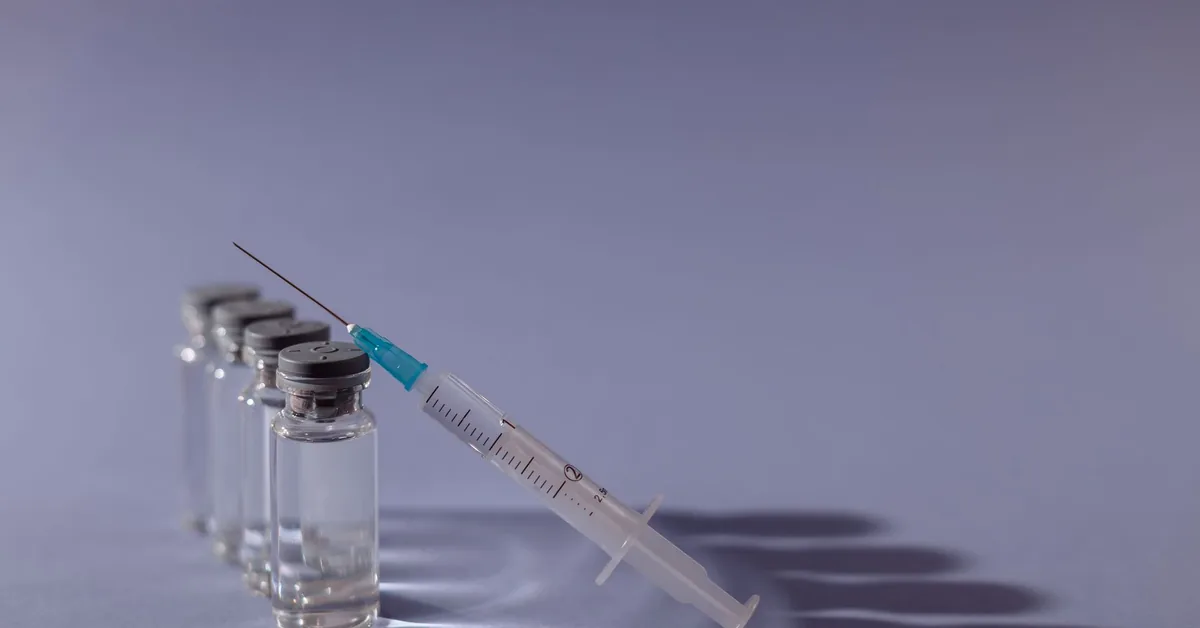

- All three are sterile liquids made for one job: dissolving or diluting a drug before it is injected. Each one's label says to follow the instructions of the maker of the drug being mixed.
- Bacteriostatic water is sterile water with 0.9% benzyl alcohol added, so a vial can be entered more than once. Sterile water for injection has no preservative and is meant for a single use. Saline adds salt so the solution matches the body's fluids.
- The well-known 28-day rule comes from CDC and USP guidance for opened multi-dose vials, and a product's own label overrides it. One tesamorelin product says to throw out the mixed vial after 7 days; another says to use it immediately.
- The drug decides the diluent, not habit. The same peptide, tesamorelin, is mixed with sterile water in one formulation and bacteriostatic water in the other, and romiplostim's label forbids bacteriostatic water outright.
Three liquids, one job
Bacteriostatic water, sterile water for injection and saline look identical in the vial and are often treated as interchangeable. On paper they share a purpose. Each of the three labels read for this guide gives the same indication, nearly word for word: the product is for diluting or dissolving drugs for intravenous, intramuscular or subcutaneous injection, according to the instructions of the company that makes the drug being prepared 1 2 3. None of them is a medicine, and none says which drugs it suits. That decision is handed to the drug's own label.
The difference between them is what is dissolved in the water.
Sterile water for injection is just that: water made to injectable standards, with nothing added. It has no preservative, so once a vial is opened it gives no protection against bacteria that get in. That is why it comes in single-use containers.
Bacteriostatic water for injection is sterile water with a preservative, benzyl alcohol, at 0.9%. Gonal-f's label gives the concentration in its own mixing instructions, which call for "Bacteriostatic Water for Injection (0.9% benzyl alcohol), USP" 4. The preservative is what lets a vial be entered with a needle more than once.
Saline is water with 0.9% sodium chloride, the concentration that matches the salt content of the body's fluids. It comes plain, without a preservative, or as bacteriostatic sodium chloride, which carries benzyl alcohol for the same reason bacteriostatic water does 3.
So the real choice is along two lines: preservative or none, and salt or none. Each has a reason, and each has cases where it is the wrong choice.
What the preservative does, and what it does not
"Bacteriostatic" means the liquid holds bacteria back. It does not mean the vial kills everything that enters it. CDC describes multi-dose vials as containers that are labelled as such by the manufacturer and typically contain an antimicrobial preservative "to help limit the growth of bacteria" 5. Its training material for clinics adds the limit that matters most: the preservative has no effect on viruses 6.
That has two practical consequences. First, a preservative is a margin of safety for a vial that is being entered repeatedly with clean technique; it is not a way to rescue one that has been handled carelessly. CDC's guidance is to discard any vial whose sterility is compromised or in question, whatever its date 5. Second, the protection belongs to the liquid. Mixing a drug into bacteriostatic water does not make the drug itself safer, and some drugs are damaged by the preservative, which is why their labels rule it out.
The other ingredient in the bacteriostatic question is time. A preservative slows bacterial growth; it does not stop the clock. The rules on how long an opened vial may be used exist because that margin wears thin.
Where the 28-day rule comes from, and when it does not apply
The figure most people know is 28 days. Its source is not a peptide forum or a supplier's insert but infection-control guidance for clinics. CDC, drawing on the United States Pharmacopeia's chapter on sterile preparations, says that once a multi-dose vial is opened or needle-punctured it should be dated and discarded within 28 days unless the manufacturer gives another date for that opened vial, and that the date should never run past the manufacturer's original expiry 5.
Two parts of that sentence are easy to miss. The 28 days start when the vial is first entered, not when it was bought. And the manufacturer's date wins, in either direction. The rule is a default for when a label is silent, not a promise that every opened vial lasts four weeks.
A drug mixed into a diluent is a different product from the diluent itself, and its label sets its own clock. Tesamorelin shows how far apart those clocks can be. Egrifta WR is mixed with bacteriostatic water and "one reconstituted vial provides daily doses for 7 days"; the label says to discard any unused solution 7 days after mixing 7. Egrifta SV, the same drug in a single-dose form mixed with sterile water, is to be used immediately after mixing; any solution not used right away is thrown out, and the mixed solution is not to be refrigerated or frozen 8.
So "how long does bacteriostatic water last" has two answers. The opened diluent vial follows its label and, where the label is silent, the 28-day rule. A drug made up in it follows the drug's label, which can be much shorter. Novarel, a chorionic gonadotropin product, gives one more variation: its larger multiple-dose preparation is mixed with bacteriostatic water and kept refrigerated between doses 9.
Why newborns never get benzyl alcohol
The most important warning on a bacteriostatic product's label concerns people who will never self-inject anything. Both Hospira labels state that benzyl alcohol, the preservative, "has been associated with toxicity in neonates", and that where water or saline is needed to prepare drugs for newborns, only preservative-free products should be used 1 3.
That warning comes from hard experience in neonatal intensive care in the early 1980s, when benzyl alcohol-preserved solutions were used to flush catheters and mix drugs for very small babies. One unit discovered the problem by accident: benzyl alcohol interfered with a routine blood test, which meant every infant had in effect been screened for it. Compared with matched infants who had not been exposed, infants under 1,000 g with raised levels had more brain haemorrhage, more metabolic acidosis and higher mortality, and survival among the smallest babies improved after the unit stopped using benzyl alcohol solutions 10.
The lesson for adults is narrower but real: the preservative is a drug ingredient in its own right, with a dose and a limit. A small amount in a weekly injection is not the same exposure as repeated flushes into a premature infant, which is why the warning is specific to newborns.
Water on its own is not meant to go into a vein
One more warning appears on both water labels, preserved and plain: given intravenously without anything dissolved in it, the water can cause haemolysis, the bursting of red blood cells 1 2. Pure water has far fewer dissolved particles than blood, and red cells take on water until they rupture.
This is the reason sterile water is sold as a diluent and not as a fluid to inject on its own, and part of the reason saline exists. A solution with the same salt concentration as the body's fluids does not pull water into cells in that way.
For subcutaneous injections of a few tenths of a millilitre, the volumes involved are tiny. The point is not that a small reconstituted dose is dangerous, but that water is a vehicle for the drug and not a neutral substance in its own right.
What approved peptide labels actually say
The clearest evidence that diluents are not interchangeable comes from the labels of approved peptide drugs, which each name exactly one. Six of them are summarised below; every instruction is the label's own, and each drug's evidence grade links to its encyclopedia entry.
| Drug (product) | Diluent the label names | What else the label says | Evidence grade |
|---|---|---|---|
| Tesamorelin (Egrifta SV) | Sterile Water for Injection, the diluent provided, and only that | Use immediately after mixing; do not refrigerate or freeze the mixed solution 8 | High |
| Tesamorelin (Egrifta WR) | Bacteriostatic Water for Injection, USP, the diluent provided, and only that | One vial gives daily doses for 7 days; discard 7 days after mixing 7 | High |
| Teduglutide (Gattex) | Preservative-free Sterile Water for Injection, in the prefilled syringe supplied | Roll the vial gently after mixing; do not shake 11 | High |
| Chorionic gonadotropin (Novarel) | Bacteriostatic Water for Injection | The larger multiple-dose preparation is refrigerated between doses 9 | High |
| Follitropin alfa (Gonal-f multi-dose) | Bacteriostatic Water for Injection (0.9% benzyl alcohol), USP | The multi-dose vials are mixed for several doses 4 | High |
| Romiplostim (Nplate) | Sterile Water for Injection, USP | Do not reconstitute or dilute with bacteriostatic water, and do not dilute with bacteriostatic saline; small doses are diluted with plain 0.9% saline 12 | High |
The tesamorelin rows are the most instructive. It is one molecule, made by one company, and its two formulations call for two different diluents, each "only" the one provided 8 7. Nothing about the peptide itself decides the question; the formulation does, along with the stability testing done for it.
Romiplostim, a peptide fused to part of an antibody, is the counterexample to the idea that bacteriostatic water is the safe default. Its label rules out benzyl alcohol-preserved water and saline altogether 12. A preservative that suits one peptide can be the wrong choice for another, and the only document that knows which is the product's own label.
When saline is the right choice
Saline earns its place where a solution must match the body's fluids or where a drug needs further dilution after mixing. Romiplostim's label is a good example of the second: after the powder is dissolved in sterile water, a calculated small dose is diluted with plain 0.9% sodium chloride so it can be measured accurately 12.
The bacteriostatic version of saline has its own label limits. Besides the newborn warning, Hospira's label says preservative-free sodium chloride, not the bacteriostatic kind, should be used to flush intravenous catheters 3.
What saline should not be is an improvised substitute for the diluent a label names. Salt changes how some molecules dissolve and how stable they stay, which is precisely the sort of thing a manufacturer tests for one diluent and not another.
What this means for unapproved peptides
Every rule above traces back to a label, and that is the gap with peptides sold for "research use". There is no label, so there is no diluent instruction, no tested in-use period and no stability data for the mixed solution. Bacteriostatic water has become the community default for these products, but that default rests on habit, not on any test of the particular peptide.
The general facts still apply. A preservative helps a clean vial stay clean between uses, but it does nothing against viruses and cannot make a contaminated vial safe 6 5. An opened multi-dose vial is dated from first use, and where no manufacturer says otherwise, clinics discard it within 28 days 5. And no amount of care with the diluent tells you what is in the powder, which is a question for independent testing, not for the water.
For the arithmetic of mixing, the site's reconstitution calculator and reconstitution guide cover volumes and concentrations. For what independent laboratories have found in products sold online, see independent lab results. None of this is medical advice: for anything you would inject, the person to ask is a pharmacist or clinician who can see the product's own documentation.
Frequently asked questions
What is the difference between bacteriostatic water and sterile water?
Bacteriostatic water is sterile water with 0.9% benzyl alcohol added as a preservative, so a vial can be entered more than once. Sterile water for injection has no preservative and is meant for a single use.
How long does bacteriostatic water last once opened?
CDC and USP guidance for opened multi-dose vials is to date them and discard within 28 days unless the manufacturer gives another date. A drug mixed into it follows its own label, which can be much shorter; one tesamorelin product says 7 days.
Can I use sterile water instead of bacteriostatic water?
Only the drug's label can answer that. One tesamorelin product requires sterile water and another requires bacteriostatic water, and sterile water has no preservative, so it suits a single use, not a vial entered repeatedly.
Can saline be used to reconstitute peptides?
Only where a label says so. Romiplostim's label uses plain 0.9% saline to dilute small doses after mixing with sterile water, and forbids bacteriostatic saline.
Why is bacteriostatic water not used for newborns?
Its preservative, benzyl alcohol, has been associated with toxicity in newborns. The labels say only preservative-free water or saline should be used to prepare drugs for them.
Does bacteriostatic water kill viruses?
No. CDC notes that the preservative in multi-dose vials helps limit bacterial growth and has no effect on viruses.
Related on Grey Peptides
- How to Reconstitute Peptides
- Reconstitution calculator
- Independent lab results
- Tesamorelin: one peptide, two diluents
Sources
- Hospira, Inc.. Bacteriostatic Water for Injection, USP. Prescribing information, DailyMed set 87d6e9dc-fe3b-4593-ac9a-d7493d1959c7, version 20, effective 2026-05-22; read October 2, 2026. Cited without a link; the set id finds it on DailyMed.
- Medefil, Inc.. Sterile Water for Injection, USP. Prescribing information, DailyMed set 99e99a50-82d5-aff6-e053-2a95a90a8c56, version 5, effective 2025-01-08; read October 2, 2026. Cited without a link; the set id finds it on DailyMed.
- Hospira, Inc.. Bacteriostatic Sodium Chloride Injection, USP. Prescribing information, DailyMed set 376093e7-e09e-4a57-3199-195e45251866, version 23, effective 2026-04-03; read October 2, 2026. Cited without a link; the set id finds it on DailyMed.
- EMD Serono. Gonal-f (follitropin alfa for injection). Prescribing information, DailyMed set ae85b9c3-e7eb-4981-a5d9-346050e8f189, version 15, effective 2025-09-02; read October 2, 2026. Cited without a link; the set id finds it on DailyMed.
- Centers for Disease Control and Prevention. Preventing Unsafe Injection Practices (Injection Safety: clinical safety). Read October 2, 2026. CDC
- Centers for Disease Control and Prevention. Safe Injection Practices, Module 6 (dental infection control training script). Read October 2, 2026. CDC (PDF)
- Theratechnologies Inc.. Egrifta WR (tesamorelin for injection). Prescribing information, DailyMed set 839334d3-8c1d-4c26-9036-2ab524a6ea75, version 2, effective 2026-07-29; read October 2, 2026. Cited without a link; the set id finds it on DailyMed.
- Theratechnologies Inc.. Egrifta SV (tesamorelin for injection). Prescribing information, DailyMed set 3d783378-b02d-4f19-99dd-0fc91a042224, version 9, effective 2026-07-29; read October 2, 2026. Cited without a link; the set id finds it on DailyMed.
- Ferring Pharmaceuticals. Novarel (chorionic gonadotropin for injection). Prescribing information, DailyMed set ac6918ff-9dc3-40d9-8619-54b26e4bdfc8, version 41, effective 2025-08-27; read October 2, 2026. Cited without a link; the set id finds it on DailyMed.
- Menon, P. A. et al. (1984). Benzyl alcohol toxicity in a neonatal intensive care unit. Incidence, symptomatology, and mortality. Am J Perinatol. PMID: 6440575
- Takeda Pharmaceuticals America. Gattex (teduglutide) for injection. Prescribing information, DailyMed set 66b69c1e-b25c-44d3-b5ff-1c1de9a516fa, version 20, effective 2025-09-05; read October 2, 2026. Cited without a link; the set id finds it on DailyMed.
- Amgen. Nplate (romiplostim) for injection. Prescribing information, DailyMed set c45f9a58-37c1-4f76-8e36-97d38c577037, version 162, effective 2026-06-23; read October 2, 2026. Cited without a link; the set id finds it on DailyMed.
Educational information, not medical advice. Each dose in this guide names its source, an approved label or a published study. None is a recommendation for you. An unapproved compound has no established safe or effective human dose, and products sold for “research use only” are not made or tested for people. Talk to a doctor before acting on anything on this site, including before you start, stop or change any medicine or dose. This guide reports what product labels and public-health guidance say; it does not name or link to any seller, and it is not medical advice.
New guides and rule changes, by email
One short email when a peptide's legal status moves — an FDA or PCAC decision, a WADA list change, an enforcement action — plus new guides and tools. At most one a week, and none when nothing changes. The newsletter has not started sending yet: your first email will be its first issue.
We keep your email address and the page you signed up from, nothing else. How it works · Privacy · RSS instead