How to Reconstitute Peptides
Last updated: September 30, 2026 · 5 min read · By the Grey Peptides Editorial Board
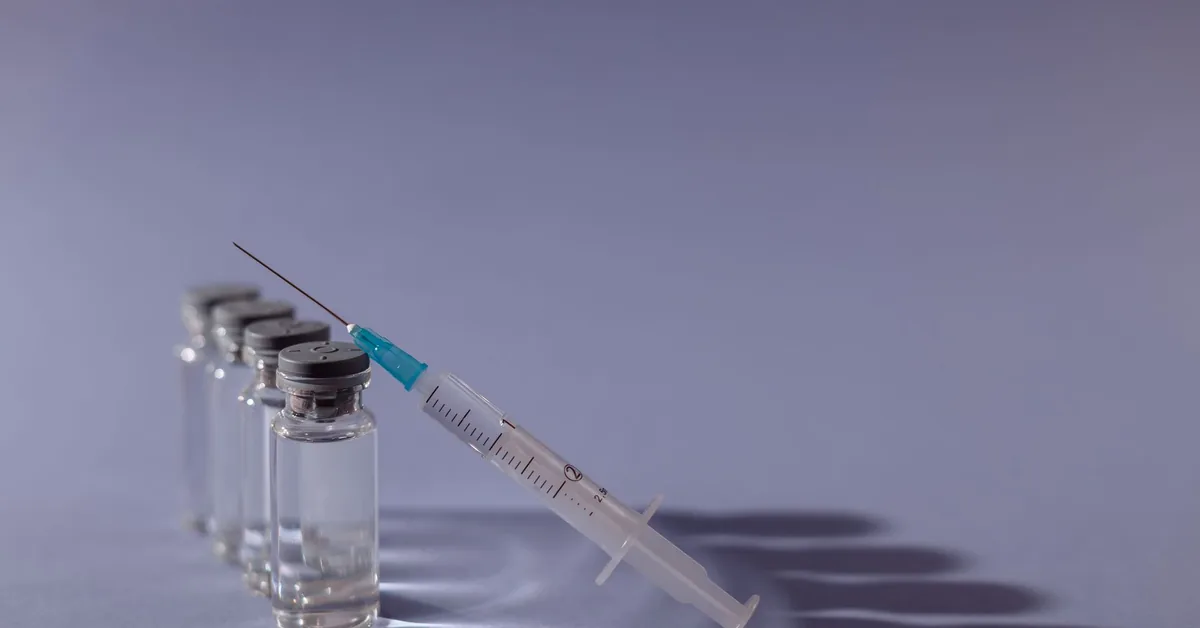

- Approved peptide drugs come with tested mixing instructions; research vials come with none, so the only defensible steps are the ones labels share 2.
- Bacteriostatic water contains 0.9% benzyl alcohol to limit bacterial growth in a vial used more than once; it does not make a peptide more stable, and it is not for newborns 1.
- Add the liquid gently and roll or swirl; labels for freeze-dried peptides say not to shake, and to use the solution only if it is clear and free of particles 2.
- The 28 days people quote is the beyond-use limit for an opened multiple-dose vial, a sterility rule, not a measurement of how long a peptide stays intact 9.
- Unit and milligram mix-ups are the errors FDA has documented; the reconstitution calculator does the arithmetic 11.
The short answer
Reconstituting a peptide means dissolving a freeze-dried powder in a sterile liquid so it can be drawn into a syringe. Approved peptide drugs come with instructions tested for that product: the liquid, the amount, how to mix it and how long the solution keeps. Research peptides come with none, so the steps below follow what approved labels and pharmacy standards have in common, and say where they stop applying. The arithmetic of how much liquid to add and how much to draw is done by our reconstitution calculator; this guide explains the choices around it.
Which liquid
Two liquids are used, and they are not interchangeable. Bacteriostatic water for injection is sterile water with 0.9% benzyl alcohol added as a preservative, sold in multiple-dose containers; its label warns that it is not for use in newborns.1 The benzyl alcohol limits the growth of bacteria introduced when a stopper is punctured again and again. It does not protect the peptide itself from breaking down.
Sterile water for injection has no preservative, so it suits a solution used at once. That is how approved single-dose products work: EGRIFTA SV, a tesamorelin product, is mixed with the 0.5 mL of sterile water supplied in the pack, given immediately, and any leftover solution is discarded.2 When a product's own label names a liquid, that liquid is the answer.
How much liquid to add
No volume is correct in general. The volume sets the concentration: the milligrams in the vial divided by the millilitres added. More liquid makes each dose a larger, easier-to-measure volume; less liquid makes it smaller. On a U-100 insulin syringe, 100 units equals 1 mL, so a dose's volume in millilitres times 100 is the number of units to draw.
A label shows the method. EGRIFTA SV's 2 mg vial is mixed with 0.5 mL, which makes 4 mg per mL, and the 1.4 mg dose is 0.35 mL.3 The same two steps apply to any vial, which is what the calculator automates. It does not supply doses for unapproved compounds, and neither does this guide.
One caution about the number on the vial: synthetic peptides are usually made as salts, most often with trifluoroacetate, and the counter-ion adds weight that is not peptide, so "5 mg" may not mean 5 mg of the active molecule.4 Online products have also been found to hold far more or less than their labels state.5
Mixing without damaging the peptide
Labels for freeze-dried peptide and protein drugs share a pattern: add the liquid gently, mix by rolling or swirling, and never shake. EGRIFTA SV's instruction is to roll the vial between the hands for 30 seconds without shaking, and to use the solution only if it is clear, colourless and free of particles.2 Aiming the stream down the inside wall of the vial rather than onto the powder follows the same logic of avoiding foam and agitation.
What happens at a kitchen table is not pharmacy compounding. USP General Chapter 797 defines sterile compounding and the controls it requires, from clean-room air to trained staff, and none of them is present at home.6 Clean the stopper with alcohol, use a new sterile needle each time, and treat any cloudiness or particles as a reason to discard the vial.
After mixing: the fridge and the 28 days
A mixed vial belongs in the main body of the refrigerator, not the door. CDC's vaccine storage guidance says not to keep vaccines in the door or near vents, because temperatures there swing the most.7 Home refrigerators are less reliable than they look: when people placed temperature sensors beside their insulin, readings in domestic refrigerators regularly fell outside the recommended range.8
The 28 days quoted everywhere is not a measure of peptide stability. It is the beyond-use date for an opened multiple-dose vial: date it when first punctured and discard it within 28 days unless the manufacturer specifies otherwise.9 It exists because every puncture can carry bacteria in; when a hospital cultured 205 opened vials, 5.4% were contaminated.10 How long a particular research peptide stays intact in solution is usually unknown.
Mistakes that cause real harm
The errors FDA and poison control centres have documented are arithmetic ones, not exotic chemistry. FDA has warned about dosing errors with compounded semaglutide, including patients measuring in the wrong units and drawing several times the intended dose.11 A poison-control case series described people who took up to ten times their dose after confusing units and millilitres.12
Three checks prevent most of them. Read milligrams and micrograms carefully: they differ by a factor of 1,000. Remember that 5 units on a U-100 syringe is 0.05 mL, not 5 mL. And never carry a unit number from one vial to another: "ten units" is only a dose at one concentration.
Frequently asked questions
Should I use bacteriostatic water or sterile water?
Use whatever the product's label names. For a vial drawn from more than once, bacteriostatic water (0.9% benzyl alcohol) limits bacterial growth; sterile water suits a solution used at once. Neither makes the peptide more stable.
How long does a reconstituted peptide last?
For an opened multiple-dose vial, the standard is to discard it within 28 days unless the manufacturer says otherwise. That is a sterility limit; how long an unapproved peptide stays intact in solution is usually unknown.
Can I shake the vial to dissolve the powder?
No. Labels for freeze-dried peptide drugs say to roll or swirl gently and not to shake, and to use the solution only if it is clear and free of particles.
How much water should I add?
There is no single right amount. The volume only sets the concentration; choose one that makes each dose easy to measure, and let the reconstitution calculator do the arithmetic.
Related on Grey Peptides
Sources
- Hospira, Inc. Bacteriostatic Water for Injection, USP, prescribing information: 0.9% (9 mg/mL) benzyl alcohol as a bacteriostatic preservative; multiple-dose container; not for use in neonates. DailyMed version of July 8, 2026, read September 30, 2026.
- Theratechnologies Inc. EGRIFTA SV (tesamorelin) for injection, US prescribing information: reconstitute with 0.5 mL of the supplied Sterile Water for Injection; mix by rolling the vial gently for 30 seconds, do not shake; use only if clear, colorless and without particulate matter; administer immediately and discard unused solution. DailyMed version of July 31, 2026, read September 30, 2026.
- Theratechnologies Inc. EGRIFTA SV (tesamorelin) for injection, US prescribing information: 2 mg vial reconstituted with 0.5 mL Sterile Water for Injection; dose 1.4 mg (0.35 mL) once daily; use immediately and discard unused solution. DailyMed version of July 31, 2026, read September 30, 2026.
- Erckes, V. et al. (2025). Towards a Consensus for the Analysis and Exchange of TFA as a Counterion in Synthetic Peptides and Its Influence on Membrane Permeation. Pharmaceuticals (Basel), 18(8). PMID: 40872554 · doi:10.3390/ph18081163
- Ashraf, A. R. et al. (2024). Multifactor Quality and Safety Analysis of Semaglutide Products Sold by Online Sellers Without a Prescription: Market Surveillance, Content Analysis, and Product Purchase Evaluation Study. Journal of Medical Internet Research, 26, e65440. PMID: 39509151 · doi:10.2196/65440
- United States Pharmacopeia (2023). General Chapter <797> Pharmaceutical Compounding - Sterile Preparations, section 1 (scope and definition of sterile compounding). USP-NF. Read September 30, 2026. USP
- Centers for Disease Control and Prevention. Vaccine Storage and Handling Toolkit: do not store vaccines in the refrigerator door or near vents; store away from walls and cooling elements. Wording confirmed September 30, 2026.
- Braune, K. et al. (2019). Storage Conditions of Insulin in Domestic Refrigerators and When Carried by Patients: Often Outside Recommended Temperature Range. Diabetes Technology and Therapeutics, 21(5), 238-244. PMID: 31009254 · doi:10.1089/dia.2019.0046
- The Joint Commission. Multi-dose vials: managing multi-dose vials of injectable medication (standards FAQ): an opened or accessed multiple-dose vial is dated and discarded within 28 days unless the manufacturer specifies a different date. Read September 30, 2026.
- Baniasadi, S. et al. (2013). Microbial contamination of single- and multiple-dose vials after opening in a pulmonary teaching hospital. Brazilian Journal of Infectious Diseases, 17(1), 69-73. PMID: 23294643 · doi:10.1016/j.bjid.2012.09.005
- US Food and Drug Administration (2024). FDA alerts health care providers, compounders and patients of dosing errors associated with compounded injectable semaglutide products. July 26, 2024. FDA
- Lambson, J. E. et al. (2023). Administration errors of compounded semaglutide reported to a poison control center-Case series. Journal of the American Pharmacists Association, 63(5), 1643-1645. PMID: 37392810 · doi:10.1016/j.japh.2023.06.017
This guide explains general principles from drug labels and pharmacy standards as of September 30, 2026. It is not medical advice and does not endorse using unapproved compounds; approved medicines should be prepared as their labels direct.
New guides and rule changes, by email
One short email when a peptide's legal status moves — an FDA or PCAC decision, a WADA list change, an enforcement action — plus new guides and tools. At most one a week, and none when nothing changes. The newsletter has not started sending yet: your first email will be its first issue.
We keep your email address and the page you signed up from, nothing else. How it works · Privacy · RSS instead