CJC-1295 and Ipamorelin Together: What Each Does, and What Nobody Has Tested
Last updated: September 28, 2026 · 8 min read · By the Grey Peptides Editorial Board
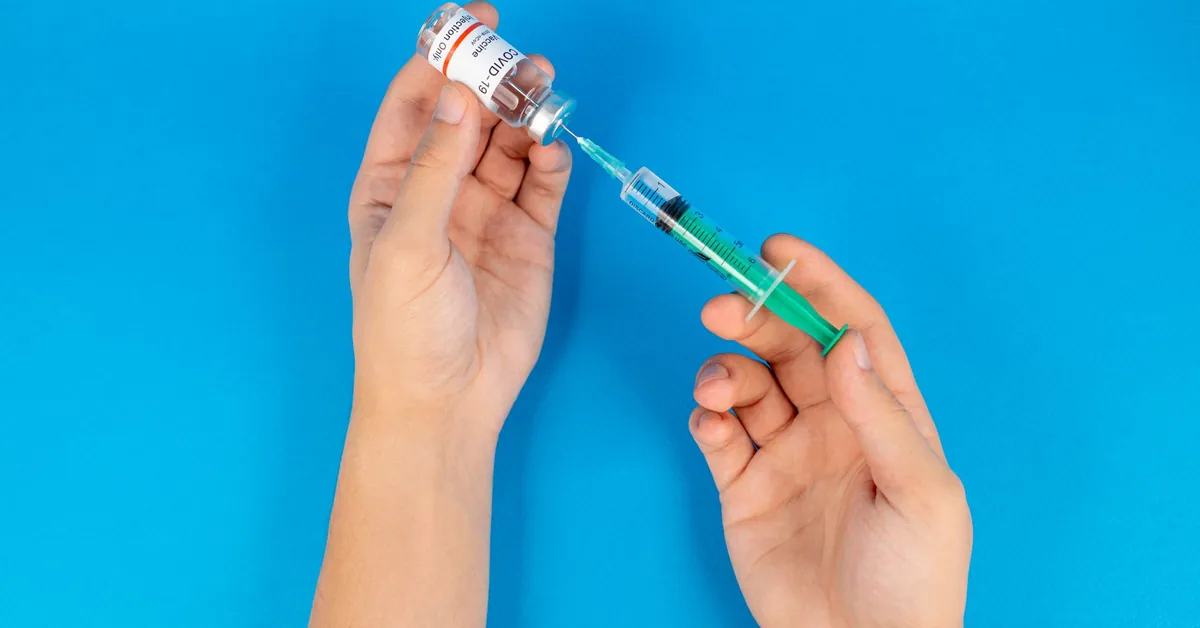

- The pair combines two ways of releasing growth hormone: CJC-1295 acts like GHRH, the hypothalamic signal, and ipamorelin acts on the ghrelin receptor.
- Combining the two classes can release more growth hormone than either alone: in a 1995 test, GHRH plus GHRP-6 released about three times the growth hormone of either in healthy children 1.
- Nobody has tested CJC-1295 with ipamorelin, in people or animals, for any outcome. The 'gold standard' label has no study behind it.
- Ipamorelin's human record is a dosing study in 40 men and a phase 2 surgery trial that found no benefit 4 5. CJC-1295's is two small 2006 studies 7 8.
- Neither is approved; 503A pharmacies cannot compound either, ipamorelin is also barred from 503B outsourcing, and WADA names both under S2.2.4 10 11.
Why they are sold together
Growth hormone release from the pituitary is controlled by two stimulating signals and one brake. GHRH, from the hypothalamus, is one signal; ghrelin, acting on the growth hormone secretagogue receptor, is the other; somatostatin is the brake. CJC-1295 is a long-acting GHRH analogue. Ipamorelin is a synthetic agonist of the ghrelin receptor. Selling them together rests on the idea that pressing both accelerators at once works better than pressing one.
That idea has real support at the level of the drug classes. In a 1995 study, seven healthy children given 1 µg/kg of GHRH, GHRP-6 or both released about as much growth hormone with either alone (areas of 1,029 and 1,221) and 3,542 with the pair 1. When GHRP-2 or GHRH was given for 7 to 30 days to healthy adults, the additive response to the pair became synergistic, with desensitisation depending on dose and frequency 2. The same 1995 study is also a warning: in children whose pituitary stalk was cut, neither peptide nor both together restored growth hormone 1.
What does not exist is any study of CJC-1295 with ipamorelin. Neither peptide in these class studies is either of the two sold in the stack, and no study, in people or animals, has measured what the pair does to growth hormone, body composition, sleep or recovery. Our interaction checker rates the pair complementary in theory and untested.
Ipamorelin: what is known
Ipamorelin is a pentapeptide (Aib-His-D-2-Nal-D-Phe-Lys-NH2) developed from the GHRP family. Its claim to fame comes from pigs: it released growth hormone about as potently as GHRP-6 and, unlike GHRP-6 and GHRP-2, did not raise ACTH or cortisol, even at doses more than 200 times its effective dose 3. That selectivity was shown in pigs, not people.
In people, a dose-escalation study in 40 healthy men gave single 15-minute intravenous infusions at five doses. Its kinetics were dose-proportional with a terminal half-life of 2 hours, and every dose produced a single pulse of growth hormone that peaked at about 40 minutes and then faded 4. Its one efficacy trial was not about growth hormone: in 114 adults after bowel surgery, intravenous ipamorelin (0.03 mg/kg twice daily for up to seven days) was well tolerated but did not significantly shorten the time to a first solid meal (25.3 against 32.6 hours, p = 0.15) 5. In rats it sped bone growth 6. It has never been approved.
CJC-1295: what is known
CJC-1295 in its original form carries an albumin-binding group that makes it last for days. In healthy adults one injection raised growth hormone for six days or more and IGF-1 for 9 to 11 days, with a half-life of 5.8 to 8.1 days 7, and a week after a dose growth hormone still came in normal pulses on a raised baseline 8. Much of what is sold as "CJC-1295 without DAC" is a different, shorter-acting peptide that those studies never tested, and a seized sample analysed in 2010 was exactly that 9. Our CJC-1295 guide covers the difference.
That distinction matters for the stack. A long-acting GHRH analogue given with a two-hour ghrelin agonist is a different pharmacological proposition from two short-acting peptides injected together, and neither version has been tested.
Dosing: what was studied and what circulates
| Source | What was given | Status |
|---|---|---|
| Ipamorelin dosing study | One 15-minute IV infusion, 4.21 to 140.45 nmol/kg | Studied, 40 healthy men 4 |
| Ipamorelin surgery trial | 0.03 mg/kg IV twice daily, up to 7 days | Studied, 114 adults; no benefit 5 |
| CJC-1295 trials | Single or weekly-to-fortnightly SC doses; best tolerated at 30 or 60 µg/kg | Studied, healthy adults 7 |
| Community stack protocols | Daily injections of both, often mixed in one syringe at bedtime | Not studied |
No study supplies a dose for the pair, a schedule, or evidence that timing injections to bedtime or an empty stomach changes anything for these two peptides. No stability data exist for the two mixed in one syringe. The calculator below converts milligrams to syringe units for a single vial; it cannot say whether a dose works.
Claims you will see, checked
- "It is the gold standard growth hormone stack." No study has tested the pair 1 2.
- "Visible changes by weeks 5 to 8." No study of the pair or of either peptide has measured body composition, skin, sleep or recovery in people.
- "Ipamorelin does not raise cortisol." Shown in pigs 3; not measured in the human studies above.
- "It will not suppress your own growth hormone." No study has measured this for the pair. With chronic GHRP-2 the response could desensitise, depending on dose and frequency 2.
- "It is legal through a compounding pharmacy." Not in the US: neither can be compounded under 503A, and ipamorelin cannot be compounded under 503B either 10.
Safety
There are no safety data for the pair. For ipamorelin, the surgery trial found it well tolerated over up to seven days, with adverse events in 87.5% of treated and 94.8% of placebo patients, as expected after bowel surgery 5. For CJC-1295, the 2006 trials reported no serious adverse reactions 7, while FDA's safety-risk page records serious adverse events associated with it, including increased heart rate and a systemic vasodilatory reaction 10. Raising growth hormone and IGF-1 for months, which is what the stack aims to do, has not been studied with either peptide.
Legal status in the US and in sport
United States. Neither peptide is approved. Both were placed in 503A Category 2 in 2023; both nominations were later withdrawn, and FDA's category list (updated May 14, 2026) names neither in any category, so 503A pharmacies cannot compound them. Ipamorelin has also been in 503B Category 2 (significant safety risks) since September 29, 2023, so outsourcing facilities cannot compound it either 10.
Sport. WADA's 2026 Prohibited List names both under S2.2.4, prohibited at all times, and the 2027 List keeps them unchanged 11 12. Doping laboratories can detect an ipamorelin fragment in urine after the parent peptide has disappeared from it 13.
Frequently asked questions
Has the CJC-1295 and ipamorelin combination been studied?
No. There is class evidence that a GHRH analogue plus a ghrelin-receptor agonist can release more growth hormone than either alone, from studies of GHRH with GHRP-6 or GHRP-2, but no study has given CJC-1295 with ipamorelin to people or animals.
Does ipamorelin raise cortisol?
In pigs it did not, unlike GHRP-6 and GHRP-2, even at very high doses. That has not been measured in the human studies of ipamorelin.
How long does ipamorelin last?
In 40 healthy men its terminal half-life was 2 hours, and each dose produced a single growth hormone pulse peaking at about 40 minutes.
Can I mix CJC-1295 and ipamorelin in one syringe?
No study has tested the two mixed together, so there are no stability or compatibility data for doing it.
Is the stack legal in the US?
Neither peptide is FDA-approved, 503A pharmacies cannot compound either, and ipamorelin is also barred from 503B outsourcing (as of September 28, 2026).
Are CJC-1295 and ipamorelin banned in sport?
Yes. WADA's 2026 and 2027 Prohibited Lists name both under S2.2.4, prohibited at all times.
Related on Grey Peptides
- CJC-1295 encyclopedia entry
- Ipamorelin encyclopedia entry
- GHRP-2 encyclopedia entry
- CJC-1295: the complete guide
- Interaction checker
- Regulatory tracker
- Reconstitution calculator
Sources
- Pombo, M. et al. (1995). Absence of growth hormone (GH) secretion after the administration of either GH-releasing hormone (GHRH), GH-releasing peptide (GHRP-6), or GHRH plus GHRP-6 in children with neonatal pituitary stalk transection. J Clin Endocrinol Metab, 80(11), 3180-4. PMID: 7593423
- Bowers, C. Y. & Granda-Ayala, R. (1996). GHRP-2, GHRH and SRIF interrelationships during chronic administration of GHRP-2 to humans. J Pediatr Endocrinol Metab, 9 Suppl 3, 261-70. PMID: 8887169
- Raun, K. et al. (1998). Ipamorelin, the first selective growth hormone secretagogue. Eur J Endocrinol, 139(5), 552-61. PMID: 9849822
- Gobburu, J. V. et al. (1999). Pharmacokinetic-pharmacodynamic modeling of ipamorelin, a growth hormone releasing peptide, in human volunteers. Pharm Res, 16(9), 1412-6. PMID: 10496658
- Beck, D. E. et al. (2014). Prospective, randomized, controlled, proof-of-concept study of the Ghrelin mimetic ipamorelin for the management of postoperative ileus in bowel resection patients. Int J Colorectal Dis, 29(12), 1527-34. PMID: 25331030
- Johansen, P. B. et al. (1999). Ipamorelin, a new growth-hormone-releasing peptide, induces longitudinal bone growth in rats. Growth Horm IGF Res, 9(2), 106-13. PMID: 10373343
- Teichman, S. L. et al. (2006). Prolonged stimulation of growth hormone (GH) and insulin-like growth factor I secretion by CJC-1295, a long-acting analog of GH-releasing hormone, in healthy adults. J Clin Endocrinol Metab, 91(3), 799-805. PMID: 16352683
- Ionescu, M. & Frohman, L. A. (2006). Pulsatile secretion of growth hormone (GH) persists during continuous stimulation by CJC-1295, a long-acting GH-releasing hormone analog. J Clin Endocrinol Metab, 91(12), 4792-7. PMID: 17018654
- Henninge, J. et al. (2010). Identification of CJC-1295, a growth-hormone-releasing peptide, in an unknown pharmaceutical preparation. Drug Test Anal, 2(11-12), 647-50. PMID: 21204297
- U.S. Food and Drug Administration. Certain Bulk Drug Substances for Use in Compounding that May Present Significant Safety Risks (current as of April 22, 2026), and Bulk Drug Substances Nominated for Use in Compounding Under Section 503A (updated May 14, 2026). FDA Category 2 page
- World Anti-Doping Agency. The 2026 Prohibited List, section S2.2.4 (read September 27, 2026). WADA 2026 List
- World Anti-Doping Agency. The 2027 Prohibited List, in force January 1, 2027 (read September 27, 2026). WADA 2027 List
- Semenistaya, E. et al. (2015). Determination of growth hormone releasing peptides metabolites in human urine after nasal administration of GHRP-1, GHRP-2, GHRP-6, Hexarelin, and Ipamorelin. Drug Test Anal, 7(10), 919-25. PMID: 25869809
This article is for education. It is not medical or legal advice, and it is not a guide to buying or using any peptide. Neither CJC-1295 nor ipamorelin is approved as a medicine, and both are prohibited in sport.
New guides and rule changes, by email
One short email when a peptide's legal status moves — an FDA or PCAC decision, a WADA list change, an enforcement action — plus new guides and tools. At most one a week, and none when nothing changes. The newsletter has not started sending yet: your first email will be its first issue.
We keep your email address and the page you signed up from, nothing else. How it works · Privacy · RSS instead