Ipamorelin: The Complete Guide, Checked Against the Evidence
Last updated: September 28, 2026 · 10 min read · By the Grey Peptides Editorial Board
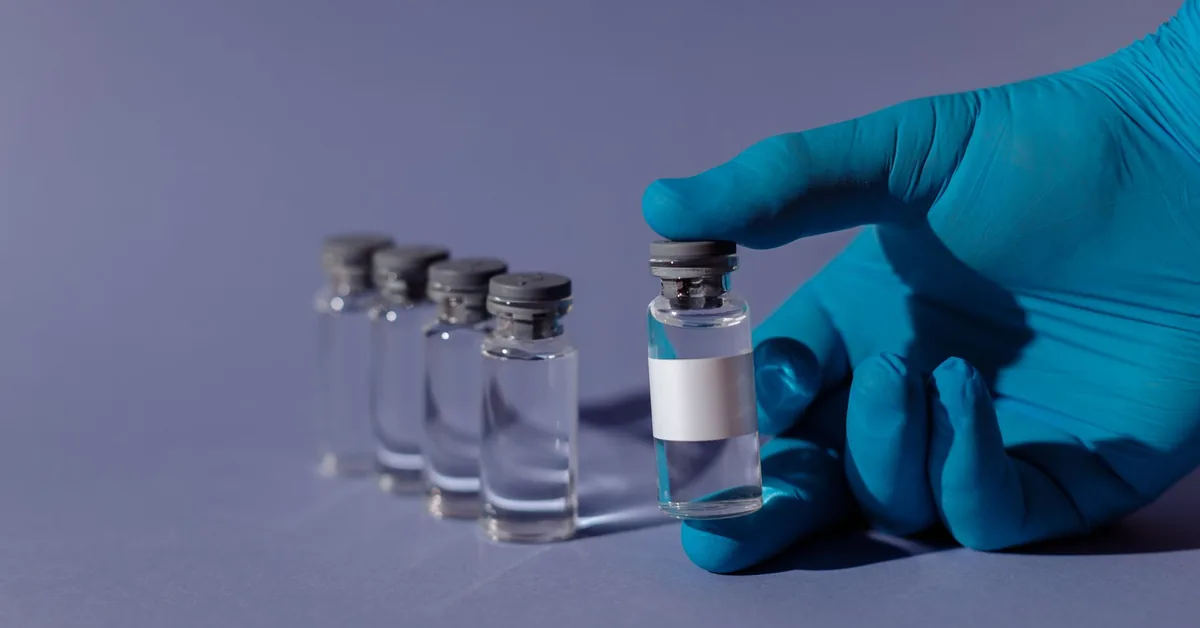

- Ipamorelin is a five-amino-acid agonist of the ghrelin receptor, found in the late 1990s by a Novo Nordisk chemistry programme that started from the older peptide GHRP-1 1.
- Its reputation for releasing growth hormone without raising cortisol comes from pigs: in the 1998 discovery study it left ACTH and cortisol unchanged even at more than 200 times its effective dose. We found no published human study that measured this 1.
- Two human studies make up its clinical record: single intravenous infusions in 40 healthy men, which gave a half-life of about 2 hours 2, and a phase 2 trial in 114 bowel-surgery patients that found no significant benefit 3.
- It was never approved. FDA placed ipamorelin acetate in Category 2 of its 503B compounding policy on September 29, 2023, and its 503A nomination was withdrawn 10.
- WADA names it under S2.2.4, prohibited at all times, and anti-doping laboratories detect it and a urinary fragment after the parent peptide is gone 13 4.
What ipamorelin is
Growth hormone release from the pituitary is driven by two signals. One is growth hormone-releasing hormone (GHRH), the target of sermorelin, CJC-1295 and tesamorelin. The other is the ghrelin receptor, which the stomach hormone ghrelin activates and which a family of synthetic peptides discovered in the 1980s activates too: GHRP-6, GHRP-2, hexarelin and, later, the swallowable non-peptide MK-677.
Ipamorelin belongs to the second family. It is a pentapeptide, Aib-His-D-2-Nal-D-Phe-Lys-NH2, and it came out of what its developers called a major chemistry programme at Novo Nordisk: the team worked through compounds lacking the central alanine-tryptophan pair of GHRP-1 and found that this one kept the growth hormone activity 1. It contains unnatural building blocks (Aib and D-2-naphthylalanine), which matters for how FDA later judged it.
The selectivity claim, and where it was measured
Ipamorelin is sold on one idea: that it releases growth hormone without the other hormones its relatives raise. That idea comes from a single paper, and it is worth reading what the paper did.
In rat pituitary cells, ipamorelin released growth hormone with potency and efficacy similar to GHRP-6, and in anaesthetised rats the two were comparable again. In conscious pigs it released growth hormone at an effective dose of 2.3 nmol/kg. The selectivity test was done in the pigs: GHRP-6 and GHRP-2 raised ACTH and cortisol, while ipamorelin did not raise either beyond what GHRH itself produced, even at more than 200 times its effective dose. None of the peptides changed prolactin, FSH, LH or TSH 1. The authors called it the first ghrelin-receptor agonist with a selectivity for growth hormone similar to GHRH, and a very interesting candidate for clinical development.
What the paper did not do is test people. The one published human dosing study measured ipamorelin's kinetics and the growth hormone response, not cortisol or prolactin 2, and the phase 2 surgical trial measured gut recovery 3. A reader who sees "no cortisol, no prolactin" on a product page is being given a pig result as a human one.
The human evidence
The dosing study. In 1999, 40 healthy men received a single 15-minute intravenous infusion at one of five doses, eight men per dose. Ipamorelin's kinetics were proportional to dose, with a terminal half-life of 2 hours. Each dose produced a single episode of growth hormone release that peaked at about 40 minutes (0.67 hours) and fell to negligible levels 2. This is the source of every "half-life of about 2 hours" figure, and it describes an intravenous infusion, not an injection under the skin.
The phase 2 trial. Ghrelin speeds the gut, so ipamorelin was tried for postoperative ileus, the paralysis of the bowel after abdominal surgery. In a multicentre, double-blind trial, 114 adults having small or large bowel resection received intravenous ipamorelin (0.03 mg/kg) or placebo twice daily for up to seven days. The median time to the first tolerated solid meal was 25.3 hours on ipamorelin and 32.6 hours on placebo, a difference that was not statistically significant (p = 0.15), and no secondary measure differed. Adverse events occurred in 87.5% of patients on ipamorelin and 94.8% on placebo; the authors called the drug well tolerated 3. No approval followed.
The detection study. Anti-doping chemists gave one volunteer a nasal dose of each of five growth hormone-releasing peptides and followed their urine for two days. Ipamorelin was heavily metabolised, and a fragment, ipamorelin (1-4) free acid, was still detectable after the parent peptide had disappeared; the method was validated for routine testing 4.
That is the whole of the human record we could find. No trial has given ipamorelin under the skin for weeks, and none has measured muscle, fat, sleep, recovery or ageing.
What the animal studies add
Most of what else is known comes from rats. In rats, ipamorelin was cleared five times more slowly than GHRP-6 and left mainly in urine, largely intact; given into the nose, about 20% was absorbed 5. Injected three times a day for 15 days into adult female rats, it made the tibia grow faster in a dose-dependent way, from 42 to 52 micrometres a day, without changing IGF-1 or bone turnover markers 6. Given by pump for 12 weeks, it increased bone mineral content, but through larger bones rather than denser ones 7. In rats given a glucocorticoid for three months it restored calf muscle strength and raised the rate of bone formation fourfold 8. After abdominal surgery in rats, a single intravenous dose shortened the time to the first bowel movement 9, the finding the failed human trial set out to reproduce.
These studies explain why the compound was developed. They do not show what it does in a person injecting it at home.
Safety
The human safety data are thin: single infusions in 40 men 2 and up to seven days of intravenous treatment in hospital, where adverse events were common in both groups and slightly less common on ipamorelin 3. There are no long-term human data at all.
FDA's reading of the literature is less reassuring. When it placed ipamorelin acetate in Category 2 of its 503B policy on September 29, 2023, as a substance that may present significant safety risks in compounding, it cited possible immune reactions from aggregation or peptide-related impurities, the complexity added by its unnatural amino acids, and a published report of serious adverse events, including death, when ipamorelin was given intravenously to improve gastric motility 10. In pancreatic tissue from normal and diabetic rats, ipamorelin increased insulin secretion 11; no human study has measured its effect on blood sugar.
Claims you will see, checked
- "It raises growth hormone with no cortisol or prolactin." Shown in pigs, at doses up to more than 200 times the effective dose; not measured in a published human study we found 1.
- "It is the cleanest and safest secretagogue." There is no human comparison of its safety with any other secretagogue, and FDA lists it as a significant compounding safety risk 10.
- "It is clinically proven." Its only efficacy trial in people, for postoperative ileus, missed its primary endpoint 3.
- "With CJC-1295 it produces more growth hormone than the sum of both." The two pathways can add up: in seven healthy children, GHRH and GHRP-6 together released about three times the growth hormone of either alone in a single intravenous test 12. No study has tested ipamorelin with CJC-1295, for growth hormone or for anything else.
- "It won't show up on a drug test." WADA names it, and laboratories detect it and a urinary fragment that outlasts it 13 4.
Dosing: what was studied and what circulates
| Source | What was given | Status |
|---|---|---|
| 1999 dosing study | One 15-minute intravenous infusion, 4.21 to 140.45 nmol/kg | Studied, in 40 healthy men 2 |
| 2014 phase 2 trial | 0.03 mg/kg intravenously twice daily for up to 7 days, after bowel surgery | Studied; no significant benefit 3 |
| Community protocols | Fixed microgram doses injected under the skin, often at bedtime, often alongside a GHRH analogue | Not studied |
No human study has tested any subcutaneous schedule, so there is no evidence-based dose for the way ipamorelin is actually used. Schedules that promise results by week four or by month three describe expectations, not trial results. If you are checking the arithmetic of a vial, the calculator below converts milligrams to syringe units; it cannot tell you what is in the vial or whether a dose works, and the COA Decoder explains what a certificate of analysis can and cannot show.
Legal status in the US and in sport
United States. Ipamorelin has never been approved by FDA. FDA placed ipamorelin acetate in Category 2 of its 503B interim policy on September 29, 2023, as a substance that may present significant safety risks; its 503A nomination was withdrawn, and it is not on the 503A category list updated May 14, 2026, so pharmacies have no route to compound it 10. It was not on either of the 2026 Pharmacy Compounding Advisory Committee agendas.
Sport. WADA's 2026 Prohibited List names ipamorelin under S2.2.4, among the growth hormone secretagogues and releasing peptides prohibited at all times, and the 2027 List keeps it there 13 14.
How it compares with other growth hormone peptides
| Compound | What it is | Evidence |
|---|---|---|
| Ipamorelin | Ghrelin-receptor agonist peptide; never approved | Medium |
| GHRP-6 | First-generation ghrelin-receptor peptide; never approved | Medium |
| MK-677 | Oral non-peptide ghrelin-receptor agonist; never approved | Medium |
| CJC-1295 | Long-acting GHRH analogue; never approved | Medium |
| Tesamorelin | GHRH analogue; FDA-approved for HIV-associated abdominal fat | High |
Ipamorelin is most often sold with CJC-1295. Our guide to the pair covers what is and is not known about combining them.
Frequently asked questions
Does ipamorelin raise cortisol or prolactin?
Not in pigs. In the 1998 discovery study it released growth hormone without raising ACTH or cortisol, even at more than 200 times the effective dose, while GHRP-6 and GHRP-2 raised both; none of them changed prolactin. The one published human dosing study measured only growth hormone, so the claim that it spares cortisol in people rests on the animal result.
Has ipamorelin been tested in humans?
Twice, as far as we could find: single intravenous infusions in 40 healthy men in 1999, and a 2014 phase 2 trial in 114 bowel-surgery patients that found no significant benefit over placebo. No trial has tested it under the skin, for weeks, or for body composition.
What is ipamorelin's half-life?
About 2 hours after an intravenous infusion in healthy men, from the 1999 dosing study. The growth hormone pulse it causes is shorter, peaking at about 40 minutes and then falling to negligible levels.
Can a pharmacy compound ipamorelin in the US?
No. FDA placed ipamorelin acetate in 503B Category 2 on September 29, 2023, and its 503A nomination was withdrawn, so pharmacies have no route to compound it (as of September 28, 2026).
Is ipamorelin banned in sport?
Yes. WADA's 2026 and 2027 Prohibited Lists name ipamorelin under S2.2.4, prohibited at all times.
Related on Grey Peptides
- Ipamorelin encyclopedia entry
- GHRP-6 encyclopedia entry
- MK-677 encyclopedia entry
- CJC-1295 and ipamorelin
- Regulatory tracker
- COA Decoder
- Reconstitution calculator
Sources
- Raun, K. et al. (1998). Ipamorelin, the first selective growth hormone secretagogue. Eur J Endocrinol, 139(5), 552-61. PMID: 9849822
- Gobburu, J. V. et al. (1999). Pharmacokinetic-pharmacodynamic modeling of ipamorelin, a growth hormone releasing peptide, in human volunteers. Pharm Res, 16(9), 1412-6. PMID: 10496658
- Beck, D. E. et al. (2014). Prospective, randomized, controlled, proof-of-concept study of the Ghrelin mimetic ipamorelin for the management of postoperative ileus in bowel resection patients. Int J Colorectal Dis, 29(12), 1527-34. PMID: 25331030
- Semenistaya, E. et al. (2015). Determination of growth hormone releasing peptides metabolites in human urine after nasal administration of GHRP-1, GHRP-2, GHRP-6, Hexarelin, and Ipamorelin. Drug Test Anal, 7(10), 919-25. PMID: 25869809
- Johansen, P. B. et al. (1998). Pharmacokinetic evaluation of ipamorelin and other peptidyl growth hormone secretagogues with emphasis on nasal absorption. Xenobiotica, 28(11), 1083-92. PMID: 9879640
- Johansen, P. B. et al. (1999). Ipamorelin, a new growth-hormone-releasing peptide, induces longitudinal bone growth in rats. Growth Horm IGF Res, 9(2), 106-13. PMID: 10373343
- Svensson, J. et al. (2000). The GH secretagogues ipamorelin and GH-releasing peptide-6 increase bone mineral content in adult female rats. J Endocrinol, 165(3), 569-77. PMID: 10828840
- Andersen, N. B. et al. (2001). The growth hormone secretagogue ipamorelin counteracts glucocorticoid-induced decrease in bone formation of adult rats. Growth Horm IGF Res, 11(5), 266-72. PMID: 11735244
- Venkova, K. et al. (2009). Efficacy of ipamorelin, a novel ghrelin mimetic, in a rodent model of postoperative ileus. J Pharmacol Exp Ther, 329(3), 1110-6. PMID: 19289567
- U.S. Food and Drug Administration. Certain Bulk Drug Substances for Use in Compounding that May Present Significant Safety Risks (ipamorelin acetate, 503B Category 2 since September 29, 2023; current as of April 22, 2026), and Bulk Drug Substances Nominated for Use in Compounding Under Section 503A (updated May 14, 2026). FDA Category 2 page
- Adeghate, E. & Ponery, A. S. (2004). Mechanism of ipamorelin-evoked insulin release from the pancreas of normal and diabetic rats. Neuro Endocrinol Lett, 25(6), 403-6. PMID: 15665799
- Pombo, M. et al. (1995). Absence of growth hormone (GH) secretion after the administration of either GH-releasing hormone (GHRH), GH-releasing peptide (GHRP-6), or GHRH plus GHRP-6 in children with neonatal pituitary stalk transection. J Clin Endocrinol Metab, 80(11), 3180-4. PMID: 7593423
- World Anti-Doping Agency. The 2026 Prohibited List, section S2.2.4 (read September 27, 2026). WADA 2026 List
- World Anti-Doping Agency. The 2027 Prohibited List, in force January 1, 2027 (read September 27, 2026). WADA 2027 List
This article is for education. It is not medical or legal advice, and it is not a guide to buying or using any peptide. Ipamorelin is not approved as a medicine anywhere and is prohibited in sport.
New guides and rule changes, by email
One short email when a peptide's legal status moves — an FDA or PCAC decision, a WADA list change, an enforcement action — plus new guides and tools. At most one a week, and none when nothing changes. The newsletter has not started sending yet: your first email will be its first issue.
We keep your email address and the page you signed up from, nothing else. How it works · Privacy · RSS instead