Oral vs Injectable vs Nasal BPC-157: What the Bioavailability Data Actually Say
Last updated: October 1, 2026 · 9 min read · By the Grey Peptides Editorial Board
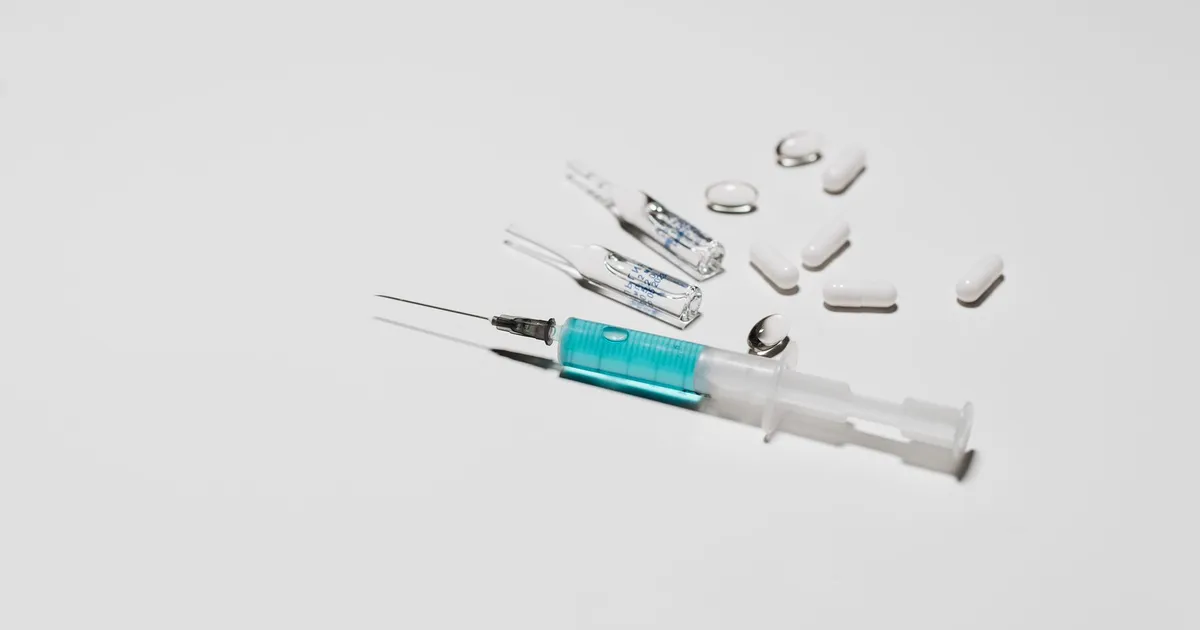

- No study has measured how much BPC-157 reaches a person's blood after swallowing it or spraying it into the nose. The one formal pharmacokinetic study, in rats and dogs, tested only intravenous and intramuscular doses 1.
- In that study BPC-157's half-life was under 30 minutes, and an intramuscular dose reached the blood at 14-19% in rats and 45-51% in dogs, a threefold gap between two species 1.
- The case for oral BPC-157 rests on rat experiments that put it in drinking water and measured healing, not blood levels, and on its developers' claim that it is stable in gastric juice 3 6. BPC-157 is graded Low on our evidence scale.
- No study has given BPC-157 into the nose. The one paper that turns up for nasal BPC-157 injected it into rats' abdomens 10.
The short answer
Which route works best for BPC-157 is one of the most asked questions about it, and the honest answer as of October 1, 2026 is that nobody has measured it in people. There is no human study of how much BPC-157 is absorbed by mouth, by nasal spray, or under the skin, the routes people actually use.
What exists is narrower. One formal pharmacokinetic study, in rats and dogs, measured intravenous and intramuscular doses 1. A two-person pilot gave BPC-157 intravenously at a private clinic 2. And a long series of rat experiments from the group that developed BPC-157 reports benefits when it is added to drinking water, without measuring what reached the blood 3 4.
None of that answers the question as it is usually asked. It does show where the claims in forums and on product pages come from, and how far they go beyond the data.
Two numbers that decide the answer
Bioavailability is the share of a dose that reaches the bloodstream intact. An intravenous dose is 100% by definition; every other route is measured against it. For peptides, oral bioavailability is usually very low, because the gut is built to break proteins into amino acids, which is why insulin, for example, is injected.
Half-life is how long it takes for the amount in the blood to fall by half. A short half-life means a dose is gone quickly, whichever route delivered it.
To compare oral, nasal and injected BPC-157 properly, someone would have to give each route and measure blood levels over time with a validated method, ideally in people. For BPC-157, that study has not been done for any route except intravenous, and in people only in two individuals 2.
The one formal pharmacokinetic study
In 2022 a team preparing BPC-157 for clinical development published its pharmacokinetics in rats and beagle dogs 1. It is the only study of its kind, and its results match the formal preclinical study in two species that the 2026 drug-development review relies on 5.
They gave BPC-157 intravenously once, and intramuscularly at three increasing doses and then repeatedly. In both species the elimination half-life of intact BPC-157 was under 30 minutes, and blood levels rose in proportion to dose. After an intramuscular injection, about 14-19% of the dose reached the blood in rats and 45-51% in dogs. Using radioactively labelled BPC-157, they found it was quickly broken into small peptide fragments and then single amino acids, which joined the body's normal amino acid pool and left in urine and bile 1.
Three things follow. First, the study did not test oral or nasal dosing at all, so it cannot be quoted for either. Second, the threefold difference in intramuscular bioavailability between rats and dogs is a warning against carrying any animal figure over to people. Third, a half-life under 30 minutes sits awkwardly beside the effects lasting hours or days that animal studies report; the 2026 review calls this gap a disconnect with real consequences for dosing 5.
Subcutaneous injection, the route most people use, was not tested either. It is often assumed to behave like intramuscular injection; that is an assumption, not a measurement.
Where the oral claims come from
The belief that BPC-157 works by mouth comes mostly from the research group that developed it. In many of their rat studies BPC-157 is given in two ways side by side: injected into the abdomen, or dissolved in the drinking water, typically at 10 micrograms per kilogram. In a study of injured myotendinous junctions, for example, rats drank water containing 0.16 micrograms per millilitre, about 12 millilitres a day, for up to six weeks 3. In a 2024 study of duodenocolic fistulas, rats received BPC-157 either in drinking water or by injection, and the authors report that all treated rats closed their defects 4.
Those are outcome studies. They measured healing, not blood levels, so they cannot say how much BPC-157 was absorbed, or whether what acted was intact BPC-157, a fragment, or an effect inside the gut itself. They also come almost entirely from one laboratory; independent replication of the oral results is thin.
The second pillar is stability. The developers describe BPC-157 as "native and stable in human gastric juice for more than 24 h" and treat that as one of its defining features 6. The independent 2026 review repeats that BPC-157 shows unusual stability in gastric juice and is active by oral, injected and topical routes, while stressing that its human pharmacokinetics remain critically undercharacterised 5. Surviving stomach acid is a precondition for oral absorption, not proof of it: the intestine still has to let an intact peptide through, and the formal study found BPC-157 is quickly broken down once it is in the body 1.
The fair summary is that oral BPC-157 has a plausible story and rat outcome data from one group, and no measurement of absorption in any species.
What exists in people
Very little, for any route. A 2025 review counted three pilot studies of BPC-157 in humans: injections into painful knees, treatment of interstitial cystitis, and an intravenous safety study 7. The 2026 drug-development review puts the total at fewer than 30 people across three uncontrolled pilots, none using a standardised pharmaceutical preparation 5.
The intravenous pilot is the only one that bears on pharmacokinetics. Two adults at a private Florida clinic received 10 milligrams and then 20 milligrams by infusion, with no reported changes in heart, liver, kidney, thyroid or glucose markers 2. The 2026 review notes that its preliminary data agree with the animal half-life of under 30 minutes 5. Two people, one route, at one clinic, is a starting point rather than a profile.
Older trials are sometimes cited for oral or rectal use. BPC-157's developers wrote in 2006 that it was safe in clinical trials for inflammatory bowel disease run by the Croatian company Pliva under the codes PL 10, PLD 116 and PL 14736 8. We searched PubMed as of October 1, 2026 for a report of those trials in people and found none; the papers indexed under PL 14736 are animal studies 9. Whatever those trials measured, their data are not available to check.
Nasal sprays
Nasal BPC-157 is sold, and it has no published basis at all. Searching PubMed as of October 1, 2026 for BPC-157 with intranasal or nasal administration returns one paper 9. In it, rats were given BPC-157 by injection into the abdomen before capsaicin, the chemical that makes chilli hot, was put into their noses; BPC-157 reduced the resulting inflammation in the nasal lining 10. The peptide was never put into the nose.
Nasal delivery can work for some small peptides, and the nasal route is used for approved drugs such as desmopressin. Whether it works for BPC-157 is simply unknown: there is no measurement of how much crosses the nasal lining, how much is swallowed, or what reaches the blood.
What capsule products can and cannot claim
Capsules, tablets and oral sprays of BPC-157 are sold as dietary supplements or as research chemicals. Neither label makes them lawful. The US Anti-Doping Agency's position is that there appears to be no legal basis for selling BPC-157 as a drug, food or dietary supplement 11. It is not an approved drug, and, as our article on prescribing BPC-157 explains, no US pharmacy has a lawful path to compound it as of October 1, 2026.
On absorption, a capsule label can claim nothing that has been measured, because nothing has. A product that says its BPC-157 is "highly bioavailable" by mouth is making a claim no study supports. Variants marketed as more stable orally, such as the arginate salt sold as PDA, have no studies of their own; our PDA article goes through that claim.
There is also the question of what is in the capsule. Products sold outside drug regulation are not tested to drug standards, and a capsule hides its contents better than a vial. A lab report for the batch, stating the amount of peptide per capsule, is the minimum; our COA decoder explains what to look for.
The routes, side by side
| Route | Measured in animals | Measured in people |
|---|---|---|
| Intravenous | Yes: half-life under 30 minutes in rats and dogs 1 | Two people, safety markers 2; half-life consistent with animals 5 |
| Intramuscular | Yes: 14-19% bioavailable in rats, 45-51% in dogs 1 | No |
| Subcutaneous | No formal measurement | No |
| Oral | Outcomes only, in drinking water; no blood levels 3 | No |
| Nasal | Never given by this route 10 | No |
The table is short because the evidence is. Anyone choosing a route for BPC-157 is choosing without data in people, and the animal figures that do exist vary threefold between two species.
What a real answer would take
The study that would settle the route question is not exotic. Healthy volunteers would receive BPC-157 by each route on separate days, with an intravenous dose as the reference, and blood would be sampled over the following hours. A validated assay would measure intact BPC-157 separately from its fragments, because the formal animal study found it is broken down quickly and a test that counts fragments as the peptide would overstate absorption 1. The product used would have to be a characterised pharmaceutical preparation, which the 2026 review notes does not yet exist for BPC-157 5.
Until something like that is published, claims that one route is several times better than another, or that a capsule matches an injection, are guesses presented as facts.
In tested sport
The route makes no difference to anti-doping rules. WADA names BPC-157 under S0 of its Prohibited List, for substances with no approval for human therapeutic use, at all times and by any route 12. A capsule is no safer for an athlete than an injection.
Frequently asked questions
Does oral BPC-157 work?
In rats, studies from the group that developed it report benefits when BPC-157 is put in drinking water, but they measured healing, not blood levels. No study has measured oral absorption in any species, and none has tested oral BPC-157 in people.
Is BPC-157 better injected or taken by mouth?
Nobody knows. The only formal pharmacokinetic study tested intravenous and intramuscular doses in rats and dogs and had no oral arm. No human study compares routes.
Do BPC-157 nasal sprays work?
There is no evidence either way. No published study has given BPC-157 into the nose; the one nasal paper injected it into rats' abdomens.
How long does BPC-157 last in the body?
In rats and dogs, its half-life was under 30 minutes after intravenous and intramuscular doses, and a two-person human pilot was consistent with that. It is broken into small fragments and amino acids.
Are BPC-157 capsules legal?
The US Anti-Doping Agency says there appears to be no legal basis for selling BPC-157 as a drug, food or dietary supplement. It is not an approved drug, and it is prohibited in sport by any route.
Related on Grey Peptides
- BPC-157 encyclopedia entry
- Pentadeca arginate (PDA)
- Can a doctor prescribe BPC-157 in 2026?
- PCAC July 2026 hub
- BPC-157 complete guide
Sources
- He, L. et al. (2022). Pharmacokinetics, distribution, metabolism, and excretion of body-protective compound 157, a potential drug for treating various wounds, in rats and dogs. Front Pharmacol. PMID: 36588717
- Lee, E. et al. (2025). Safety of Intravenous Infusion of BPC157 in Humans: A Pilot Study. Altern Ther Health Med. PMID: 40131143
- Japjec, M. et al. (2021). Stable Gastric Pentadecapeptide BPC 157 as a Therapy for the Disable Myotendinous Junctions in Rats. Biomedicines. PMID: 34829776
- Vukusic, D. et al. (2024). Duodenocolic fistula healing by pentadecapeptide BPC 157 in rats. A cytoprotection viewpoint. J Physiol Pharmacol. PMID: 38583442
- Mateescu, D. M. et al. (2026). BPC-157 as an Investigational Peptide Therapeutic: Biopharmaceutical Challenges, Formulation Strategies, and Translational Development Barriers. Pharmaceutics. PMID: 42198317
- Sikiric, P. et al. (2024). New studies with stable gastric pentadecapeptide protecting gastrointestinal tract. Significance of counteraction of vascular and multiorgan failure of occlusion/occlusion-like syndrome in cytoprotection/organoprotection. Inflammopharmacology. PMID: 38980576
- McGuire, F. P. et al. (2025). Regeneration or Risk? A Narrative Review of BPC-157 for Musculoskeletal Healing. Curr Rev Musculoskelet Med. PMID: 40789979
- Sikiric, P. et al. (2006). Stable gastric pentadecapeptide BPC 157 in trials for inflammatory bowel disease (PL-10, PLD-116, PL 14736, Pliva, Croatia). Full and distended stomach, and vascular response. Inflammopharmacology. PMID: 17186181
- PubMed searches run October 1, 2026: BPC-157 with intranasal or nasal administration (one record, the 1997 rat study listed here); BPC-157 with pharmacokinetics, bioavailability or ADME (six records, one primary study); PL 14736 with volunteers, healthy subjects, enema or colitis (no human trial report). PubMed
- Kalogjera, L. et al. (1997). Dose-dependent protective effect of BPC 157 on capsaicin-induced rhinitis in rats. Eur Arch Otorhinolaryngol. PMID: 9065615
- U.S. Anti-Doping Agency. BPC-157: Experimental Peptide Prohibited. Read October 1, 2026. USADA
- World Anti-Doping Agency. The 2026 Prohibited List, in force January 1, 2026: S0, non-approved substances, which names BPC-157. WADA
Educational information, not medical advice. Each dose in this guide names its source, an approved label or a published study. None is a recommendation for you. An unapproved compound has no established safe or effective human dose, and products sold for “research use only” are not made or tested for people. Talk to a doctor before acting on anything on this site, including before you start, stop or change any medicine or dose. This article describes what has and has not been measured; it is not medical advice.
New guides and rule changes, by email
One short email when a peptide's legal status moves — an FDA or PCAC decision, a WADA list change, an enforcement action — plus new guides and tools. At most one a week, and none when nothing changes. The newsletter has not started sending yet: your first email will be its first issue.
We keep your email address and the page you signed up from, nothing else. How it works · Privacy · RSS instead