Epitalon and telomeres: what the studies actually measured
Last updated: October 2, 2026 · 4 min read · By the Grey Peptides Editorial Board
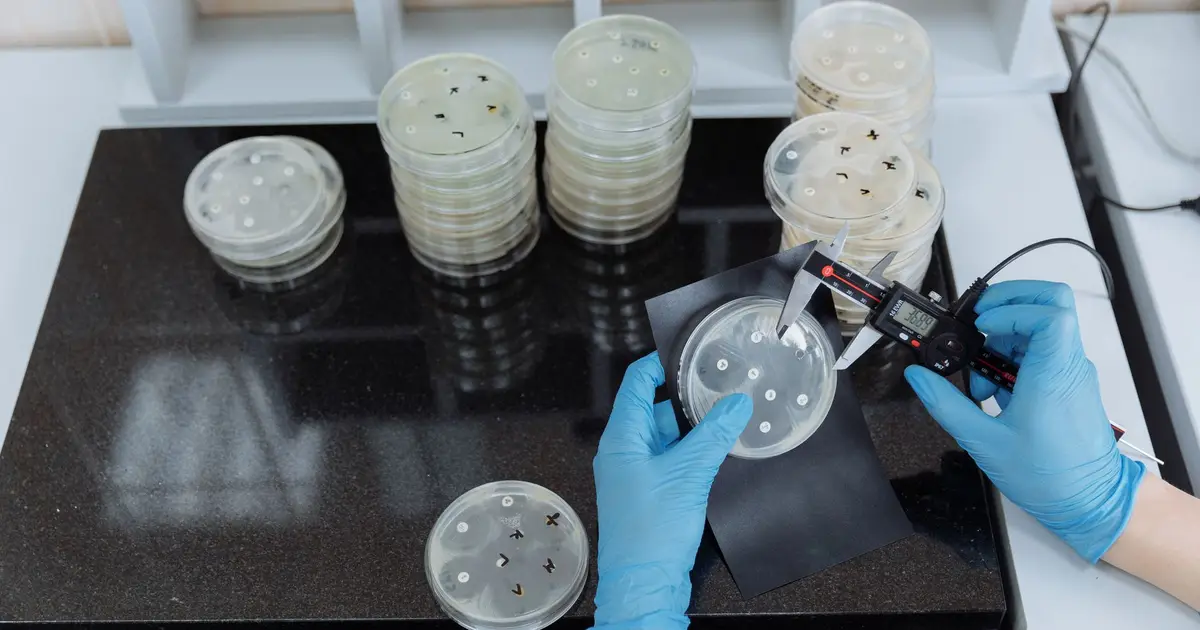

- Every telomere result for epitalon comes from cells in a dish. No published study has measured telomeres in people who took it.
- The animal results are real but modest and come almost entirely from the group that developed it; the biggest lifespan and human figures often quoted come from epithalamin, a cattle pineal extract, not the synthetic peptide sold today.
- FDA reviewers found no human safety data and no genotoxicity studies. The compounding committee recommended it anyway in July 2026; at our last check the FDA had not acted, so pharmacies still could not compound it.
A four-amino-acid peptide and a big claim
Epitalon Low, also spelled epithalon, is a tetrapeptide: alanine, glutamic acid, aspartic acid and glycine, AEDG 1. It came out of Vladimir Khavinson's group in St. Petersburg, which made it from the amino-acid composition of epithalamin, an extract of cattle pineal gland; a 2025 review of a quarter-century of research describes that history and is candid that it is uncertain how much of the work translates 2. It is sold online as an anti-ageing peptide on one claim above all: that it switches on telomerase and lengthens telomeres, the protective caps on chromosomes that shorten as cells divide.
What the cell studies measured
The founding result, in 2003, was in human fetal fibroblasts that do not normally make telomerase. Adding epitalon to the culture switched on the gene for telomerase's catalytic subunit, produced measurable telomerase activity and lengthened telomeres 3. A 2025 study repeated the idea in normal human epithelial cells and fibroblasts and found dose-dependent telomere lengthening through more hTERT and telomerase. It also treated two breast-cancer cell lines, and their telomeres grew too, through a telomerase-independent route called ALT 4. In blood lymphocytes from 11 men, relative telomere length changed significantly in 7: it rose in five, by 18% to 156%, and fell in two 5.
These are real measurements, but of cells in a dish exposed directly to the peptide. They do not show what happens to telomeres in a person who injects it, and the breast-cancer result is a reason for caution as much as for interest: lengthening telomeres is one of the ways cancer cells keep dividing.
What the animal studies measured
In the longest mouse study, 54 female mice received epitalon five days a month from three months of age until death and 54 received saline. Average lifespan did not change; the longest-lived 10% lived 13.3% longer and maximum lifespan rose 12.3% 6. In mice bred to develop HER-2/neu breast cancer, injections five times a week raised average lifespan by 13.5% and made tumour-free mice 3.7 times more common 7, and in another strain fewer treated mice developed malignant tumours 8. These studies come from the developer's group and its collaborators, and none measured telomeres in the animals as the outcome.
What was measured in people, and in what
The human evidence is thinner than the marketing suggests, and much of it is about a different product. The largest human study, a 12-year randomised trial in elderly heart patients reporting 28% fewer deaths, used epithalamin, the pineal extract, not synthetic epitalon 9. Lifespan gains of 11% to 31% across fruit flies, mice and rats also come from the extract 10. For the synthetic peptide, one paper reports rats with inherited retinal degeneration and then a positive effect in 90% of treated patients, with no patient count, no comparison group and no detail 11.
So the claim that epitalon lengthens telomeres in people rests on no measurement in people at all. It is an extrapolation from cell cultures.
What FDA reviewers found, and the vote
When the FDA's compounding committee considered epitalon in July 2026, agency staff found no human safety data, a carcinogenicity record consisting of three similar mouse studies of spontaneous tumours from one group, and no genotoxicity studies, and they treated claims that epitalon prevents cancer as marketing rather than findings 12. The committee voted on July 24, 2026 to recommend adding it to the 503A list anyway; published reports put the tally at 7 to 4 or 7 to 5 with one abstention 13. At our last check on September 25, 2026, the FDA had not acted on the vote, so pharmacies still could not compound epitalon 13. Our guide to peptides and cancer sets the telomerase question beside the other cancer worries.
Frequently asked questions
Does epitalon lengthen telomeres?
In cultured human cells, yes: it switched on telomerase and lengthened telomeres in fibroblasts and other cells. No published study has measured telomeres in people who took it.
What are epitalon's proven benefits in humans?
None from controlled trials of the synthetic peptide. The 12-year study reporting fewer deaths used epithalamin, a cattle pineal extract, and the one human report on epitalon itself gives no patient numbers or comparison group.
Is epitalon a cancer risk?
Unknown. It lengthened telomeres in two breast-cancer cell lines, and FDA reviewers found no genotoxicity studies and only three similar mouse tumour studies from one group.
Can pharmacies compound epitalon?
Not as of September 25, 2026. The compounding committee recommended it in July 2026, but the FDA had not acted on the vote.
Related on Grey Peptides
- Khavinson bioregulators: a critical guide
- Epithalon (epitalon)
- Peptides and cancer
- The PCAC votes, July 2026
Sources
- Grey Peptides dataset, epithalon record (sequence AEDG; status); read October 2, 2026.
- Araj, S. K., et al. (2025). Overview of Epitalon-Highly Bioactive Pineal Tetrapeptide with Promising Properties. Int J Mol Sci, 26(6). PMID: 40141333
- Khavinson, V. K. h., et al. (2003). Epithalon peptide induces telomerase activity and telomere elongation in human somatic cells. Bull Exp Biol Med, 135(6), 590-2. PMID: 12937682
- Al-Dulaimi, S., et al. (2025). Epitalon increases telomere length in human cell lines through telomerase upregulation or ALT activity. Biogerontology, 26(5), 178. PMID: 40908429
- Khavinson, V. K., et al. (2019). Effect of Peptide AEDG on Telomere Length and Mitotic Index of PHA-Stimulated Human Blood Lymphocytes. Bull Exp Biol Med, 168(1), 141-144. PMID: 31761987
- Anisimov, V. N., et al. (2003). Effect of Epitalon on biomarkers of aging, life span and spontaneous tumor incidence in female Swiss-derived SHR mice. Biogerontology, 4(4), 193-202. PMID: 14501183
- Anisimov, V. N., et al. (2002). Epithalon decelerates aging and suppresses development of breast adenocarcinomas in transgenic her-2/neu mice. Bull Exp Biol Med, 134(2), 187-90. PMID: 12459848
- Kossoy, G., et al. (2006). Effect of the synthetic pineal peptide epitalon on spontaneous carcinogenesis in female C3H/He mice. In Vivo, 20(2), 253-7. PMID: 16634527
- Korkushko, O. V., et al. (2006). Geroprotective effect of epithalamine (pineal gland peptide preparation) in elderly subjects with accelerated aging. Bull Exp Biol Med, 142(3), 356-9. PMID: 17426848
- Anisimov, V. N., et al. (1998). Pineal peptide preparation epithalamin increases the lifespan of fruit flies, mice and rats. Mech Ageing Dev, 103(2), 123-32. PMID: 9701766
- Khavinson, V., et al. (2002). Pineal-regulating tetrapeptide epitalon improves eye retina condition in retinitis pigmentosa. Neuro Endocrinol Lett, 23(4), 365-8. PMID: 12195242
- US Food and Drug Administration (2026). Pharmacy Compounding Advisory Committee meeting, July 23-24, 2026: briefing document for epitalon; read October 2, 2026. FDA
- US FDA. Pharmacy Compounding Advisory Committee, July 23-24, 2026: votes as published in reports of the meeting; status as of September 25, 2026. FDA
Educational information, not medical advice. Each dose in this guide names its source, an approved label or a published study. None is a recommendation for you. An unapproved compound has no established safe or effective human dose, and products sold for “research use only” are not made or tested for people. Talk to a doctor before acting on anything on this site, including before you start, stop or change any medicine or dose.
New guides and rule changes, by email
One short email when a peptide's legal status moves — an FDA or PCAC decision, a WADA list change, an enforcement action — plus new guides and tools. At most one a week, and none when nothing changes. The newsletter has not started sending yet: your first email will be its first issue.
We keep your email address and the page you signed up from, nothing else. How it works · Privacy · RSS instead