Icotrokinra (Icotyde): how a pill blocks IL-23 in psoriasis
Last updated: October 3, 2026 · 9 min read · By the Grey Peptides Editorial Board
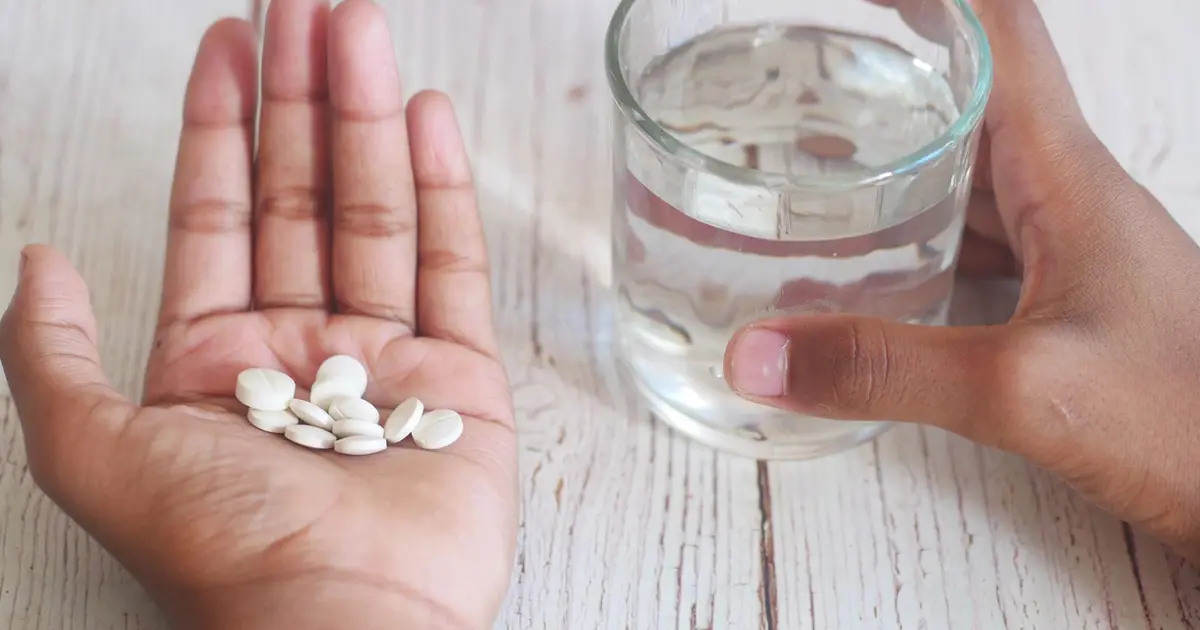

- Icotrokinra is a 13-amino-acid peptide taken as a daily tablet that blocks the receptor for interleukin-23, a key driver of psoriasis. Until its approval in March 2026, drugs aimed at that pathway were all injected antibodies.
- In phase 3 trials about two thirds of patients had clear or almost clear skin at week 16, against about one in ten on placebo, and it beat the oral drug deucravacitinib head to head.
- Very little of each dose is absorbed, which is why the label is strict: 200 mg on waking, on an empty stomach with water, then 30 minutes before food. Food cut exposure by almost half.
What icotrokinra is
Psoriasis is an immune disease of the skin, and one of its main drivers is interleukin-23 (IL-23), a signalling protein that keeps a particular group of inflammatory immune cells active. Blocking IL-23 is one of the most effective treatments known, but until 2026 every drug that did it was an antibody, a large protein injected under the skin every few weeks or months, because antibodies are digested if swallowed.
Icotrokinra takes a different route. It is a 13-amino-acid peptide, engineered to resist digestion, that binds the IL-23 receptor itself rather than the IL-23 protein 1. In laboratory studies it bound the receptor with a dissociation constant of 7.1 picomolar, extraordinarily tightly, and blocked IL-23 signalling in human cells without affecting signalling by the related cytokine IL-12 2. FDA approved it as Icotyde on March 17, 2026 for moderate-to-severe plaque psoriasis in adults and in children aged 12 or older who weigh at least 40 kg and are candidates for systemic therapy or phototherapy, and the EU authorised it on September 18, 2026 1 3.
Why IL-23 is the target
Psoriasis plaques form when immune cells in the skin keep sending inflammatory signals that make skin cells multiply far faster than normal. Researchers traced much of that signalling to a chain that starts with IL-23, which sustains a group of T cells producing IL-17 and related cytokines. Cut the chain at IL-23 and the inflammation, and the plaques, can settle for long periods.
Drugs aimed at this chain have transformed psoriasis treatment over the past two decades, but they have always been injections. For patients that means needles, refrigeration and visits; for health systems it means expensive biologics. A pill that blocks the same pathway removes some of those barriers, which is why icotrokinra's approval drew so much attention. It also blocks the receptor rather than the cytokine, an approach that had not reached the clinic before for this pathway 2.
How a peptide survives being swallowed
The hard part of an oral peptide is getting any of it into the body. Icotrokinra's developers report an oral bioavailability of only 0.1% to 0.3% in animals, without any absorption enhancer, yet enough reached the bloodstream to block IL-23 signalling throughout the body 4. The molecule was stable in gastrointestinal fluids, plasma and liver cells, distributed freely to skin, joints and gut tissue, and was mostly excreted unchanged in faeces 4. Extreme potency compensates for poor absorption: a drug that binds its target at picomolar concentrations needs only a tiny fraction to arrive.
That is a different strategy from oral semaglutide, which pairs the peptide with an absorption enhancer, and from orforglipron, approved two weeks after icotrokinra, which abandons the peptide altogether for a small molecule 1. Our guide to what makes a peptide a peptide explains why most peptides have to be injected. Icotrokinra shows that engineering stability and potency into the peptide itself can work.
What the trials showed
Icotrokinra moved from a phase 2 trial to five phase 3 results in about two years. The headline results at week 16 are below; 'IGA 0/1' means a dermatologist rated the skin clear or almost clear, and 'PASI 90' means at least a 90% improvement in a standard severity score 5 6 7 8:
| Trial | Who | Result at week 16 |
|---|---|---|
| FRONTIER-1 (phase 2b) | 255 adults | PASI 75 in 37% to 79% across doses vs 9% on placebo, rising with dose |
| ICONIC-LEAD (phase 3) | 684 adults and adolescents | Clear or almost clear skin (IGA 0/1) 65% vs 8%; PASI 90 50% vs 4%; completely clear (IGA 0) 33% vs 1% |
| ICONIC-TOTAL (phase 3) | 311 with scalp, genital or hand and foot psoriasis | IGA 0/1 56.7% vs 5.8%; scalp 65.9% vs 10.6%; genital 76.5% vs 21.4%; hand and foot 41.7% vs 26.1% (not significant) |
| ICONIC-ADVANCE 1 (phase 3) | 774 adults, with a deucravacitinib arm | IGA 0/1 68% vs 11% on placebo; PASI 90 55% vs 4% |
| ICONIC-ADVANCE 2 (phase 3) | 731 adults, with a deucravacitinib arm | IGA 0/1 70% vs 9% on placebo; PASI 90 57% vs 1% |
Three points stand out. Responses were dose-dependent in phase 2, which supported the dose chosen 5. The phase 3 programme included adolescents 6 and people with psoriasis on the scalp and genitals, places that are hard to treat and matter a great deal to patients, though the hand-and-foot result missed significance 7. And in ICONIC-ADVANCE, icotrokinra was superior not only to placebo but to deucravacitinib, an approved oral psoriasis drug, with fewer adverse events by week 24 (57% against 65%) 8. A 2026 meta-analysis of the five randomised trials found icotrokinra about seven times as likely as placebo to produce clear or almost clear skin at week 16, with no heterogeneity between trials 9.
The phase 2 trial that made the case
The first large test, FRONTIER-1, enrolled 255 adults with a mean severity score of 19.1 and psoriasis for an average of 18 years; 78% had already tried systemic treatment. Across five dose groups, the share reaching a 75% improvement in severity at week 16 rose steadily with dose, from 37% to 79%, against 9% on placebo, and adverse events were similar to placebo 5. That clean dose-response, in a population that had already been through other treatments, is what justified the large phase 3 programme that followed.
Does it last?
Psoriasis is lifelong, so durability matters. In the phase 2 extension, response rates were maintained from week 16 to week 52, with 74% clear or almost clear at a year on the highest dose 10. In a one-year durability analysis reported in 2026, about 70% to 75% of patients randomised to icotrokinra had clear or almost clear skin during weeks 24 to 52, and 85% to 90% of week-16 responders kept their response at week 52 1. Longer data will be needed, and injected IL-23 antibodies have years of follow-up that icotrokinra does not yet have.
Safety and the label
Across the trials, adverse event rates were similar to placebo; the most common were nasopharyngitis and upper respiratory infections 6 8. A pooled safety analysis through one year, covering 1,840 participant-years, found adverse events, serious adverse events, infections and discontinuations comparable to placebo through week 16 1. The label carries three warnings: infections, tuberculosis and immunizations. It advises considering a tuberculosis test before treatment and completing age-appropriate vaccinations first, because blocking IL-23 dampens part of the immune response 3.
The dosing instructions follow from the absorption problem. The label dose is 200 mg once daily, taken on waking on an empty stomach with water, waiting at least 30 minutes before eating; taking it with food cut total exposure by 43% and peak concentration by 59%, and steady state is reached in about three days 3. The tablet can be dispersed in water for people who cannot swallow it 3. These instructions come from the label and are reproduced here for information, not as advice.
What happens after the tablet
The label describes a drug that behaves predictably once it is absorbed. After a 200 mg dose, blood levels peak at a median of about two hours, though anywhere from 15 minutes to 8 hours; exposure rises in proportion to dose across a wide range; and with daily dosing, levels build up by up to 1.5- to 1.6-fold and reach a steady state in about three days 3. Its effective half-life is about 12 hours 1. Its pharmacokinetics were similar in healthy volunteers and in people with psoriasis 3.
Because it is a peptide rather than a conventional small molecule, it does not appear to tangle with the liver enzymes and transporters behind many drug interactions: in the developers' studies it was neither a substrate nor an inhibitor of the main cytochrome P450 enzymes or drug transporters 4. That is a practical advantage for people with psoriasis, who often take medicines for related conditions such as heart disease, diabetes or depression, though any combination should still be checked with a pharmacist.
A pill or an injection?
For patients, the choice between icotrokinra and an injected IL-23 or IL-17 drug will turn on more than skin clearance. A daily tablet avoids needles but has to be taken every morning, on an empty stomach, half an hour before food, every day; missing doses or taking it with breakfast lowers exposure 3. Injected antibodies are given every few weeks or months, which some patients find easier to keep up. The antibodies also have many years of long-term safety data, while icotrokinra's pooled safety record so far runs to about a year 1.
No randomised trial has yet compared icotrokinra directly with an injected IL-23 antibody, so claims that it matches them rest on comparisons across separate trials, which differ in their patients and methods. Its direct comparisons so far are with placebo and with deucravacitinib 8. Which treatment suits a given patient is a decision for them and their dermatologist, weighing response, convenience, cost and other health conditions.
What it means for oral peptides
Icotrokinra matters beyond psoriasis because it shows that a peptide can be engineered to work as an ordinary daily tablet against a target previously reachable only by injected antibodies. It was followed in July 2026 by enlicitide, an oral macrocyclic peptide that blocks PCSK9 to lower cholesterol, another target previously served by injections 1. Together they mark a shift that our 2026 pipeline overview describes in more detail. Icotrokinra is also being tested in psoriatic arthritis and inflammatory bowel disease 1.
None of this applies to research peptides sold online. Icotrokinra works as a pill because of years of engineering and a manufacturing process regulators have reviewed; a research peptide in a capsule is no more likely to survive the gut than one in a vial is to be what its label claims.
Frequently asked questions
What is Icotyde?
Icotyde is the brand name for icotrokinra, a once-daily oral peptide that blocks the interleukin-23 receptor. FDA approved it on March 17, 2026 for moderate-to-severe plaque psoriasis in adults and children 12 and older weighing at least 40 kg.
How well does icotrokinra work?
In phase 3 trials, 65% to 70% of patients had clear or almost clear skin at week 16, against 8% to 11% on placebo, and it was superior to deucravacitinib in head-to-head trials.
How do you take Icotyde?
The label says 200 mg once daily on waking, on an empty stomach with water, waiting at least 30 minutes before eating, because food reduces absorption.
Is icotrokinra a biologic?
No. It is a 13-amino-acid peptide, far smaller than the antibodies that block IL-23, and it is taken by mouth rather than injected.
Related on Grey Peptides
Sources
- Grey Peptides encyclopedia entries for icotrokinra (approval details, NDA 220149; EU authorisation; durability and safety cards), enlicitide, oral semaglutide and orforglipron. Read October 3, 2026.
- Fourie, A. M., et al. (2024). JNJ-77242113, a highly potent, selective peptide targeting the IL-23 receptor, provides robust IL-23 pathway inhibition upon oral dosing in rats and humans. Sci Rep, 14(1), 17515. PMID: 39080319
- Janssen Biotech. Icotyde (icotrokinra) tablets, US prescribing information, sections 1, 2, 5 and 12.3 (DailyMed version 2, effective March 17, 2026). Read October 3, 2026.
- Knight, B., et al. (2025). Translational Pharmacokinetics of Icotrokinra, a Targeted Oral Peptide that Selectively Blocks Interleukin-23 Receptor and Inhibits Signaling. Dermatol Ther (Heidelb), 15(9), 2495-2520. PMID: 40629250
- Bissonnette, R., et al. (2024). An Oral Interleukin-23-Receptor Antagonist Peptide for Plaque Psoriasis. N Engl J Med, 390(6), 510-521. PMID: 38324484
- Bissonnette, R., et al. (2025). Oral Icotrokinra for Plaque Psoriasis in Adults and Adolescents. N Engl J Med, 393(18), 1784-1795. PMID: 41191940
- Gooderham, M., et al. (2025). Targeted Oral Peptide Icotrokinra for Psoriasis Involving High-Impact Sites. NEJM Evid, 4(12), EVIDoa2500155. PMID: 41191932
- Gold, L. S., et al. (2025). Once-daily oral icotrokinra versus placebo and once-daily oral deucravacitinib in participants with moderate-to-severe plaque psoriasis (ICONIC-ADVANCE 1 & 2): two phase 3, randomised, placebo-controlled and active-comparator-controlled trials. Lancet, 406(10510), 1363-1374. PMID: 40976249
- Advani, S., et al. (2026). Efficacy and Safety of Icotrokinra for Plaque Psoriasis: A Systematic Review and Meta-analysis. Clin Exp Dermatol, . PMID: 42308521
- Ferris, L. K., et al. (2025). FRONTIER-2: A phase 2b, long-term extension, dose-ranging study of oral JNJ-77242113 for the treatment of moderate-to-severe plaque psoriasis. J Am Acad Dermatol, 92(3), 495-502. PMID: 39549848
Educational information, not medical advice. Each dose in this guide names its source, an approved label or a published study. None is a recommendation for you. An unapproved compound has no established safe or effective human dose, and products sold for “research use only” are not made or tested for people. Talk to a doctor before acting on anything on this site, including before you start, stop or change any medicine or dose.
New guides and rule changes, by email
One short email when a peptide's legal status moves — an FDA or PCAC decision, a WADA list change, an enforcement action — plus new guides and tools. At most one a week, and none when nothing changes. The newsletter has not started sending yet: your first email will be its first issue.
We keep your email address and the page you signed up from, nothing else. How it works · Privacy · RSS instead