Insulin Syringe Units Explained: U-100, U-40 and Why “10 Units” Is Not a Dose
Last updated: September 28, 2026 · 12 min read · By the Grey Peptides Editorial Board
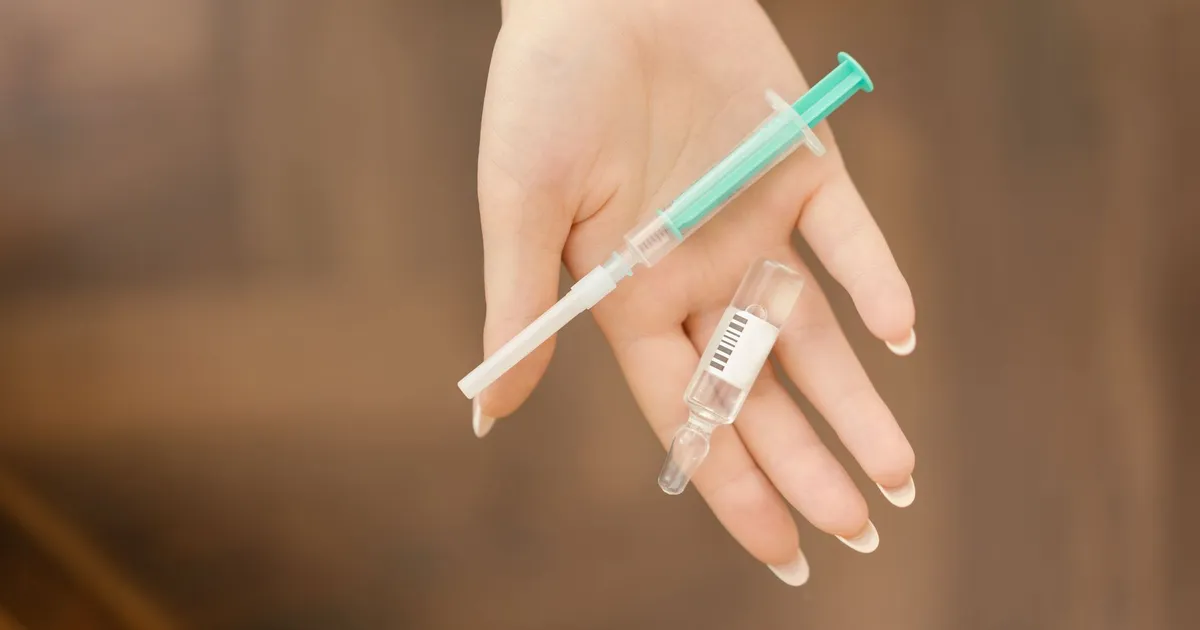

- On a U-100 insulin syringe a “unit” is a volume mark, 0.01 mL. It says nothing about how much drug is in that volume.
- The same 10 units holds 0.5 mg of peptide at 5 mg/mL, 0.25 mg at 2.5 mg/mL and 0.2 mg at 2 mg/mL, so a dose written only in units is incomplete.
- To convert: units = dose in mg ÷ concentration in mg/mL × 100. The concentration is the mg in the vial divided by the mL of water added.
- FDA has documented patients drawing 5 to 20 times their intended dose of compounded semaglutide, often by confusing units, milliliters and milligrams.
The short answer
The numbers printed on an insulin syringe are volume marks. On the common U-100 syringe, each unit line is 0.01 mL, so 10 units is 0.1 mL and the full 1 mL syringe holds 100 units. The syringe has no idea what is inside it. Ten units of a strong solution and ten units of a weak one look identical in the barrel and deliver completely different doses.
Insulin gets away with this because insulin itself is labelled in units: U-100 insulin contains 100 units of insulin per mL, and the syringe was designed to match it, so one line on the barrel is one unit of insulin. Peptides are not labelled in units. They are weighed in milligrams or micrograms, dissolved in whatever volume of water the user or pharmacy chooses, and then drawn up with an insulin syringe because it is small and finely marked. At that point “units” means nothing more than hundredths of a millilitre. A dose of “10 units” is only a dose once you know the concentration, and a dose in milligrams is only drawable once you convert it.
That gap is where the most common dosing error lives, and it is not a hypothetical one. FDA has documented patients who were told to draw 5 units of compounded semaglutide and drew 50.1 This guide explains what the markings mean, how to convert a dose at any concentration, how U-100 differs from U-40 syringes and from pens, and what the studies say about how accurately small volumes can be drawn.
What U-100 actually means
“U-100” describes insulin at a strength of 100 units per millilitre, the standard strength for most insulin today. A U-100 syringe is marked to match: 100 unit lines per millilitre, each line 0.01 mL. The same markings come on syringes of different capacities, most often 1 mL (100 units), 0.5 mL (50 units) and 0.3 mL (30 units), and the smaller barrels spread the same volume over more space, which makes small doses easier to read.
Other strengths exist, and they bring their own syringes. U-40 insulin, 40 units per millilitre, is used among other places in veterinary medicine for cats and dogs, and is drawn with U-40 syringes marked with 40 lines per millilitre, each line 0.025 mL; studies of insulin dosing in animals test exactly these 40 U/mL syringes.2 Concentrated U-500 insulin, 500 units per millilitre, is used by people who need very large insulin doses, and medication errors with it, mostly in administration and dispensing, are a recognised hazard precisely because its strength differs from the syringes people are used to.3
For peptides the lesson is simple. Almost everyone drawing a reconstituted peptide uses a U-100 syringe, so a unit is 0.01 mL, and every conversion in this guide assumes that. If a syringe says U-40 anywhere on the barrel or packaging, every number changes.
Turning milligrams into units
Two numbers decide everything: how much peptide is in the vial, and how much water went into it. Divide the first by the second and you have the concentration. Then the dose in units is the dose divided by the concentration, times 100 for a U-100 syringe:
concentration (mg/mL) = peptide in vial (mg) ÷ water added (mL)
units on a U-100 syringe = dose (mg) ÷ concentration (mg/mL) × 100
Micrograms work the same way once they are converted: 250 mcg is 0.25 mg. Here is one dose at three concentrations, then a larger dose at three more.
| Vial | Water added | Concentration | Dose | Draw on a U-100 syringe |
|---|---|---|---|---|
| 5 mg | 1 mL | 5 mg/mL | 0.25 mg (250 mcg) | 5 units (0.05 mL) |
| 5 mg | 2 mL | 2.5 mg/mL | 0.25 mg (250 mcg) | 10 units (0.10 mL) |
| 5 mg | 2.5 mL | 2 mg/mL | 0.25 mg (250 mcg) | 12.5 units (0.125 mL) |
| 10 mg | 1 mL | 10 mg/mL | 2.5 mg | 25 units (0.25 mL) |
| 10 mg | 2 mL | 5 mg/mL | 2.5 mg | 50 units (0.50 mL) |
| 10 mg | 3 mL | 3.33 mg/mL | 2.5 mg | 75 units (0.75 mL) |
Read the table the other way to see why a dose in units alone is incomplete. Ten units is 0.5 mg of peptide in the first vial if it had 1 mL of water, 0.25 mg with 2 mL, and 0.2 mg with 2.5 mL. The instruction “take 10 units” is correct for exactly one concentration, and it silently changes meaning if the next vial is mixed with a different amount of water or comes from a pharmacy that makes it stronger.
Adding more water does not change the dose, only the volume that carries it. That is the practical use of the choice: more water makes each unit carry less peptide, so a small dose becomes a larger, easier-to-measure draw, at the cost of a larger injection volume and fewer doses per millilitre. Less water does the opposite.
Check it with the calculator
The calculator below does the same arithmetic as the table. Enter the milligrams in your vial, the millilitres of water added and the dose in milligrams, and it shows the units to draw on a 100-unit syringe, the volume in millilitres and how many doses the vial holds. The presets load common vial sizes; the note under each says whether its dose is a label dose or a community figure. It is a measuring aid, not a recommendation of any dose.
The full reconstitution calculator adds reverse mode (units to milligrams), multi-vial schedules and pen dosing.
The errors that actually happen
In July 2024 FDA issued an alert about dosing errors with compounded semaglutide High sold in multi-dose vials. Most reports involved patients drawing more than the prescribed dose from the vial, between 5 and 20 times the intended amount, and many said they did not know how to measure the dose with a syringe. In several reports patients told to draw a 5-unit (0.05 mL) dose into a U-100 syringe drew 50 units. Other reports involved clinicians miscalculating the dose when converting from milligrams to units or millilitres, leading to 5- to 10-fold overdoses. FDA pointed to confusion between milliliters, milligrams and units, and advised that patients be given a syringe of the right size and shown how to measure their dose. Reported harms included vomiting, dehydration, pancreatitis and gallstones, and some patients needed hospital care.1
A regional poison control centre described the same pattern a year earlier: three people with adverse effects after compounded semaglutide, two of whom had injected ten times their intended dose. One had been given a vial and syringes with no instruction on how to use them, and one had been dosing in millilitres and units rather than milligrams. The authors noted that vials lack the safety features of the manufacturer's prefilled pens.4
FDA's adverse event database points the same way. Among 81,078 reports on GLP-1 drugs from 2018 to 2024, the 707 involving compounded products had far higher odds of preparation errors than branded products (reporting odds ratio 48.9), as well as higher odds of prescribing errors, contamination and hospitalisation, though lower odds of the reports being coded as administration or dosing errors.5 Reporting databases cannot give rates, but the preparation signal is large.
U-100 vs U-40: the classic mix-up
Because a U-40 syringe puts 40 lines in a millilitre, each of its units is 0.025 mL, two and a half times the volume of a U-100 unit. Drawing “10 units” on a U-40 syringe fills 0.25 mL, which is 25 units on a U-100 syringe. Drawing “10 units” on a U-100 syringe when the instructions assumed a U-40 syringe delivers only 40% of the intended volume. With insulin, the rule has always been to match the syringe to the insulin's strength, and the reason is exactly this arithmetic.
For peptides the fix is the same: use U-100 syringes, check the barrel says so, and convert with the U-100 formula. If you ever receive syringes marked U-40, or are converting instructions written for a U-40 syringe, multiply U-40 units by 2.5 to get the U-100 equivalent.
Where pens fit in
Pens avoid most of this by doing the conversion for you. The branded GLP-1 pens are set in milligrams: the Ozempic pen, for example, selects doses of 0.25, 0.5, 1 or 2 mg, so there is nothing to convert and no units to misread.6 Insulin pens dial in units of that insulin, and because each pen is built for one insulin strength, the dial shows insulin units whatever the concentration of the cartridge.
The trouble starts when a pen-based dose is carried over to a vial and syringe, which is exactly what happens with many compounded products. A prescription for 0.25 mg becomes an instruction in units only after someone divides by the concentration, and if the concentration on the vial is different from the one the instruction assumed, the dose is wrong by the same factor. Writing the concentration on the vial, and every dose in milligrams as well as units, closes most of that gap.
How accurate are small draws?
Even correctly calculated doses are less accurate at the smallest volumes. In a laboratory study of 1, 2, 5 and 10 unit doses of U-100 insulin, syringes filled by nurses delivered on average 1.23 units when 1 unit was intended, a 23% overdose, while two pen-injectors delivered about 8 to 11% less than intended; at 10 units all three were within about 2%.7 A veterinary study of doses from 0.5 to 16 units found precision worst at the smallest doses, with coefficients of variation of about 9 to 12% for syringes at 0.5 unit.2
Preparation adds its own errors. When 22 nurses each prepared 50 insulin doses, a camera system found that 1.0% of the 1,100 syringes held the wrong volume and 6.5% contained enough air to make the dose inaccurate.8 Those were trained professionals in a hospital. At home, an air bubble in a 5-unit draw can displace a meaningful share of the dose.
The practical reading of these studies is that very small draws are the least reliable part of the process. Choosing a concentration that turns the dose into a larger number of units, using the smallest syringe that holds the dose, and tapping out air before injecting all reduce the error.
Before you draw a dose
- Know the concentration. Write the milligrams per millilitre on the vial label when you mix it, or read it from the pharmacy label. Without it, units cannot be converted.
- Keep the dose in milligrams. Convert to units each time from the milligram dose, rather than carrying a unit number from one vial to the next.
- Check the syringe. Confirm it is a U-100 syringe, and prefer the smallest capacity that holds the dose: 0.3 mL for small doses, 0.5 or 1 mL for larger ones.
- Do the arithmetic twice. Once by hand and once with the calculator. The FDA reports include professionals who converted incorrectly.
- Ask when unsure. For prescribed compounded medicines, the pharmacist who made the vial can confirm the concentration and the number of units for your dose.
Frequently asked questions
How many units is 0.25 mg?
It depends on the concentration. On a U-100 syringe, 0.25 mg is 5 units at 5 mg/mL, 10 units at 2.5 mg/mL and 12.5 units at 2 mg/mL. Divide the dose in mg by the concentration in mg/mL and multiply by 100.
Is one unit the same as one milligram?
No. On a U-100 syringe one unit is 0.01 mL of liquid. How many milligrams that holds depends entirely on how concentrated the solution is.
What is the difference between U-40 and U-100 syringes?
A U-100 syringe has 100 unit lines per millilitre (0.01 mL each); a U-40 syringe has 40 (0.025 mL each). Ten units on a U-40 syringe is 0.25 mL, the same volume as 25 units on a U-100 syringe.
Why do compounded semaglutide instructions give doses in units?
Because the dose is drawn from a vial with an insulin syringe, and units are what the syringe shows. The units are only correct for the concentration of that vial, which is why FDA has warned about 5- to 20-fold overdoses when patients or clinicians confused units, milliliters and milligrams.
How accurate is an insulin syringe for very small doses?
Less accurate than for larger ones. In one study, 1-unit doses drawn by nurses averaged 23% too much, while 10-unit doses were within about 2%. Air bubbles add error, especially in small draws.
Does adding more water change the dose?
No. More water spreads the same amount of peptide through more liquid, so each unit carries less and you draw more units for the same dose. The dose in milligrams stays the same.
Related on Grey Peptides
- Reconstitution calculator
- Peptide mixing and administration guide
- Semaglutide encyclopedia entry
- BPC-157 dosage page
- GLP-1 titration planner
- Do peptides cause cancer?
Sources
- US Food and Drug Administration (2024). FDA alerts health care providers, compounders and patients of dosing errors associated with compounded injectable semaglutide products. July 26, 2024. FDA
- Malerba, E. et al. (2021). The accuracy and precision of insulin administration using human and veterinary pen-injectors and syringes for administration of insulin. Journal of Veterinary Internal Medicine, 35(3), 1255-1264. PMID: 33991138
- Segal, A. R. et al. (2010). Use of concentrated insulin human regular (U-500) for patients with diabetes. American Journal of Health-System Pharmacy, 67(18), 1526-1535. PMID: 20811030
- Lambson, J. E. et al. (2023). Administration errors of compounded semaglutide reported to a poison control center-Case series. Journal of the American Pharmacists Association, 63(5), 1643-1645. PMID: 37392810
- McCall, K. L. et al. (2026). Safety analysis of compounded GLP-1 receptor agonists: a pharmacovigilance study using the FDA adverse event reporting system. Expert Opinion on Drug Safety, 25(3), 581-588. PMID: 40285721
- Novo Nordisk. Ozempic (semaglutide) injection, US prescribing information and pen instructions: doses of 0.25, 0.5, 1 and 2 mg selected on the pen.
- Gnanalingham, M. G. et al. (1998). Accuracy and reproducibility of low dose insulin administration using pen-injectors and syringes. Archives of Disease in Childhood, 79(1), 59-62. PMID: 9771255
- Cabri, A. et al. (2021). Use of Computer Vision to Identify the Frequency and Magnitude of Insulin Syringe Preparation Errors. Journal of Diabetes Science and Technology, 15(3), 672-675. PMID: 32755240
This article explains how syringe markings and concentrations work. It is not medical advice and does not recommend any dose or product. Follow your prescriber's and pharmacist's instructions for any prescribed medicine.
New guides and rule changes, by email
One short email when a peptide's legal status moves — an FDA or PCAC decision, a WADA list change, an enforcement action — plus new guides and tools. At most one a week, and none when nothing changes. The newsletter has not started sending yet: your first email will be its first issue.
We keep your email address and the page you signed up from, nothing else. How it works · Privacy · RSS instead