Cerebrolysin: the stroke drug sold as a nootropic
Last updated: October 3, 2026 · 8 min read · By the Grey Peptides Editorial Board
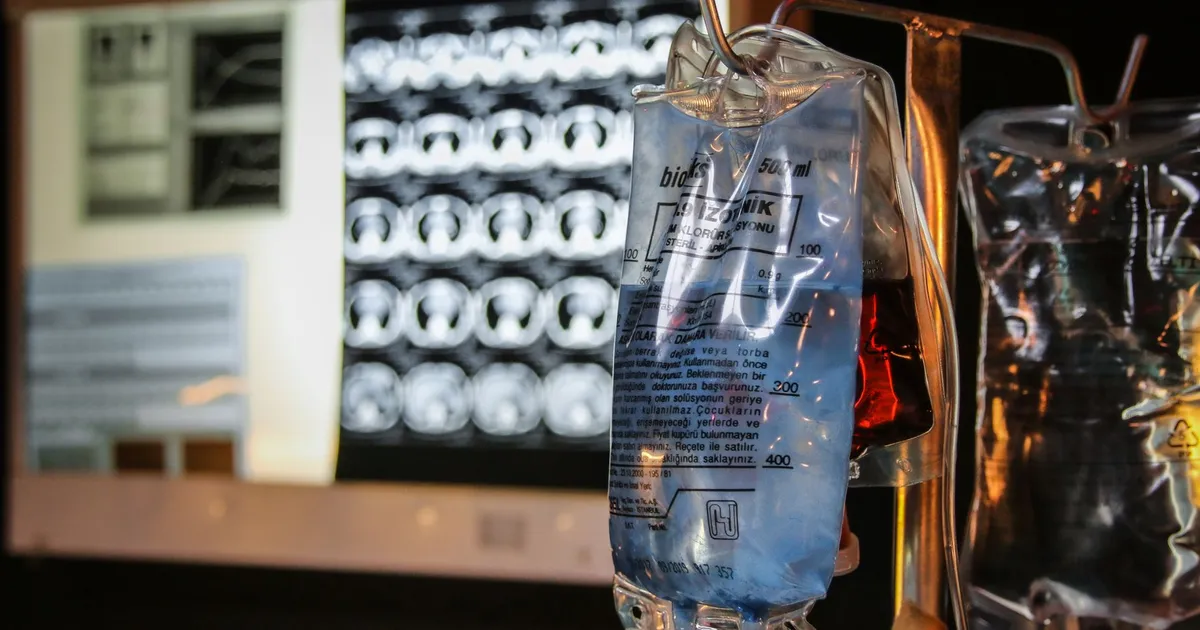

- Cerebrolysin is a peptide mixture from pig brain, given by intravenous infusion in hospitals in parts of Europe and Asia. It is not FDA-approved.
- The 2023 Cochrane review of stroke trials found it does not reduce deaths and may increase non-fatal serious adverse events.
- Smaller trials, several supported by the manufacturer, report benefits on recovery scores after stroke and brain injury; the evidence in dementia is mixed.
- It has never been tested as a nootropic in healthy people, and the injectable vials sold online for that purpose are not the hospital product.
What cerebrolysin is
Cerebrolysin is not a single peptide. The Cochrane review describes it as a mixture of low-molecular-weight peptides and amino acids derived from pig brain, with potential neuroprotective properties 1. It is made by enzymatic digestion of brain tissue and given by intravenous infusion, typically in daily courses of one to three weeks. Because it is a mixture, nobody can say exactly which components do what, and batch-to-batch consistency depends entirely on the manufacturer.
The 2017 edition of the Cochrane review records that it is widely used for acute stroke in Russia, Eastern Europe, China and other Asian and post-Soviet countries, and names the maker as EVER Neuro Pharma, formerly Ebewe Pharma 2. It is not approved by FDA or centrally authorised in the European Union 3. In rats with stroke, it increased the brain's new nerve cells and reduced cell death (animal evidence) 4, which is the laboratory basis for its use.
How a stroke drug became a 'nootropic'
Online, cerebrolysin is sold in vials alongside research peptides as a memory and focus enhancer, sometimes with instructions for injecting it under the skin or into muscle. None of that rests on a trial. Every study we found gave cerebrolysin intravenously, in hospital or clinic settings, to people with stroke, brain injury or dementia. No study has tested whether it improves memory, focus or mood in healthy people. Evidence grade for nootropic use: none.
The reasoning online runs from 'it helps damaged brains recover' to 'it will make a healthy brain better'. Even if the first part were firmly established, the second would not follow: a healthy brain is not missing what a recovering one needs, and the trials measured recovery from injury, not enhancement.
Stroke: what the biggest studies found
The most independent summary is the Cochrane review, updated in 2023. It pooled seven randomised trials with 1,773 people that started cerebrolysin, or a similar cattle-brain product called Cortexin, within 48 hours of stroke. The result: little to no difference in death from any cause (risk ratio 0.96), little to no difference in the total number of people with serious adverse events, but an increase in non-fatal serious adverse events (risk ratio 2.39, 95% CI 1.10 to 5.23), most clearly at the common schedule of 30 mL a day for ten days. The reviewers judged the risk of bias largely unclear, noted that the manufacturer supported three of the multicentre trials, and found that no trial reported death or dependence, quality of life or return to work (moderate-certainty evidence) 1.
The largest single trial, CASTA, randomised 1,070 people in Asia within 12 hours of stroke to cerebrolysin or saline for ten days on top of aspirin. Its primary outcome, a combined test of three stroke scales at 90 days, showed no significant difference. A subgroup analysis done afterwards suggested better outcomes and lower 90-day mortality (10.5% against 20.2%) in people with severe strokes, but subgroup findings found after the fact need confirming in a new trial before they can be trusted (randomised trial evidence) 5.
Stroke recovery: the smaller trials
Two smaller trials focused on recovery rather than survival. In CARS, people who started 30 mL a day for 21 days, 24 to 72 hours after stroke, alongside standard rehabilitation, had better arm function at 90 days, with a large effect on the main arm test and a small-to-medium effect across 12 scales (randomised trial evidence) 6. In another trial, people treated within 18 hours had a larger improvement on the NIH Stroke Scale at 30 days (randomised trial evidence) 7.
These results are the main case for using cerebrolysin in stroke rehabilitation. They sit uneasily beside the Cochrane finding on serious adverse events, and both trials used combined or effect-size statistics that are harder to translate into what a patient would notice. A consistent signal in large, independent trials is still missing.
Traumatic brain injury
The CAPTAIN trials tested cerebrolysin after moderate to severe traumatic brain injury, alongside usual care. CAPTAIN I, with 46 patients, just missed statistical significance on its combined primary measure of 14 scales, though three individual tests favoured cerebrolysin (randomised trial evidence) 8. CAPTAIN II, with 139 analysed, found a small-to-medium effect at 90 days on a combined measure of 13 scales (randomised trial evidence) 9. A prospective meta-analysis of the two, 185 patients in all, reported small-to-medium effects at days 30 and 90 10.
These are encouraging but small, and the combined-scale method means the benefit is spread across many measures rather than shown on one clinical outcome. All three reports come from the same investigator network, based in Cluj-Napoca, Romania, rather than from independent groups.
Alzheimer's disease and vascular dementia
In Alzheimer's disease the results are mixed. A dose-finding study found improved global ratings at all three doses but no change in total daily-living scores or the MMSE (randomised trial evidence) 11. In a 197-person trial comparing cerebrolysin, donepezil and both, there were no significant differences in cognition, function or behaviour at 28 weeks (randomised trial evidence) 12.
For vascular dementia, one trial found cerebrolysin, added to aspirin, improved a cognitive score by 10.6 points against 4.4 on placebo at 24 weeks (randomised trial evidence) 13. A 2019 Cochrane review found courses of cerebrolysin improved cognition and general function, but warned of heterogeneity and high risk of bias, said any benefit may be too small to matter clinically, and called the evidence base weak (systematic review evidence) 14.
| Use | Best evidence | What it found |
|---|---|---|
| Acute ischaemic stroke: survival | Cochrane review, 7 trials, 1,773 people (2023) | Little to no difference in death; more non-fatal serious adverse events |
| Acute ischaemic stroke: recovery | CASTA, 1,070 people (2012); smaller trials | Main outcome missed in CASTA; smaller, manufacturer-linked trials report benefits |
| Traumatic brain injury | CAPTAIN I and II, 185 people pooled (2021) | Small-to-medium effect on a combined score of many scales |
| Alzheimer's disease | Several trials of 100-250 people | Mixed: better global ratings in one trial, no difference against donepezil |
| Vascular dementia | Cochrane review (2019) | Possible small benefit; high risk of bias |
| Healthy people, 'focus' or memory | None | Never tested |
Side effects
Across controlled trials, a 2012 safety review found adverse reactions generally mild and short-lived, most often dizziness, agitation and feeling hot, at rates similar to placebo, and no major problems when it was combined with the clot-buster alteplase or with dementia drugs (review of trial data) 15. The 2023 Cochrane review is the important counterweight: in stroke trials, more people on cerebrolysin had non-fatal serious adverse events 1. Our interaction matrix records no published interaction studies 3.
One curiosity: a 2022 case series described five older patients whose grey hair darkened during cerebrolysin treatment, linked to reactivated pigment cells (case series, five people) 16. It is a single report, not a reason to use the drug.
A product made from animal tissue depends on regulated manufacturing for consistent sourcing and purity in a way a synthetic peptide does not. A vial sold online as cerebrolysin, outside a pharmacy, has no assurance of what it contains or how it was made.
Where it is approved, as of October 3, 2026
Cerebrolysin is not approved by FDA, and our regulatory tracker records no product in the UK's electronic medicines compendium and no central EU authorisation, though individual countries can authorise medicines nationally 3. It is used in Austria, where its maker is based, and widely in Russia, Eastern Europe and Asia 2. Importing it for personal use into the United States is not the same as lawful access, and a 'research use only' vial is not the hospital product.
For athletes, cerebrolysin is not named on WADA's Prohibited List. Whether S0, the category for substances with no current approval anywhere, applies depends on whether a national approval elsewhere is current, so we record its status as unsettled; athletes should check with their anti-doping organisation 3.
Questions to ask before using cerebrolysin
- What condition is it for, and was it tested in people with that condition? (As of October 3, 2026, it has never been tested in healthy people.)
- How would it be given? Every trial used intravenous infusion, not injections under the skin.
- Where does the product come from, and is it the licensed product from a regulated pharmacy?
- What did the Cochrane review find about serious adverse events, and how does that weigh against the expected benefit?
- For stroke or brain injury, what does the treating team recommend, given current guidelines where I live?
How it compares with other brain peptides
Cerebrolysin has more human trials than most compounds sold for the brain: far more than semax and infinitely more than dihexa. Two synthetic stroke peptides make a useful contrast. Nerinetide missed its primary outcomes in three large trials, and sovateltide won approval in India on two small trials run by its developer. The pattern across all of them is that promising stroke results in smaller studies have rarely held up in large, independent ones.
The bottom line
Cerebrolysin is a genuine medicine in the countries that use it, with a real body of hospital trials. Those trials do not show that it saves lives after stroke, and the most independent review found a possible increase in serious side effects. Benefits on recovery scores after stroke and brain injury come mainly from smaller, manufacturer-linked trials. As a nootropic for healthy people, it has no evidence at all.
Frequently asked questions
What is cerebrolysin?
A mixture of low-molecular-weight peptides and amino acids made from pig brain, given by intravenous infusion for stroke, brain injury and dementia in parts of Europe and Asia. It is not FDA-approved.
Does cerebrolysin work for stroke?
The 2023 Cochrane review found little to no difference in deaths and more non-fatal serious adverse events. The largest trial missed its main outcome; some smaller trials report better recovery scores.
Is cerebrolysin a nootropic?
It is sold as one, but no study has tested it in healthy people. All trials gave it intravenously to people with stroke, brain injury or dementia.
What are cerebrolysin's side effects?
Trials report mostly mild, short-lived dizziness, agitation and feeling hot. In stroke trials pooled by Cochrane, non-fatal serious adverse events were more frequent than with placebo.
Is cerebrolysin legal in the US?
It is not FDA-approved, and as of October 3, 2026 there is no approved US product. Vials sold online for research are not the licensed product.
Related on Grey Peptides
Sources
- Ziganshina, L. E., et al. (2023). Cerebrolysin for acute ischaemic stroke. Cochrane Database Syst Rev, 10(10), CD007026. PMID: 37818733
- Ziganshina, L. E., et al. (2017). Cerebrolysin for acute ischaemic stroke. Cochrane Database Syst Rev, 4(4), CD007026. PMID: 28430363
- Grey Peptides encyclopedia entry and regulatory tracker for cerebrolysin: FDA status (not approved, read October 1, 2026), UK EMC and EMA register results (read October 3, 2026), WADA status (S0 unsettled), interaction coverage. Read October 3, 2026.
- Zhang, C., et al. (2010). Cerebrolysin enhances neurogenesis in the ischemic brain and improves functional outcome after stroke. J Neurosci Res, 88(15), 3275-81. PMID: 20857512
- Heiss, W. D., et al. (2012). Cerebrolysin in patients with acute ischemic stroke in Asia: results of a double-blind, placebo-controlled randomized trial. Stroke, 43(3), 630-6. PMID: 22282884
- Muresanu, D. F., et al. (2016). Cerebrolysin and Recovery After Stroke (CARS): A Randomized, Placebo-Controlled, Double-Blind, Multicenter Trial. Stroke, 47(1), 151-9. PMID: 26564102
- Gharagozli, K., et al. (2017). Efficacy and safety of Cerebrolysin treatment in early recovery after acute ischemic stroke: a randomized, placebo-controlled, double-blinded, multicenter clinical trial. J Med Life, 10(3), 153-160. PMID: 29075343
- Poon, W., et al. (2020). Safety and efficacy of Cerebrolysin in acute brain injury and neurorecovery: CAPTAIN I-a randomized, placebo-controlled, double-blind, Asian-Pacific trial. Neurol Sci, 41(2), 281-293. PMID: 31494820
- Muresanu, D. F., et al. (2020). Efficacy and safety of cerebrolysin in neurorecovery after moderate-severe traumatic brain injury: results from the CAPTAIN II trial. Neurol Sci, 41(5), 1171-1181. PMID: 31897941
- Vester, J. C., et al. (2021). Cerebrolysin after moderate to severe traumatic brain injury: prospective meta-analysis of the CAPTAIN trial series. Neurol Sci, 42(11), 4531-4541. PMID: 33620612
- Alvarez, X. A., et al. (2011). Efficacy and safety of Cerebrolysin in moderate to moderately severe Alzheimer's disease: results of a randomized, double-blind, controlled trial investigating three dosages of Cerebrolysin. Eur J Neurol, 18(1), 59-68. PMID: 20500802
- Alvarez, X. A., et al. (2011). Combination treatment in Alzheimer's disease: results of a randomized, controlled trial with cerebrolysin and donepezil. Curr Alzheimer Res, 8(5), 583-91. PMID: 21679156
- Guekht, A. B., et al. (2011). Cerebrolysin in vascular dementia: improvement of clinical outcome in a randomized, double-blind, placebo-controlled multicenter trial. J Stroke Cerebrovasc Dis, 20(4), 310-8. PMID: 20656516
- Cui, S., et al. (2019). Cerebrolysin for vascular dementia. Cochrane Database Syst Rev, 2019(11). PMID: 31710397
- Thome, J., et al. (2012). Safety profile of Cerebrolysin: clinical experience from dementia and stroke trials. Drugs Today (Barc), 48 Suppl A, 63-9. PMID: 22514795
- Villarreal-Reyna, G., et al. (2022). Cerebrolysin induces hair repigmentation associated to MART-1/Melan-A reactivation. Eur J Med Res, 27(1), 257. PMID: 36411485
Educational information, not medical advice. Each dose in this guide names its source, an approved label or a published study. None is a recommendation for you. An unapproved compound has no established safe or effective human dose, and products sold for “research use only” are not made or tested for people. Talk to a doctor before acting on anything on this site, including before you start, stop or change any medicine or dose.
New guides and rule changes, by email
One short email when a peptide's legal status moves — an FDA or PCAC decision, a WADA list change, an enforcement action — plus new guides and tools. At most one a week, and none when nothing changes. The newsletter has not started sending yet: your first email will be its first issue.
We keep your email address and the page you signed up from, nothing else. How it works · Privacy · RSS instead