Copper Peptides (GHK-Cu) for Skin: What Fifty Years of Research Actually Shows
Last updated: October 1, 2026 · 10 min read · By the Grey Peptides Editorial Board
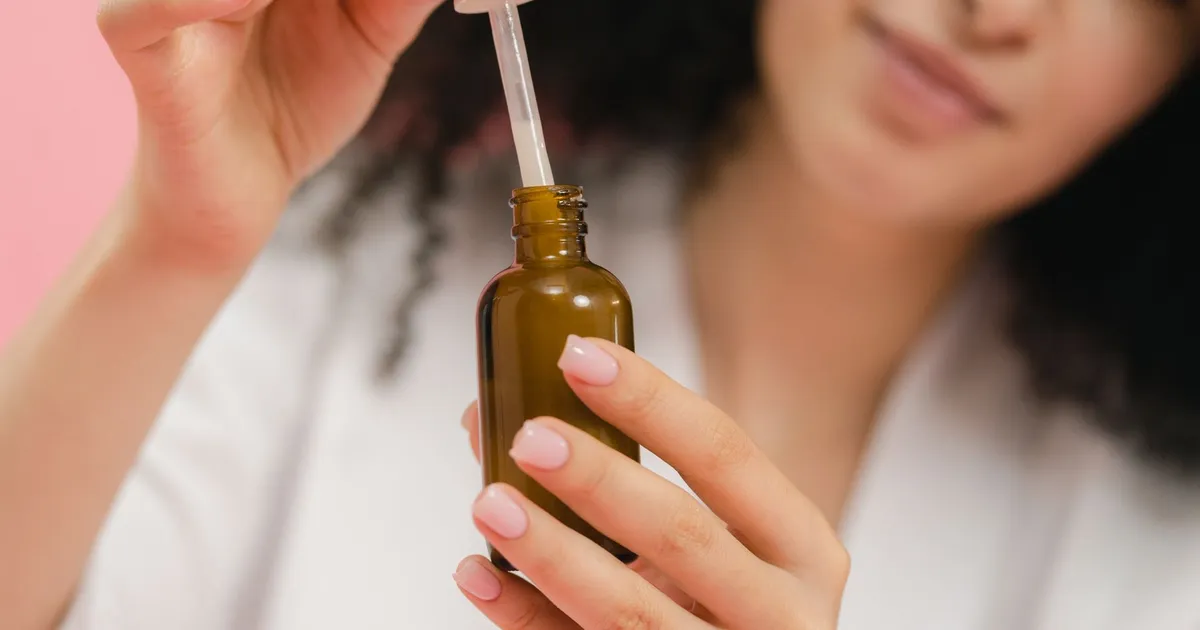

- GHK-Cu is a three-amino-acid peptide bound to copper that the body makes itself; skin-care labels call it copper tripeptide-1. Its reputation rests mostly on cell and animal studies, and we grade it Low 4.
- The two human trials that used objective measures both came up empty on them: a copper complex cream did no better than placebo on venous leg ulcers, and after laser resurfacing it did not speed healing or improve wrinkles 1 2.
- GHK-Cu crosses the outer layer of skin poorly, and products rarely say how much intact complex they contain, so the dose that reaches living skin from a serum is unknown 12 4.
- In the US, a cream that claims to increase collagen or remove wrinkles is making a drug claim, by FDA's own definition 17. Compounding pharmacies may use GHK-Cu only for non-injectable routes while FDA evaluates it 16.
The short answer
Copper peptides are among the best-known ingredients in skin care, and the research behind them is real: decades of work on how GHK-Cu affects cells, wound healing in animals, and the genes involved in tissue repair. What that research has not produced is solid evidence that a copper peptide cream changes human skin in ways a person would notice.
The human trials are few and small. The two that used objective, measured outcomes rather than impressions both found no benefit on those outcomes 1 2. Two independent reviews published in 2026 describe the human evidence as thin, fragmented and incompletely characterised 3 4.
That does not prove copper peptides do nothing. It means the claims on most labels run well ahead of what has been shown, as of October 1, 2026.
What copper peptides are
GHK is a tripeptide, glycyl-histidyl-lysine, found in human blood. Its discoverer, Loren Pickart, described it as binding copper with an affinity similar to the copper-carrying site on albumin, the main protein in blood, and forming the complex GHK-Cu 5. In the laboratory it can take copper from albumin: with equal amounts of the two in solution, about 42% of the copper went to the peptide 6.
The body's own supply declines with age. A 2020 review puts the serum level at about 200 nanograms per millilitre at age 20 and about 80 by age 60 7. That decline is a large part of the marketing story, and it is a correlation: nothing shows that the fall causes skin ageing or that rubbing GHK-Cu on the face replaces it.
On ingredient lists GHK-Cu usually appears as copper tripeptide-1. "Copper peptides" is a looser label: it is also used for related complexes such as AHK-Cu, a different tripeptide with copper, and the 2026 formulation review insists on separating GHK-Cu, GHK without copper, GHK-derived copper peptides and copper peptides unrelated to GHK, because studies and products often blur them 4.
Why the lab evidence looks so strong
The case for GHK-Cu was built in cells and animals, and on its own terms it is extensive. Injected into wound chambers implanted under rats' skin, it raised collagen, total protein and other components of new tissue in step with the dose, with collagen rising faster than the rest 8. Pickart's reviews list a long series of further actions: attracting repair cells, damping inflammation, raising collagen, elastin and growth-factor production, and supporting blood-vessel and nerve growth 5.
The most quoted number comes from the same group: that GHK can raise or lower at least 4,000 human genes 9. That figure comes from analysing gene-activity data, not from measuring skin. A substance that shifts the activity of thousands of genes in a laboratory analysis may do many things, or very little, in a living person; the number says nothing about which.
Two 2026 reviews that look at the whole literature agree on the shape of it. One, a systematic review of 64 studies, calls the preclinical evidence deep and mechanistically coherent while finding the human literature thin, made up mostly of small randomised trials of facial creams 3. The other concludes that preclinical data consistently support effects on tissue remodelling, repair, inflammation and blood-vessel growth, but that the clinical evidence remains sparse and does not meet current standards for defining the active ingredient 4.
What happened when it was tested on human skin
Two human trials used outcomes that were measured rather than judged by impression, and both are worth knowing in detail.
Venous leg ulcers, 1992. In a randomised, evaluator-blinded trial of 86 patients, a cream containing 0.4% of a tripeptide copper complex was compared with silver sulfadiazine cream and an inert placebo. Silver sulfadiazine reduced ulcer size; the copper complex did not differ from placebo 1.
Laser-resurfaced skin, 2006. Thirteen patients who had the skin around their mouths resurfaced with a carbon dioxide laser were randomised to skin care with or without GHK-Cu. Computer analysis and blinded evaluators found no faster fading of redness and no difference in wrinkles or overall skin quality between the groups; patients using GHK-Cu rated their skin quality better on a questionnaire 2.
The rest of the human record is mostly cosmetic studies. The 2026 formulation review describes these historical reports as small or incompletely characterised 4, and a 2025 review of GHK as an anti-wrinkle ingredient found a surprising absence of clinical studies of GHK-Cu or its palmitoyl form 10.
A proper test is under way. A phase 2 trial of a topical GHK-Cu gel for acute skin wounds is registered and recruiting, with about 60 participants planned 11. It has no results yet, and its existence is not evidence that the gel works 4.
The problem of getting it into skin
Skin is designed to keep things out, and its outer layer, the stratum corneum, is rich in fats. GHK-Cu is fairly water-loving, and a 2025 review notes that it crosses that layer poorly 12. Liposomes, tiny fat-based carriers, might help, but the same review finds that how they change GHK-Cu's passage through skin has received little study 12.
Other delivery methods have been tried in the laboratory. Microneedles greatly increase GHK-Cu uptake in lab and pig-skin experiments, yet no adequately powered human trial of microneedle-delivered GHK-Cu has been published 3. A 2024 study built an ionic-liquid microemulsion that roughly tripled local delivery of copper peptides in laboratory tests 13.
The practical meaning is simple. When a cream is applied, how much intact GHK-Cu reaches living skin cells is not known, and the cell studies that produced the impressive results did not have a skin barrier in the way.
What is actually in the bottle
Most copper peptide products do not state a concentration. When the research did state one, it varied: the 1992 ulcer cream used 0.4% of the copper complex 1, and a 2018 case series on pattern hair loss applied copper peptide at 1% after laser treatment, mixed with finasteride and several growth factors 14. A percentage on a label, where there is one, cannot be compared with those without knowing what form it measures.
That form matters more than most labels admit. The 2026 formulation review found that studies of GHK-Cu delivery systems usually report particle size and total peptide or copper content, but rarely report how much of the peptide actually carries copper, how much copper is loosely bound, or whether what is released is intact GHK-Cu or separate GHK and free copper 4. A product listing "copper peptides" could contain mostly copper-free GHK, mostly loose copper, or the complex itself, and the label would read the same.
The blue colour of a copper peptide serum shows that copper is present. It does not show how much GHK-Cu is intact or how much will reach the skin.
Copper peptides and hair
Hair claims are common, and the evidence behind them is thinner still. The best-known laboratory result used AHK-Cu, a different copper tripeptide: in very small amounts it lengthened human hair follicles kept alive outside the body and made dermal papilla cells multiply 15.
In people, the record is a set of fragments. The 2026 formulation review describes an 18-person split-face eyebrow study that reported positive cosmetic results without defining what form of GHK-Cu was applied or how much reached the skin 4. The 2018 case series of four people combined laser treatment, finasteride, growth factors and copper peptide, so the copper peptide's share of any benefit cannot be separated 14. No randomised trial has tested a copper peptide alone against placebo for scalp hair loss.
Minoxidil and finasteride, by contrast, are approved for pattern hair loss on the strength of controlled trials. Anyone choosing a copper peptide for hair is choosing an ingredient with laboratory promise and no comparable test.
Five common claims, checked
"Fifty years of research proves it works." Much of that research is real, but it is mostly cells and animals. The human trials with measured outcomes were negative on those outcomes 1 2.
"It switches on 4,000 genes." The figure comes from gene-activity analyses by the peptide's discoverer's group 9. It describes a laboratory signal, not a change anyone has measured in skin.
"Your levels fall with age, so topping up reverses ageing." Serum GHK does fall with age 7. No study shows that a cream restores it, or that restoring it reverses anything.
"It grows hair like minoxidil." No randomised scalp trial exists; the support is laboratory work on a related peptide and small or mixed human reports 15 14.
"Injections work better than creams." GHK-Cu has been tested in people only on the skin. FDA's compounding list explicitly leaves injectable routes out of its current evaluation of GHK-Cu 16; injectable vials sold online are research chemicals outside drug regulation.
What labels can claim, and what pharmacies can make
In the US, the line between a cosmetic and a drug is drawn by what a product is intended to do. FDA's guidance on anti-ageing products says that a product meant to make lines less noticeable by moisturising is a cosmetic, but one intended to remove wrinkles or increase the skin's production of collagen is a drug or a medical device, which would need approval 17. A copper peptide serum that promises to "boost collagen" is, by that definition, making a drug claim.
Compounding is a separate track. FDA's list of substances nominated for 503A compounding, updated May 14, 2026 and checked as of October 1, 2026, places "GHK-Cu (except for injectable routes of administration)" back in Category 1, its category for substances under evaluation, after one nominator clarified that it had withdrawn only the injectable route. FDA says it intends to consult its compounding advisory committee before the end of February 2027 16. Under FDA's interim policy, it does not intend to act against 503A pharmacies compounding with a Category 1 substance that meets the policy's other conditions 18. So a pharmacy may compound GHK-Cu for use on the skin for now, while injectable GHK-Cu has no such path.
None of this is an approval. GHK-Cu is not an FDA-approved drug for any use.
How to read a copper peptide product
Copper peptides are a reasonable ingredient to be curious about and a poor one to pay a premium for on the strength of the claims. Three questions help.
- What does the label claim? Moisturising and looking smoother are cosmetic claims. Rebuilding collagen or removing wrinkles are drug claims that no copper peptide product has been approved to make 17.
- How much, and in what form? A stated percentage of GHK-Cu is better than none, but it does not say how much is intact complex 4.
- What evidence is quoted? If it is cell studies, the 4,000-gene figure or falling blood levels with age, the product is citing the laboratory case, not a result in human skin.
Our GHK-Cu entry lists every study we have read, with where each was done. The ongoing wound-gel trial is the result to watch; until it or something like it reports, the human evidence for copper peptides in skin is a small set of mostly negative or uncontrolled studies.
Frequently asked questions
What are copper peptides good for?
In the laboratory and in animals, GHK-Cu promotes wound repair, collagen production and tissue remodelling. In people, the two trials with measured outcomes, on leg ulcers and laser-resurfaced skin, found no benefit on those outcomes, and cosmetic studies are small.
Are copper peptides good for anti-aging?
The evidence in human skin is thin. 2025 and 2026 reviews describe a near absence of rigorous clinical studies, and GHK-Cu crosses the skin's outer layer poorly. Products that claim to boost collagen are making a drug claim under FDA's definition.
Do copper peptides grow hair?
A related copper peptide lengthened human hair follicles in the laboratory, and small human reports are mixed or uncontrolled. No randomised trial has tested a copper peptide alone for scalp hair loss.
Is copper tripeptide-1 the same as GHK-Cu?
Yes. Copper tripeptide-1 is the name skin-care ingredient lists use for GHK-Cu. The broader term copper peptides can also cover related complexes such as AHK-Cu.
Can GHK-Cu be injected?
It has been tested in people only on the skin. FDA's 503A compounding list currently covers GHK-Cu only for non-injectable routes, as of October 1, 2026, and injectable vials sold online are research chemicals outside drug regulation.
Related on Grey Peptides
- GHK-Cu encyclopedia entry
- Matrixyl
- PCAC July 2026 hub
- What research use only means
- Gray-market name decoder
Sources
- Bishop, J. B. et al. (1992). A prospective randomized evaluator-blinded trial of two potential wound healing agents for the treatment of venous stasis ulcers. J Vasc Surg. PMID: 1495150
- Miller, T. R. et al. (2006). Effects of topical copper tripeptide complex on CO2 laser-resurfaced skin. Arch Facial Plast Surg. PMID: 16847171
- Najafi, N. et al. (2026). A Systematic Review of the Mechanisms and Therapeutic Applications of GHK-Cu (Glycyl-L-Histidyl-L-Lysine-Copper Complex) in Topical Microneedle Delivery: A Case for Expanded Clinical Trials. Arch Intern Med Res. PMID: 42787770
- Mateescu, D. M. et al. (2026). GHK-Cu as a Bioactive Metallopeptide and Drug-Delivery Cargo: Coordination Chemistry, Formulation Science, Therapeutic Evidence, and a Translational Roadmap. Pharmaceutics. PMID: 42797253
- Pickart, L. (2008). The human tri-peptide GHK and tissue remodeling. J Biomater Sci Polym Ed. PMID: 18644225
- Lau, S. J. et al. (1981). The interaction of copper(II) and glycyl-L-histidyl-L-lysine, a growth-modulating tripeptide from plasma. Biochem J. PMID: 7340824
- Dou, Y. et al. (2020). The potential of GHK as an anti-aging peptide. Aging Pathobiol Ther. PMID: 35083444
- Maquart, F. X. et al. (1993). In vivo stimulation of connective tissue accumulation by the tripeptide-copper complex glycyl-L-histidyl-L-lysine-Cu2+ in rat experimental wounds. J Clin Invest. PMID: 8227353
- Pickart, L. et al. (2015). GHK Peptide as a Natural Modulator of Multiple Cellular Pathways in Skin Regeneration. Biomed Res Int. PMID: 26236730
- Mortazavi, S. M. et al. (2025). Topically applied GHK as an anti-wrinkle peptide: Advantages, problems and prospective. Bioimpacts. PMID: 39963574
- ClinicalTrials.gov. NCT07437586: Topical GHK-Cu Gel for Acute Skin Wound Healing. Phase 2, recruiting, estimated 60 participants; record last updated February 27, 2026; read October 1, 2026. ClinicalTrials.gov
- Ogórek, K. et al. (2025). Are We Ready to Measure Skin Permeation of Modern Antiaging GHK-Cu Tripeptide Encapsulated in Liposomes? Molecules. PMID: 39795193
- Liu, T. et al. (2024). Thermodynamically stable ionic liquid microemulsions pioneer pathways for topical delivery and peptide application. Bioact Mater. PMID: 38026438
- Bertin, A. C. J. et al. (2018). Fractional non-ablative laser-assisted drug delivery leads to improvement in male and female pattern hair loss. J Cosmet Laser Ther. PMID: 29452017
- Pyo, H. K. et al. (2007). The effect of tripeptide-copper complex on human hair growth in vitro. Arch Pharm Res. PMID: 17703734
- U.S. Food and Drug Administration. Bulk Drug Substances Nominated for Use in Compounding Under Section 503A (Categories 1, 2 and 3). Updated May 14, 2026; downloaded October 1, 2026: "GHK-Cu (except for injectable routes of administration)" in Category 1. FDA
- U.S. Food and Drug Administration. Wrinkle Treatments and Other Anti-aging Products. Read October 1, 2026. FDA
- U.S. Food and Drug Administration. Interim Policy on Compounding Using Bulk Drug Substances Under Section 503A of the Federal Food, Drug, and Cosmetic Act. Guidance for industry, January 2025. Read September 30, 2026. FDA
Educational information, not medical advice. Each dose in this guide names its source, an approved label or a published study. None is a recommendation for you. An unapproved compound has no established safe or effective human dose, and products sold for “research use only” are not made or tested for people. Talk to a doctor before acting on anything on this site, including before you start, stop or change any medicine or dose. This article describes research and regulatory status; it is not medical or dermatological advice.
New guides and rule changes, by email
One short email when a peptide's legal status moves — an FDA or PCAC decision, a WADA list change, an enforcement action — plus new guides and tools. At most one a week, and none when nothing changes. The newsletter has not started sending yet: your first email will be its first issue.
We keep your email address and the page you signed up from, nothing else. How it works · Privacy · RSS instead