Injectable GHK-Cu: the gap between topical evidence and the needle
Last updated: October 3, 2026 · 8 min read · By the Grey Peptides Editorial Board
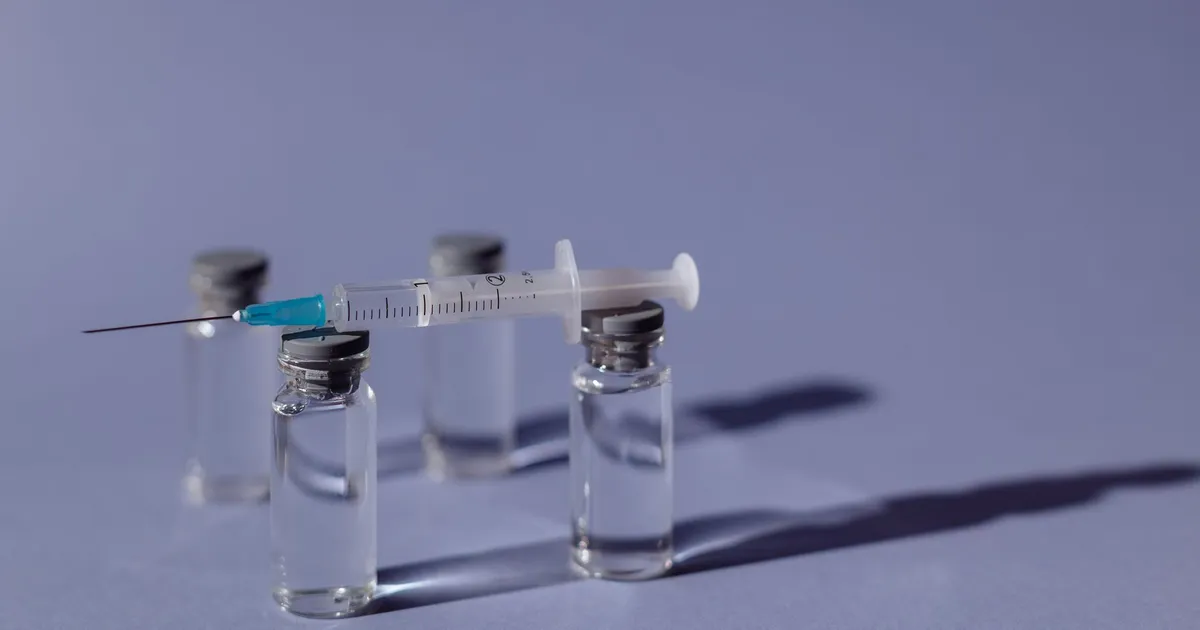

- No human trial has tested injected GHK-Cu. The human evidence people cite is from skin products, and even that is thin.
- GHK-Cu is about 16% copper by weight. A 50 mg vial contains about 7.9 mg of copper, delivered without passing the gut, one of the body's main copper controls.
- Animal studies of injected GHK-Cu are positive, mostly for wound healing and tissue repair, but animals are not people.
- FDA says compounded injectable GHK-Cu may cause immune reactions and that human data are limited. Its compounding committee is due to review it by February 2027.
What GHK-Cu is
GHK is a three-amino-acid peptide, glycine-histidine-lysine, found naturally in blood, saliva and urine, with levels that fall with age: a review from its main research group gives about 200 ng/mL in serum at age 20 and about 80 ng/mL by 60 (review) 1. It binds copper tightly, and GHK-Cu is that complex. In the blood it competes with albumin for copper, and laboratory studies show it forming complexes with albumin itself (laboratory evidence) 2 3. Our encyclopedia lists its formula as C14H23CuN6O4, with a molecular weight of 402.92 4.
Most of what is written about GHK-Cu comes from Loren Pickart, who described it decades ago, and his collaborators. Their reviews present a long list of apparently health-positive actions, from collagen and elastin production to blood-vessel growth and tissue repair, and state that GHK can influence thousands of human genes (reviews by the discoverer's group) 5 6. Those reviews are the source of most claims on seller pages.
The topical evidence, and why it does not transfer
GHK-Cu earned its reputation in skin care, but even there the clinical evidence is surprisingly thin. A 2025 review of cosmetic peptides concluded that cell studies support GHK as an anti-wrinkle ingredient, but found a surprising absence of clinical studies of GHK-Cu or palmitoyl-GHK and limited published data on their skin penetration and effectiveness (review) 7. A second 2025 review noted that GHK-Cu is fairly water-loving and crosses the skin's oily outer layer poorly (review) 8. The one small randomised trial on our entry, after laser skin treatment in 13 patients, found no faster fading of redness and no difference in wrinkles or skin quality with GHK-Cu (randomised trial, small) 9.
Whatever the cream data show, they do not tell us about injection. A cream applied to skin delivers a small, poorly absorbed amount to the surface, mostly staying where it is put. An injection under the skin or into muscle delivers the whole amount into tissue, from where it can reach the blood. Different route, different dose reaching the body, different questions about safety. Evidence grade for injected GHK-Cu in people: none.
What the injection studies in animals show
Injected GHK-Cu has been studied in animals, and the results are positive. In rats, GHK-Cu injected into small implanted chambers under the skin increased collagen, protein and other markers of wound repair in step with the dose (animal evidence) 10. In 72 rats after knee ligament reconstruction, weekly knee injections reduced laxity and stiffened the graft at six weeks (animal evidence) 11. In mice with chemically induced lung scarring, GHK-Cu injected into the abdomen reduced inflammation and collagen deposition (animal evidence) 12. In mice exposed to cigarette smoke it reduced muscle loss, and in a small human comparison people with COPD had lower blood GHK than healthy controls (animal evidence plus an observational measurement) 13. A nasal-dosing study in old mice reported better memory, posted as a preprint (animal evidence, not yet peer reviewed) 14.
These are reasons to run human trials. They are not human trials. None tells us what amount, if any, is safe or useful in a person, how often it can be given, or what repeated copper exposure does over months.
The copper in every vial
The issue unique to GHK-Cu is the metal. From its formula, copper makes up about 15.8% of GHK-Cu by weight 4, so every milligram of the peptide carries about 158 micrograms of copper. The table shows what that means for common amounts. It describes what a vial contains, not an amount to use.
| Amount of GHK-Cu | Copper it contains | Compared with the adult upper limit for oral copper (10 mg a day) |
|---|---|---|
| 1 mg | 158 micrograms | 1.6% |
| 10 mg | 1.58 mg | 16% |
| 50 mg (a common amount in multi-peptide blend vials) | 7.9 mg | 79% |
The US National Institutes of Health sets the tolerable upper intake level for copper at 10,000 micrograms (10 mg) a day for adults, counting all sources: food, drink and supplements 15. That limit was set for copper taken by mouth. The body normally controls copper through absorption in the gut, excretion in bile and storage in the liver (review) 16. An injection skips the first of those controls. Chronic copper overload damages the liver and other organs, most clearly in Wilson's disease, a genetic disorder of copper handling, and in a childhood liver disease linked to copper-contaminated milk 16.
Medicine already gives copper intravenously, in parenteral nutrition for people who cannot eat, and treats it with care: a 2017 review of copper in adult parenteral nutrition says the correct amount must be provided if both deficiency and toxicity are to be avoided, that needs are lower in people with cholestasis, and that the tests used to judge copper status are unreliable (review) 17. How the copper in injected GHK-Cu is handled, how much stays bound to the peptide and how much joins the body's copper pool over repeated injections, has not been studied in people.
FDA's view and the PCAC review, as of October 3, 2026
GHK-Cu is not approved by FDA for injection. FDA's page on bulk substances that may present safety risks in compounding, current as of April 22, 2026, lists GHK-Cu for injectable routes: compounded injectable products may pose a risk of immune reactions because of aggregation and peptide-related impurities, and there are limited data in humans to inform safety 18. FDA's Pharmacy Compounding Advisory Committee is due to discuss GHK-Cu, with four other substances, at a meeting before the end of February 2027; FDA's meeting page, current as of April 15, 2026, says the time and location will be scheduled 19. Our guide to the second PCAC five covers that meeting.
Topical copper peptides remain legal cosmetic ingredients. For athletes, GHK-Cu is not named on WADA's list, but as a substance with no approval for human therapeutic use it falls under S0 4.
GHK-Cu in blend vials
Injectable GHK-Cu is often sold mixed with BPC-157 and TB-500, and sometimes KPV, in multi-peptide vials where it is the largest component, commonly 50 mg of an 80 mg or 70 mg vial. In those blends the copper load comes along with every draw, and the other peptides' own evidence gaps are added to it. Our pages on the three-peptide blend and the four-peptide blend do the arithmetic, and our KLOW vs GLOW vs Wolverine guide explains the names.
Questions to ask before injecting GHK-Cu
- Has injected GHK-Cu been tested in people? (As of October 3, 2026, no published trial exists.)
- How much copper does the product contain, and how does that add to my copper from food and supplements?
- Do I have liver disease, a problem with bile flow, or a family history of Wilson's disease?
- What exactly is in the vial, and does a certificate of analysis from an identifiable laboratory confirm the peptide, its copper content and its purity?
- Would a topical product, which at least has a cosmetic safety record, serve the same purpose?
What would change the picture
The gap could be closed. A useful first human study would give injected GHK-Cu, at defined amounts, to a small group of volunteers under monitoring, and measure what happens to the peptide and its copper: how long each stays in the blood, how much copper ends up bound to albumin and how much in the liver's stores, and whether markers of liver function or copper status change over repeated doses. Only then would efficacy trials make sense, with a defined condition, a control group and an outcome a patient would notice, such as how fast a wound closes. Until then, neither the benefit nor the copper question has an answer, and FDA's committee will be weighing a file with limited human data 18.
The bottom line
GHK-Cu is a real molecule with interesting biology and positive animal studies. But the human evidence people quote is from skin products, and even that is thin; the injected version has never been tested in a human trial. Every vial carries a meaningful amount of copper delivered past the gut, and FDA flags immune-reaction risks and limited human data. Until trials exist, injecting GHK-Cu is an experiment with no data on the outcome.
Frequently asked questions
Is GHK-Cu injection safe?
Unknown. No human trial has tested injected GHK-Cu. FDA says compounded injectable GHK-Cu may pose immune-reaction risks and that human safety data are limited.
How much copper is in GHK-Cu?
About 15.8% by weight, so 1 mg of GHK-Cu contains about 158 micrograms of copper and 50 mg about 7.9 mg. The US upper limit for oral copper from all sources is 10 mg a day for adults.
Does topical GHK-Cu evidence apply to injections?
No. Topical products deliver small, poorly absorbed amounts to the skin; an injection delivers the full amount into the body. A 2025 review also found surprisingly few clinical studies even of topical GHK-Cu.
What are the benefits of GHK-Cu injections?
In animals, injected GHK-Cu improved wound repair, ligament graft healing and lung scarring. None of these has been tested in people.
Is GHK-Cu legal?
It is a legal cosmetic ingredient for topical use but is not FDA-approved for injection. FDA's compounding committee is due to review it by the end of February 2027, and WADA prohibits it under S0.
Related on Grey Peptides
Sources
- Dou, Y., et al. (2020). The potential of GHK as an anti-aging peptide. Aging Pathobiol Ther, 2(1), 58-61. PMID: 35083444
- Lau, S. J., et al. (1981). The interaction of copper(II) and glycyl-L-histidyl-L-lysine, a growth-modulating tripeptide from plasma. Biochem J, 199(3), 649-56. PMID: 7340824
- Bossak-Ahmad, K., et al. (2021). Ternary Cu(2+) Complexes of Human Serum Albumin and Glycyl-l-histidyl-l-lysine. Inorg Chem, 60(22), 16927-16931. PMID: 34730942
- Grey Peptides encyclopedia entry for GHK-Cu: molecular formula C14H23CuN6O4 and weight 402.92, FDA status (not approved for injection), WADA status (S0, inferred); blend compositions from the Grey Peptides blend presets. Read October 3, 2026.
- Pickart, L., et al. (2015). GHK Peptide as a Natural Modulator of Multiple Cellular Pathways in Skin Regeneration. Biomed Res Int, 2015, 648108. PMID: 26236730
- Pickart, L., et al. (2018). Regenerative and Protective Actions of the GHK-Cu Peptide in the Light of the New Gene Data. Int J Mol Sci, 19(7). PMID: 29986520
- Mortazavi, S. M., et al. (2025). Topically applied GHK as an anti-wrinkle peptide: Advantages, problems and prospective. Bioimpacts, 15, 30071. PMID: 39963574
- Ogórek, K., et al. (2025). Are We Ready to Measure Skin Permeation of Modern Antiaging GHK-Cu Tripeptide Encapsulated in Liposomes? Molecules, 30(1). PMID: 39795193
- Miller, T. R., et al. (2006). Effects of topical copper tripeptide complex on CO2 laser-resurfaced skin. Arch Facial Plast Surg, 8(4), 252-9. PMID: 16847171
- Maquart, F. X., et al. (1993). In vivo stimulation of connective tissue accumulation by the tripeptide-copper complex glycyl-L-histidyl-L-lysine-Cu2+ in rat experimental wounds. J Clin Invest, 92(5), 2368-76. PMID: 8227353
- Fu, S. C., et al. (2015). Tripeptide-copper complex GHK-Cu (II) transiently improved healing outcome in a rat model of ACL reconstruction. J Orthop Res, 33(7), 1024-33. PMID: 25731775
- Ma, W. H., et al. (2020). Protective effects of GHK-Cu in bleomycin-induced pulmonary fibrosis via anti-oxidative stress and anti-inflammation pathways. Life Sci, 241, 117139. PMID: 31809714
- Deng, M., et al. (2023). Glycyl-l-histidyl-l-lysine-Cu(2+) rescues cigarette smoking-induced skeletal muscle dysfunction via a sirtuin 1-dependent pathway. J Cachexia Sarcopenia Muscle, 14(3), 1365-1380. PMID: 36905132
- Tucker, M., et al. (2023). Intranasal GHK peptide enhances resilience to cognitive decline in aging mice. bioRxiv, . PMID: 38014118
- National Institutes of Health, Office of Dietary Supplements. Copper: Fact Sheet for Health Professionals and for Consumers (Tolerable Upper Intake Level for adults, 10,000 mcg a day from all sources). Read October 3, 2026. NIH ODS
- Pankit, A. N., et al. (2002). Copper metabolic defects and liver disease: environmental aspects. J Gastroenterol Hepatol, 17 Suppl 3, S403-7. PMID: 12472971
- Livingstone, C. (2017). Review of Copper Provision in the Parenteral Nutrition of Adults. Nutr Clin Pract, 32(2), 153-165. PMID: 29927526
- FDA. Certain Bulk Drug Substances for Use in Compounding that May Present Significant Safety Risks (entry for GHK-Cu, injectable routes of administration). Content current as of April 22, 2026; read October 1, 2026. FDA
- FDA. Meeting of the Pharmacy Compounding Advisory Committee (February 2027): agenda including GHK-Cu; time and location 'will be scheduled in the coming months'. Content current as of April 15, 2026; read October 3, 2026. FDA
Educational information, not medical advice. Each dose in this guide names its source, an approved label or a published study. None is a recommendation for you. An unapproved compound has no established safe or effective human dose, and products sold for “research use only” are not made or tested for people. Talk to a doctor before acting on anything on this site, including before you start, stop or change any medicine or dose.
New guides and rule changes, by email
One short email when a peptide's legal status moves — an FDA or PCAC decision, a WADA list change, an enforcement action — plus new guides and tools. At most one a week, and none when nothing changes. The newsletter has not started sending yet: your first email will be its first issue.
We keep your email address and the page you signed up from, nothing else. How it works · Privacy · RSS instead