Do peptides show up on drug tests?
Last updated: October 2, 2026 · 9 min read · By the Grey Peptides Editorial Board
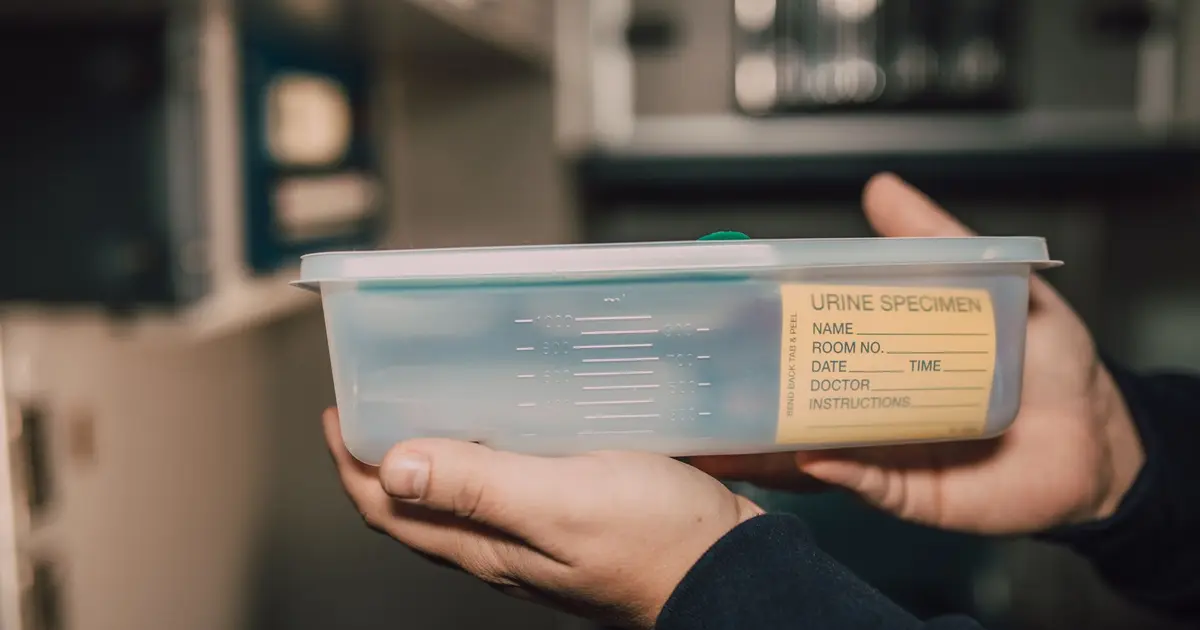

- A workplace drug screen built on the US federal panel does not test for peptides. The panel HHS published in March 2026 covers marijuana and cocaine metabolites, opioids, PCP, fentanyl, amphetamines and MDMA, and nothing else.
- Anti-doping tests are a different system. WADA's 2026 List names BPC-157, TB-500, CJC-1295, ipamorelin and the GHRPs, and accredited labs have published urine methods that detect them, often through metabolites that outlast the drug.
- Many athletes are caught without a positive sample. Recent USADA cases on BPC-157 and TB-500 came from a whistleblower, declarations and self-reports, and the 34 Essendon players banned over thymosin beta-4 never tested positive.
Two different tests
"Drug test" covers two systems that have little in common. A workplace screen looks for a short, published list of drugs of abuse. An anti-doping test, run under the World Anti-Doping Code, looks for anything on WADA's Prohibited List, and that list names peptides. Whether BPC-157, TB-500 or a growth-hormone peptide shows up depends on which of the two is collecting the sample.
The US federal workplace program is the clearest example of the first kind. Each year the Department of Health and Human Services publishes the analytes that certified laboratories test federal agency specimens for, and the March 2026 notice left the panels that took effect on July 7, 2025 unchanged 1. The urine panel covers a marijuana metabolite, a cocaine metabolite, codeine and morphine, hydrocodone and hydromorphone, oxycodone and oxymorphone, 6-acetylmorphine (a marker of heroin), PCP, fentanyl and norfentanyl, amphetamine and methamphetamine, and MDMA and MDA 1. HHS describes these as panels of Schedule I and II drugs; no peptide is on them, and the agency has not authorized routine testing for any biomarker 1. The initial screens are immunoassays calibrated against a named target drug in each group 1, so a test run to this panel is not looking for a peptide hormone at all.
What WADA prohibits by name (as of October 2, 2026)
Athletes tested under programs that have adopted the World Anti-Doping Code, such as USADA's protocol for Olympic and Paralympic sport 2, are tested against WADA's Prohibited List. The 2026 List names several of the peptides sold online, and every class below is prohibited at all times, in and out of competition 3.
| Peptide | 2026 List section | Specified? |
|---|---|---|
| BPC-157 Low | S0, non-approved substances (named) | Specified |
| TB-500 Low, as "thymosin-β4 and its derivatives" | S2.3, growth factors | Non-Specified |
| CJC-1295 Medium, sermorelin, tesamorelin | S2.2.4, GHRH and its analogues | Non-Specified |
| Ipamorelin Medium, ibutamoren (MK-677) | S2.2.4, growth hormone secretagogues | Non-Specified |
| GHRP-2 Medium, GHRP-6, hexarelin, GHRP-1, -3, -4 and -5 | S2.2.4, GH-releasing peptides | Non-Specified |
| AOD-9604, hGH 176-191 | S2.2.3, growth hormone fragments | Non-Specified |
| IGF-1 and its analogues, mechano growth factors | S2.3, growth factors | Non-Specified |
| Kisspeptin, gonadorelin and GnRH agonists (in males) | S2.2.1, testosterone-stimulating peptides | Non-Specified |
| MOTS-c | S4.4.1, AMPK activators | Non-Specified |
The Specified label changes the starting penalty. USADA's case announcements give the defaults: two years for a positive test or use involving a Specified Substance such as BPC-157 2, and four years for the use or possession of non-Specified Substances 4. Sanctions move from there with fault, cooperation and early admission, as the cases further down show.
A peptide does not have to be named to be banned. S0 covers any pharmacological substance that no other section addresses and that has no current approval by any government health authority for human therapeutic use, and S2 extends to substances with a similar chemical structure or similar biological effect 3. The 2027 List, in force from January 1, 2027, adds "peptides" to the S0 wording; WADA's explanatory note says many unapproved peptides already met the criteria and that a peptide not named on the List may still be prohibited 5.
How anti-doping labs detect peptides
Peptides are difficult targets: they break down quickly and reach urine at fractions of a nanogram per millilitre. Anti-doping laboratories use liquid chromatography with mass spectrometry, and they increasingly target the breakdown products, which can stay detectable after the intact drug has gone 6 7. This is the published work on the peptides people ask about most.
BPC-157
BPC-157 entered the anti-doping literature through confiscated vials. Scientists at the Sports Medicine Research and Testing Laboratory in Salt Lake City identified it in seized material, showed in plasma experiments that it forms a stable metabolite that should be detectable in urine, and validated a urine method with a detection limit of 0.1 ng/mL; BPC-157 stayed stable in urine for at least four days 8. In 2023 the Shanghai Anti-Doping Laboratory mapped nine metabolites using isotope-labelled BPC-157 and validated a urine method for the parent and its five main metabolites, with detection limits of 0.01 to 0.11 ng/mL 9. Neither study gave BPC-157 to people, so neither measures how long it stays detectable after a human dose. Both show that labs have the targets and the sensitivity to look.
TB-500 and thymosin β4
TB-500 products contain an acetylated seven-amino-acid fragment of thymosin β4, Ac-LKKTETQ. The Ghent doping control laboratory identified that fragment in a TB-500 product in 2012 and proposed a method for finding it in plasma and urine 10. The Hong Kong Jockey Club's racing laboratory gave horses a single TB-500 dose containing 10 mg of the peptide and confirmed the parent and its metabolites in their urine and plasma, with detection limits of 0.01 ng/mL in urine and 0.02 ng/mL in plasma 11. Work at the Korea Institute of Science and Technology's doping control center found that in rats the metabolite Ac-LK peaked in the first six hours while Ac-LKK stayed detectable for up to 72 hours 12, and that a metabolite of full-length thymosin β4 could be measured in rat urine for 48 hours and was absent from blank human urine 13. These are animal data. They show which markers labs look for, not how long a human dose can be detected.
GHRPs and ipamorelin
The growth hormone releasing peptides have the most human data. A Tokyo anti-doping center gave intravenous GHRP-2 to ten men and found unchanged GHRP-2 and its specific metabolite in the urine of all ten 14. The Cologne laboratory validated a urine method for eight GHRPs, including ipamorelin and hexarelin, with detection limits of 0.2 to 1 ng/mL; after a single 10 mg oral dose of GHRP-2 the metabolite was detectable for more than 20 hours, while the intact drug was not seen at all 6. A Moscow study gave one volunteer each a nasal dose of GHRP-1, GHRP-2, GHRP-6, hexarelin or ipamorelin: GHRP-2 and its metabolites were detected for up to 47 hours, unchanged GHRP-6 for 23 hours, and metabolites of hexarelin and ipamorelin were still found after the parent drugs had cleared 7. The authors' conclusion is the useful one for anyone guessing at a window: it depends on the person's metabolism, the preparation and the route 7.
CJC-1295 and other GHRH analogues
CJC-1295, sermorelin and tesamorelin are larger peptides. A 2021 King's College London study identified 19 in vitro metabolites of four GHRH analogues, including CJC-1295 with and without its drug affinity complex, and built a urine method with detection limits generally at or below 1 ng/mL, the performance limit WADA requires 15. The same paper reported that, despite evidence of use from admissions and intelligence, these analogues did not appear to have been found in anti-doping samples by accredited laboratories at the time, which it attributed to their low urine concentrations and the limited knowledge of their metabolism 15.
Why athletes still get caught
A clean sample is not the end of a case. Use and possession are violations on their own, and the recent peptide cases show investigators proving them from other evidence.
In September 2025 USADA announced a four-year sanction for a 46-year-old triathlete after a whistleblower's information led to an investigation showing he had possessed and used BPC-157 and TB-500. USADA also found he had promoted BPC-157, TB-500, CJC-1295, ipamorelin and tesamorelin on social media to followers who included athletes bound by the Code 4. In 2024 an independent arbitrator gave a 19-year-old speedskater a one-year sanction for a supplement containing BPC-157 that a medical provider had recommended. She never tested positive; she declared the supplement and admitted using it during USADA's investigation 2. In 2023 a UFC fighter accepted a four-month sanction under the UFC's anti-doping policy after self-reporting BPC-157 that a doctor had prescribed for a medical condition; a Therapeutic Use Exemption was not applicable to a non-approved substance 16.
The largest peptide case in professional sport also had no positive test. In January 2016 the Court of Arbitration for Sport found 34 past and present Essendon Football Club players guilty of taking thymosin β4 and suspended them for the 2016 season 17. The injections were part of the club's supplements program in 2011 and 2012, and none of the players ever returned a positive test; the panel relied on other evidence 18. The Swiss Federal Tribunal declined to entertain the appeal in October 2016, closing the first case in which a whole team, 34 players from one club, came under the court's jurisdiction on doping charges 19.
What is in the vial is another risk. The Norwegian Doping Control Laboratory, analysing products seized by police and customs from 2011 to 2014, found peptide- and protein-based doping substances in 28% of them 20. Poland's National Medicines Institute identified a previously undescribed glycine analogue of GHRP-2 in a seized injection vial and suggested it may be a new way to circumvent detection 21. A product bought as one peptide can hold another, and a sanction can follow even when a medical provider recommended the product 2.
A prescription does not settle it either. USADA says a Therapeutic Use Exemption for BPC-157 is unlikely to be approved because permitted alternatives exist, although it considers each application 22.
What this means for you
If you are facing an employment drug screen, the federal panel contains no peptide 1; what matters is the list of drugs on your own test. If you compete under the World Anti-Doping Code, treat any unapproved peptide as prohibited: S0 catches it whether or not it is named, the 2027 List writes peptides into that section, and the classes above apply in and out of competition 3 5. Labs have published methods for the common ones, and cases are also built from tips, declarations and seized products. Your own anti-doping organization gives the answer that counts before you take anything.
Frequently asked questions
Does BPC-157 show up on a drug test?
Not on a workplace screen built on the US federal panel, which lists no peptide. Anti-doping labs have validated urine methods that detect BPC-157 at 0.1 ng/mL, and with five of its metabolites at 0.01 to 0.11 ng/mL. BPC-157 is named in S0 of WADA's 2026 List and is prohibited at all times.
Does TB-500 show up on a drug test?
Not on the federal workplace panel. Anti-doping methods detect its peptide, Ac-LKKTETQ, and its metabolites; in horses the peptide was detected at 0.01 ng/mL in urine, and in rats one metabolite stayed detectable for up to 72 hours. TB-500 falls under S2.3 of WADA's List as a non-Specified Substance.
Are peptides banned by WADA?
Many are named on the 2026 List: BPC-157 in S0; TB-500, CJC-1295, sermorelin, tesamorelin, ipamorelin, the GHRPs and AOD-9604 in S2; MOTS-c in S4.4.1. Unnamed unapproved peptides are caught by S0, and the 2027 List adds peptides to that section's wording.
How long are GHRPs detectable?
In single-volunteer nasal studies GHRP-2 and its metabolites were detected for up to 47 hours and unchanged GHRP-6 for 23 hours. After one oral 10 mg dose of GHRP-2, its metabolite was detectable for more than 20 hours. The window depends on metabolism, preparation and route.
Can an athlete be banned for peptides without a positive test?
Yes. The 34 Essendon players banned over thymosin beta-4 never returned a positive test, and recent USADA cases on BPC-157 and TB-500 were built on a whistleblower's information, declarations and self-reports.
Related on Grey Peptides
Sources
- US Department of Health and Human Services. Mandatory Guidelines for Federal Workplace Drug Testing Programs: Authorized Testing Panels. Federal Register 91 FR 12308, March 13, 2026; read October 2, 2026. Federal Register
- US Anti-Doping Agency. Independent arbitrator imposes one-year sanction on speedskating athlete Kamryn Lute for anti-doping rule violation, 2024; read October 2, 2026. USADA
- World Anti-Doping Agency. World Anti-Doping Code International Standard: Prohibited List 2026, valid January 1, 2026; read October 2, 2026. WADA
- US Anti-Doping Agency. Triathlon athlete Anthony McCauley accepts sanction for anti-doping rule violations, September 17, 2025; read October 2, 2026. USADA
- World Anti-Doping Agency. Prohibited List 2027, in force January 1, 2027, and Summary of Major Modifications and Explanatory Notes; read October 2, 2026. WADA
- Thomas, A., Höppner, S., Geyer, H., et al. (2011). Determination of growth hormone releasing peptides (GHRP) and their major metabolites in human urine for doping controls by means of liquid chromatography mass spectrometry. Analytical and Bioanalytical Chemistry, 401(2), 507-516. PMID: 21298258 · doi:10.1007/s00216-011-4702-3
- Semenistaya, E., Zvereva, I., Thomas, A., et al. (2015). Determination of growth hormone releasing peptides metabolites in human urine after nasal administration of GHRP-1, GHRP-2, GHRP-6, Hexarelin, and Ipamorelin. Drug Testing and Analysis, 7(10), 919-925. PMID: 25869809 · doi:10.1002/dta.1787
- Cox, H. D., Miller, G. D., & Eichner, D. (2017). Detection and in vitro metabolism of the confiscated peptides BPC 157 and MGF R23H. Drug Testing and Analysis, 9(10), 1490-1498. PMID: 28035768 · doi:10.1002/dta.2152
- Tian, T., Jing, J., Li, Y., Wang, Y., Deng, X., & Shan, Y. (2023). Stable isotope labeling-based nontargeted strategy for characterization of the in vitro metabolic profile of a novel doping BPC-157 in doping control by UHPLC-HRMS. Molecules, 28(21), 7345. PMID: 37959764 · doi:10.3390/molecules28217345
- Esposito, S., Deventer, K., Goeman, J., Van der Eycken, J., & Van Eenoo, P. (2012). Synthesis and characterization of the N-terminal acetylated 17-23 fragment of thymosin beta 4 identified in TB-500, a product suspected to possess doping potential. Drug Testing and Analysis, 4(9), 733-738. PMID: 22962027 · doi:10.1002/dta.1402
- Ho, E. N. M., Kwok, W. H., Lau, M. Y., et al. (2012). Doping control analysis of TB-500, a synthetic version of an active region of thymosin beta 4, in equine urine and plasma by liquid chromatography-mass spectrometry. Journal of Chromatography A, 1265, 57-69. PMID: 23084823 · doi:10.1016/j.chroma.2012.09.043
- Rahaman, K. A., Muresan, A. R., Min, H., et al. (2024). Simultaneous quantification of TB-500 and its metabolites in in-vitro experiments and rats by UHPLC-Q-Exactive orbitrap MS/MS and their screening by wound healing activities in-vitro. Journal of Chromatography B, 1235, 124033. PMID: 38382158 · doi:10.1016/j.jchromb.2024.124033
- Rahaman, K. A., Muresan, A. R., Hasan, M. L., et al. (2023). Detection and quantification of the metabolite Ac-Tbeta1-14 in in vitro experiments and urine of rats treated with Ac-Tbeta4: A potential biomarker of Ac-Tbeta4 for doping tests. Drug Testing and Analysis, 15(11-12), 1454-1467. PMID: 37515313 · doi:10.1002/dta.3552
- Okano, M., Sato, M., Ikekita, A., & Kageyama, S. (2010). Determination of growth hormone secretagogue pralmorelin (GHRP-2) and its metabolite in human urine by liquid chromatography/electrospray ionization tandem mass spectrometry. Rapid Communications in Mass Spectrometry, 24(14), 2046-2056. PMID: 20552695 · doi:10.1002/rcm.4619
- Memdouh, S., Gavrilović, I., Ng, K., Cowan, D., & Abbate, V. (2021). Advances in the detection of growth hormone releasing hormone synthetic analogs. Drug Testing and Analysis, 13(11-12), 1871-1887. PMID: 34665524 · doi:10.1002/dta.3183
- US Anti-Doping Agency. Cortney Casey accepts sanction for violation of UFC Anti-Doping Policy, September 14, 2023; read October 2, 2026. USADA
- AFL.com.au. Guilty: Court bans the Essendon 34 for 2016, January 12, 2016, reporting the Court of Arbitration for Sport decision and statement; read October 2, 2026.
- Acting as one: understanding the actions of the banned Essendon 34. Sport in Society, 21(3), abstract and notes; read October 2, 2026.
- Farrar, M., & Faunce, T. (2017). The Essendon Football Club supplements saga: Exploring natural justice for team sanctions within anti-doping regulations. Journal of Law and Medicine, 24(3), 565-575. PMID: 30137750
- Hullstein, I. R., Malerod-Fjeld, H., Dehnes, Y., & Hemmersbach, P. (2015). Black market products confiscated in Norway 2011-2014 compared to analytical findings in urine samples. Drug Testing and Analysis, 7(11-12), 1025-1029. PMID: 26607218 · doi:10.1002/dta.1900
- Popławska, M., & Błażewicz, A. (2019). Identification of a novel growth hormone releasing peptide (a glycine analogue of GHRP-2) in a seized injection vial. Drug Testing and Analysis, 11(1), 162-167. PMID: 30051972 · doi:10.1002/dta.2467
- US Anti-Doping Agency. BPC-157: what athletes should know about the prohibited experimental peptide; read October 2, 2026. USADA
Educational information, not medical advice. Each dose in this guide names its source, an approved label or a published study. None is a recommendation for you. An unapproved compound has no established safe or effective human dose, and products sold for “research use only” are not made or tested for people. Talk to a doctor before acting on anything on this site, including before you start, stop or change any medicine or dose.
New guides and rule changes, by email
One short email when a peptide's legal status moves — an FDA or PCAC decision, a WADA list change, an enforcement action — plus new guides and tools. At most one a week, and none when nothing changes. The newsletter has not started sending yet: your first email will be its first issue.
We keep your email address and the page you signed up from, nothing else. How it works · Privacy · RSS instead