Pre-filling syringes: stability data and contamination risk
Last updated: October 3, 2026 · 8 min read · By the Grey Peptides Editorial Board
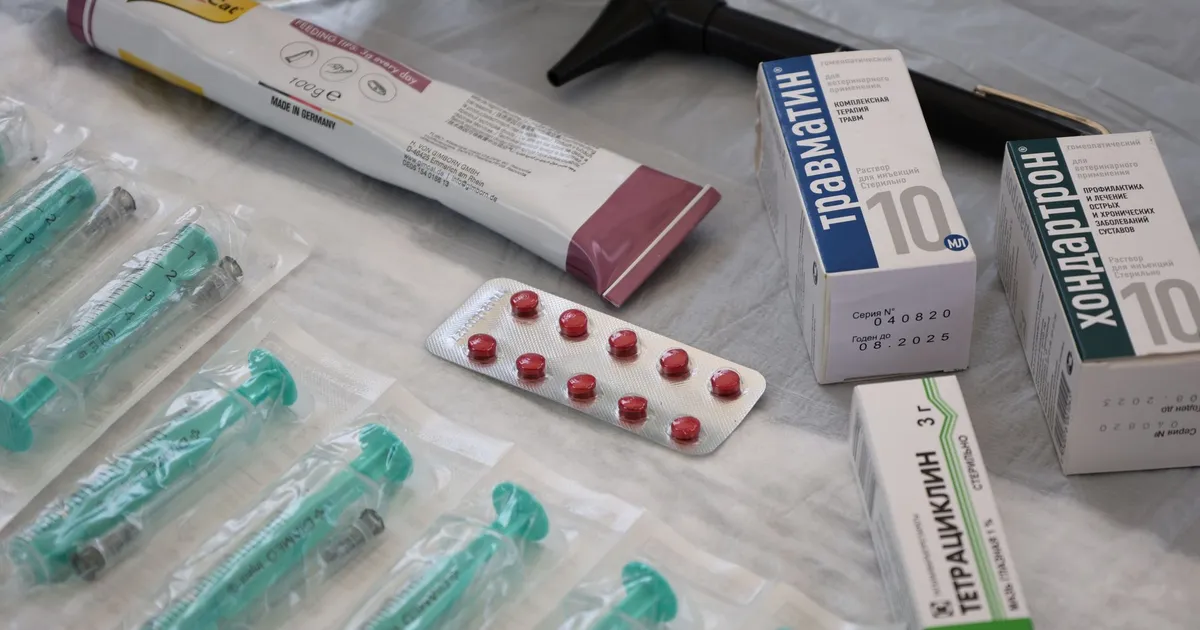

- The reassuring sterility studies are about insulin, which contains a preservative that kills bacteria; most reconstituted peptides do not.
- Contaminated syringes usually look perfectly clear, so inspection does not tell you anything.
- Silicone oil in syringes, plus air space and shaking, promoted aggregation of a GLP-1 peptide in laboratory work.
- No approved peptide label authorises filling syringes in advance at home.
Why people do it
Pre-filling syringes saves time, makes dosing consistent and helps people who find drawing up difficult, and it removes the daily chore of measuring a small volume accurately. It is an established practice with insulin, done by home nurses for patients who cannot fill their own, and that is where almost all of the published safety data comes from. People using research peptides copy the habit, often filling a week at a time from a reconstituted vial. The question is whether the insulin evidence transfers. Mostly, it does not.
The insulin sterility studies, and what they actually measured
In a 1990 study, visiting nurses filled 15 syringes for each of 20 elderly patients, who kept them in their home refrigerators; two were removed for culture each week for a month. None of the 159 syringes tested grew bacteria. The important part is the control arm: syringes deliberately contaminated with staphylococci stayed positive when they contained saline, but the contaminated insulin samples, positive at the start, had become negative by week 3, which the authors attributed to insulin's bactericidal activity (human study) 1.
In other words, that study did not show that refrigeration keeps a pre-filled syringe sterile. It showed that insulin formulations kill bacteria that get in. Reconstituted peptides mixed with plain sterile water contain no preservative and do nothing of the kind; our reconstitution guide covers the difference between diluents.
A longer study of reusing syringes and needles in 24 patients over 201 patient-weeks found no relevant contamination in 154 needles, 155 syringe rinses and 201 vials, and in 100 patients followed for up to seven years, only occasional small areas of redness across roughly 560,000 injections (human study) 2. Again: insulin, with its preservative, in a controlled routine.
| Concern when pre-filling | What the studies show |
|---|---|
| Sterility of the fill | Insulin prefilled by nurses and kept refrigerated for a month showed no growth in 159 syringes; insulin's own preservative killed deliberately added bacteria by week 3 |
| Contamination that hides | Contaminated syringe hubs often looked clear; 70.8% held viable bacteria and 95.6% of end products were contaminated after injection |
| Peptide sticking to or reacting with the syringe | Silicone oil plus headspace and agitation promoted liraglutide fibrillation |
| Material leaching | Leachable compounds found in pharmacy-compounded prefilled syringes, bags and vials |
| Starting material | Compounded GLP-1 samples differed from originators in strength and impurities, with potentially immunogenic peptides |
Contamination you cannot see
A 2011 study deliberately contaminated the hub fluid of 48 sterile syringes with small numbers of Staphylococcus epidermidis or Bacillus subtilis spores. After three weeks, only 20.8% looked cloudy, yet 70.8% contained viable bacteria, and when the syringe contents were injected into a sterile end product, 95.6% of those became contaminated (laboratory study) 3. The practical lesson is blunt: a clear-looking syringe is not evidence of anything, and contamination in a small volume can seed a much larger one. The authors framed it as an unacceptable risk to the end product 3.
What the syringe does to the peptide
A syringe is not a neutral container. Its plunger is lubricated with silicone oil, and a filled syringe contains an air bubble. A 2026 study examined both: mild agitation or limited air space caused minimal change to liraglutide, but greater headspace and stronger agitation promoted fibrillation, the formation of ordered aggregates, and the authors imaged the peptide interacting with silicone oil directly (laboratory study) 4. Commercial prefilled syringes are engineered and tested around these effects for one specific formulation; a generic syringe filled at home is not.
Headspace is not avoidable either: a syringe drawn from a vial carries an air bubble that people are taught to expel, but any that remains gives the peptide an air-water interface to sit against for the whole storage period 4. Containers can also give something back. A 2024 study of hospital pharmacy-compounded prefilled syringes, infusion bags and vials identified leachable compounds from the materials (laboratory study) 5. Peptides also stick to surfaces; adsorption losses to plastics are well enough known that they are studied in drug-delivery research 6.
What is in the vial before you fill anything
Pre-filling only compounds whatever is already there. A 2026 analysis by Novo Nordisk scientists compared follow-on and compounded semaglutide and liraglutide products against the originators, and found distinct impurity profiles including amino acid deletions and additions, unidentified impurities, significant differences in strength and in high-molecular-weight protein, and potentially immunogenic peptides presented by immune cells in a laboratory assay (laboratory study) 7. Our manufacturing guide explains where those impurities come from, and our compounded versus branded guide covers the regulatory picture.
A practice question worth separating from stability: a 2020 review warned about the risk of patient harm from unnecessarily diluting ready-to-administer prefilled syringes, since each extra manipulation adds a chance of error and contamination (review) 8. Every transfer step is a step where something can go wrong. A commercially prefilled syringe exists precisely to remove those steps; filling syringes at home from a vial adds them back, and adds a storage period on top.
The mechanical side: plungers, needles and dose accuracy
Two more things change while a filled syringe sits. The first is the force needed to start the plunger moving, which manufacturers measure as break-loose and glide force. Reassuringly, a 2026 study stored commercial prefilled syringes and autoinjectors tip-up and tip-down for 12 months and found the effects of orientation and time statistically detectable but practically negligible: break-loose shifts under 1 newton and injection-time differences under 2 seconds, with no out-of-specification performance (laboratory study) 9. That is good news for engineered, factory-filled syringes with a validated silicone layer, which is precisely what a home-filled generic syringe is not.
The second is the needle. Fluid sits in the hub of a filled syringe, exactly the compartment the contamination study sampled, where bacteria stayed invisible 3. Every published insulin study used refrigerated storage over short periods, so none tells us what happens to a research peptide left filled at room temperature for a week.
Aggregates matter beyond potency. Our injection-reaction guide covers why particles and impurities are linked to local reactions and immune responses, and the impurity analysis above found potentially immunogenic peptides in compounded GLP-1 samples 7.
Temperature, and why label periods differ
Temperature stability is product-specific. A 2023 Cochrane review of human insulin notes that in-use shelf life recommendations range from about 10 to 45 days and maximum in-use temperatures from 25 to 37 degrees Celsius depending on the product and authority (systematic review) 10. Approved peptide labels differ even more widely after mixing, from a few hours to weeks, as our shelf-life guide sets out. A pre-filled syringe cannot extend any of those periods; it only adds a container the manufacturer never tested, and the clock that matters still starts when the vial was mixed, not when the syringe was filled.
What injection guidelines say
Clinical guidance on insulin injection technique is detailed about handling but does not recommend home pre-filling. The 2019 East Africa Diabetes Study Group recommendations, written for settings where supplies are scarce, cover transport without undue shaking and above 0 and below 32 degrees Celsius, storage at 2 to 8 degrees for insulin kept over two months, keeping in-use insulin at room temperature and never immersed in water, because piercing a vial and then immersing it carries a high contamination risk that can cause injection abscesses, and the shortest available needles (consensus guideline) 11. On reuse, the group did not endorse it but, acknowledging that people do it, advised not frightening patients while capping reuse of a needle at five times 11. That is the tone of real-world guidance: specific limits, set by people who know the practice happens anyway.
Note what is absent. No guideline we read tells patients to fill a week of syringes themselves, and the published practice involved trained nurses filling them for patients who could not 1.
Lower-risk ways to solve the same problem
Pre-filling is usually solving a practical problem: time, dexterity, consistency or travel. Each has an answer that does not involve storing filled syringes. Dose consistency is better handled by getting the concentration right once and using a syringe whose markings match it; our reconstitution calculator does that arithmetic. Dexterity problems are worth raising with a clinician, since the devices that exist for them, such as pens, were designed and tested as sealed systems. For travel, the product's label, not a pre-filled syringe, sets what is possible, and our travel guide covers the rules.
What would make pre-filling defensible
Drawing the evidence together, the conditions under which pre-filling has been studied safely are narrow: a preserved formulation, filled by a trained person using aseptic technique, refrigerated, used within a short defined period, in a product whose manufacturer supports it. Insulin meets most of those. An unpreserved reconstituted research peptide in a generic syringe meets none of them, and the label of an approved peptide, not a practice borrowed from insulin, is what governs how it may be stored 10.
Questions worth asking
- Does this product contain a preservative, or is it mixed with plain sterile water?
- What does the product's own label say about storage after mixing?
- Who filled the syringes, where, and with what technique?
- Does the extra step add anything that could not be achieved by drawing up each dose at the time?
The bottom line
The studies people cite for pre-filled syringes are about insulin, and the clearest of them showed that insulin kills bacteria that get into the syringe rather than that the syringe stays sterile. Contamination hides in clear fluid, silicone oil and air promote peptide aggregation, containers leach, and compounded starting material already varies in strength and impurities. None of that makes pre-filling impossible in a clinical setting with a preserved product; it makes borrowing the practice for research peptides at home a very different proposition from the one the data supports.
Frequently asked questions
Can you pre-fill syringes with peptides?
The published sterility data is about insulin, which contains a preservative. Reconstituted peptides mixed with plain sterile water have no such protection, and no approved peptide label authorises home pre-filling.
Do pre-filled insulin syringes stay sterile?
In a 1990 study no bacteria grew in 159 refrigerated syringes, but the same study showed insulin itself killed deliberately added bacteria by week 3.
Can you see if a syringe is contaminated?
No. In one study only 20.8% of contaminated syringes looked cloudy while 70.8% contained viable bacteria.
Does silicone oil in syringes damage peptides?
In a 2026 laboratory study, silicone oil combined with air space and agitation promoted fibrillation of liraglutide.
How long can a reconstituted peptide be kept?
It depends entirely on the product's label; approved peptides range from a few hours to several weeks after mixing.
Related on Grey Peptides
Sources
- Jackson, E. A., et al. (1990). Sterility of insulin in prefilled disposable syringes. Am J Hosp Pharm, 47(11), 2508-10. PMID: 2278263
- Chlup, R., et al. (1990). A prospective study of the hazards of multiple use of disposable syringes and needles in intensified insulin therapy. Diabet Med, 7(7), 624-7. PMID: 2146071
- Yusop, N., et al. (2011). Low-level microbial contamination of liquid in syringe hubs leads to an unacceptable risk to the end product. J Pharm Pharmacol, 63(2), 164-8. PMID: 21235579
- Hamada, N., et al. (2026). Molecular Mechanisms of Liraglutide Aggregation Induced by Dual Air-Water and Silicone-Oil-Water Interfacial Stress. Mol Pharm, 23(2), 1295-1309. PMID: 41572471
- Bello, W., et al. (2024). Study of leachable compounds in hospital pharmacy-compounded prefilled syringes, infusion bags and vials. J Pharm Sci, 113(11), 3227-3237. PMID: 39173742
- Li, X., et al. (2019). Hydrophobic drug adsorption loss to syringe filters from a perspective of drug delivery. J Pharmacol Toxicol Methods, 95, 79-85. PMID: 30529169
- Kopp, K. L., et al. (2026). Impurities and Potential Immunogenicity Associated With Follow-on and Compounded Glucagon-like Peptide-1 Receptor Agonists. Pharm Res, 43(8), 2861-2886. PMID: 42533250
- Degnan, D. D., et al. (2020). Risk of Patient Harm Related to Unnecessary Dilution of Ready-to-Administer Prefilled Syringes: A Literature Review. J Infus Nurs, 43(3), 146-154. PMID: 32287169
- Mensah, V., et al. (2026). Impact of Storage Orientation and Duration on Prefilled Syringe Performance: Break-Loose and Glide Forces, and Injection Time Across Multiple Time Points. PDA J Pharm Sci Technol, . PMID: 42225409
- Richter, B., et al. (2023). Thermal stability and storage of human insulin. Cochrane Database Syst Rev, 11(11), CD015385. PMID: 37930742
- Bahendeka, S., et al. (2019). EADSG Guidelines: Insulin Storage and Optimisation of Injection Technique in Diabetes Management. Diabetes Ther, 10(2), 341-366. PMID: 30815830
Educational information, not medical advice. Each dose in this guide names its source, an approved label or a published study. None is a recommendation for you. An unapproved compound has no established safe or effective human dose, and products sold for “research use only” are not made or tested for people. Talk to a doctor before acting on anything on this site, including before you start, stop or change any medicine or dose.
New guides and rule changes, by email
One short email when a peptide's legal status moves — an FDA or PCAC decision, a WADA list change, an enforcement action — plus new guides and tools. At most one a week, and none when nothing changes. The newsletter has not started sending yet: your first email will be its first issue.
We keep your email address and the page you signed up from, nothing else. How it works · Privacy · RSS instead