Peptides for tendon and ligament injuries: the human evidence, ranked
Last updated: October 3, 2026 · 8 min read · By the Grey Peptides Editorial Board
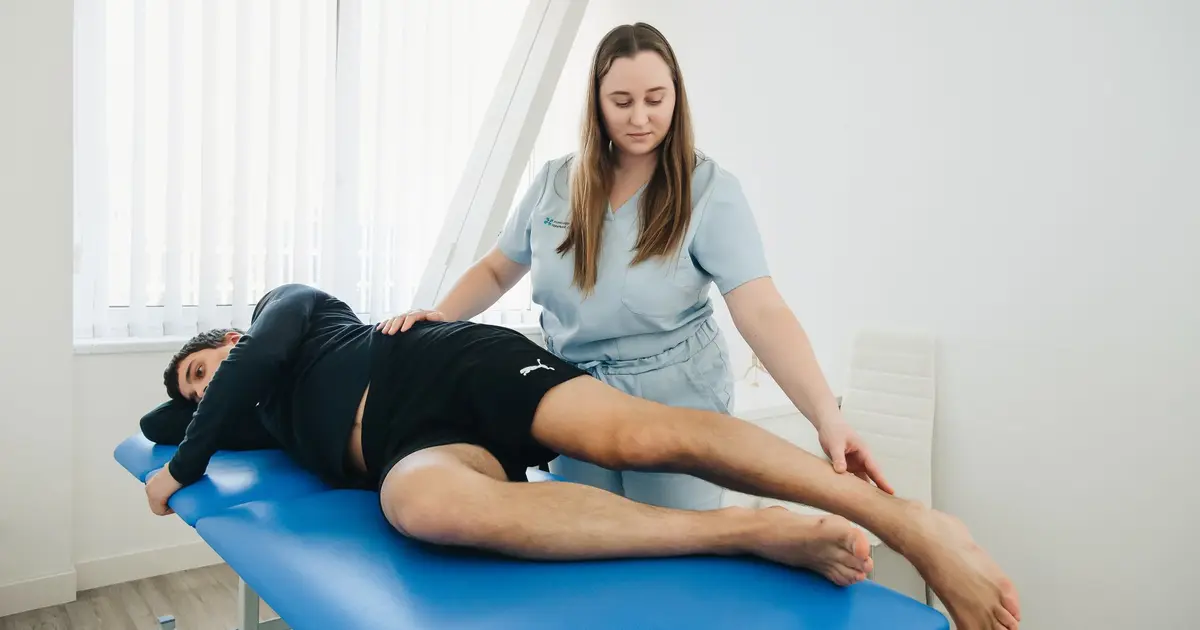

- Ranked by human evidence in tendon and ligament problems, the best-supported 'peptide' is a collagen supplement taken alongside rehabilitation exercise, and even that rests on small trials.
- BPC-157 has one uncontrolled chart review of 16 knee patients; a 2025 orthopaedic systematic review found 35 of its 36 studies were in animals or cells. TB-500 and GHK-Cu have no human tendon studies at all.
- What works best for most tendon problems is progressive loading exercise. Steroid injections relieve pain for weeks but can leave people worse off months later; platelet-rich plasma has shown no clear benefit in most tendon conditions.
Why tendons attract peptide marketing
Tendon and ligament injuries are slow and frustrating. Tendons have a limited blood supply, chronic tendon pain can last months or years, and the standard treatments ask for patience and months of exercise. That gap is where peptides are sold, with claims of faster, better healing drawn from animal studies. Our overview of healing peptides covers wound and gut healing more broadly; this article asks a narrower question. If you have tendinopathy, a partial tear or a ligament injury, what has actually been tested in people with that problem?
The answer depends on reading the evidence ladder honestly: cell studies and animal models first, then case series and uncontrolled reports, then randomised trials. Most claims for tendon peptides stop on the second rung. Our guide to reading a study explains why the rung matters.
The ranking
We ranked the products most sold for tendon and ligament injuries by the best human evidence in those injuries specifically, as of October 3, 2026. Evidence grades come from our encyclopedia and follow the rubric on our methodology page.
| Rank | Option | Best human evidence in tendon or ligament problems | Grade |
|---|---|---|---|
| 1 | Collagen peptides (oral, with exercise) | Small randomised trials as an add-on to rehabilitation, most of them multi-ingredient products | Medium |
| 2 | BPC-157 | One uncontrolled chart review of knee injections (16 patients); 35 of 36 studies in a 2025 systematic review were preclinical | Low |
| 3 | TB-500 | None for tendons. The parent protein, thymosin beta-4, has human safety and wound studies, not tendon trials | Low |
| 4 | GHK-Cu | None for tendons; its human studies are topical, on skin | Low |
| 5 | BPC-157 with TB-500 | Four patients in the same chart review; one rat Achilles study | Not graded as a pair |
1. Collagen peptides: small trials, with exercise
Collagen peptides are fragments of collagen protein taken by mouth, sold as supplements rather than drugs. They lead this ranking only because they have been tested in people with tendon problems at all. In a 2019 crossover pilot, 20 people with chronic Achilles tendinopathy followed a twice-daily calf-strengthening programme for six months and took collagen peptides or placebo for three months each. Function scores rose by 12.6 points in the first three months in those taking collagen first, against 5.3 points in those on placebo first; both groups improved further after crossing over, and no adverse events were reported 1.
A 2026 systematic review found six studies of collagen-based products in tendon and ligament tears or tendinopathy, including trials after anterior cruciate ligament reconstruction and rotator cuff repair. Collagen was associated with improvements in pain, function or imaging, but most oral products contained several ingredients, and only one tear study tested a clearly defined collagen peptide formulation. The authors described a cautiously positive signal as an add-on to rehabilitation 2. That is a modest finding, and it is about supplements taken with exercise, not injections. Our collagen article covers the wider evidence.
2. BPC-157: animal studies and one chart review
BPC-157 is the peptide most associated with tendon healing, and the gap between its reputation and its human evidence is wide. A 2025 systematic review written from an orthopaedic sports medicine perspective identified 36 eligible studies: 35 preclinical and one clinical 3. In animals, BPC-157 improved functional, structural and biomechanical outcomes in muscle, tendon, ligament and bone injury models 3.
The one clinical study is a 2021 chart review of knee injections at a single clinic. Of 16 patients reached by phone, most reported relief, but there was no control group, the outcome was recalled pain, and patients were selected after the fact 4. A 2025 two-person pilot found intravenous BPC-157 tolerated without changes in standard blood markers 5. No randomised trial has tested BPC-157 for any tendon or ligament injury. It is not approved by FDA, it is prohibited by WADA, and FDA's advisory committee recommendation to allow its compounding, made in July 2026, had not been acted on as of October 3, 2026.
3. TB-500: the parent protein's studies, not tendon trials
TB-500 is a short fragment of thymosin beta-4. Its human evidence is the parent protein's: a randomised safety study of intravenous thymosin beta-4 in healthy volunteers, in which adverse events were infrequent 6, and trials of topical and eye-drop formulations for wounds and corneal disease. None tested a tendon or ligament injury, and none tested TB-500 itself. In the only controlled comparison involving tendons, a 2026 rat study of repaired Achilles tendons, TB-500 alone produced a significant gain in the force the tendon could bear, while BPC-157 alone did not reach significance overall 7. That is one animal study.
4. GHK-Cu: skin studies only
GHK-Cu, a copper peptide, appears in several injury blends. Its human evidence is topical and about skin: in a small trial after laser resurfacing, patients rated their skin quality higher with a copper peptide cream, while investigator-rated outcomes did not differ 8. There is no human study of GHK-Cu for tendons or ligaments, and no human study of it injected.
5. Combinations and blends
The blends sold for injuries, such as BPC-157 with TB-500 or the three- and four-peptide mixes with GHK-Cu and KPV, have the least evidence of all. The only reports of giving any combination are the rat Achilles study 7 and four patients in the knee chart review who had separate injections of BPC-157 and thymosin beta-4 4. Our BPC-157 and TB-500 blend page sets out what is known about the commonest pair.
Ligaments are a separate, even thinner story
Most of the human research above concerns tendinopathy, the painful overuse condition of tendons. Ligament injuries, such as ankle sprains and tears of the anterior cruciate ligament in the knee, are different problems with different treatments. A torn anterior cruciate ligament does not heal back together on its own, which is why active people often have it reconstructed with a graft, and the months of rehabilitation that follow are what restore function.
The human peptide evidence for ligaments amounts to the collagen studies in the 2026 systematic review, which included one randomised trial after anterior cruciate ligament reconstruction and an indirect study in chronic ankle instability, both of oral collagen products as add-ons to standard care 2. We found no human study of BPC-157, TB-500 or GHK-Cu in any ligament injury. Claims that they 'regrow' ligaments rest entirely on animal models, and a reconstructed ligament heals by a graft remodelling over many months, which no peptide has been shown to speed in people.
What orthopaedics relies on instead
For most tendon problems, the treatment with the strongest evidence is exercise that progressively loads the tendon. A network meta-analysis of 37 randomised trials in patellar tendinopathy found that many treatments had been tested only once, that shockwave therapy was no better than a sham when both groups did eccentric exercise, and that the most promising combinations all included structured exercise 9. Loading programmes are the backbone of care for Achilles and patellar tendinopathy, and they take months.
Injections are a mixed picture. A large systematic review in The Lancet found that corticosteroid injections reduced pain in the short term, but in tennis elbow the effect reversed: at intermediate and long-term follow-up, people who had no injection did better 10. Platelet-rich plasma, made from a patient's own blood and rich in growth factors, has been tested in dozens of trials; a 2023 meta-analysis of 33 randomised trials found no clear differences from comparators in tennis elbow, plantar fasciitis, or Achilles, rotator cuff or patellar tendinopathy, with low or very low certainty evidence 11. A 2025 meta-analysis comparing it directly with steroid injections found some advantages for pain at three months in rotator cuff injury but no difference in function 12.
Surgery is reserved for complete ruptures, some tears and cases that fail months of rehabilitation, and decisions depend on the tendon, the injury and the person.
Why the human evidence is so thin
Tendon trials are hard to run well. Many tendon problems improve slowly with time and exercise, so a trial without a comparison group will make almost anything look effective. Outcomes such as pain and function scores are subjective, so blinding matters. And the peptides in question are not made by companies seeking approval, which is what usually pays for large trials. The result is that BPC-157 and TB-500 have been studied in hundreds of rats and almost no people, while the treatments orthopaedic surgeons actually use have been tested, and sometimes found wanting, in randomised trials.
A note for athletes
BPC-157 and TB-500 are both prohibited at all times under the World Anti-Doping Code, and GHK-Cu and KPV fall under its catch-all for non-approved substances. An athlete using any of them for an injury risks a ban, whatever the reason. Collagen supplements are not prohibited, but supplements can be contaminated, which is why many sports bodies recommend batch-tested products. Our WADA status page lists every entry.
The bottom line
If you have a tendon or ligament injury, the evidence points to a diagnosis from a clinician, a structured, progressive loading programme, patience, and caution about quick fixes, including steroid injections for chronic tendon pain. A collagen supplement alongside exercise has a small, cautiously positive evidence base. The peptides most marketed for tendons, BPC-157, TB-500 and their blends, have animal data and almost nothing in people. Nothing on this page is a recommendation or a dose; discuss any treatment with a clinician who knows your injury.
Frequently asked questions
What is the best peptide for tendon repair?
No peptide has been shown in randomised trials to heal tendons. Oral collagen peptides taken with rehabilitation exercise have the most human evidence, from small trials. BPC-157 has one uncontrolled 16-patient chart review; TB-500 and GHK-Cu have no human tendon studies.
Does BPC-157 work for tendonitis?
It has not been tested in a controlled human trial. A 2025 orthopaedic systematic review found 35 of 36 BPC-157 studies were in animals or cells. The one human report had no comparison group.
Is TB-500 good for tendons?
There is no human study of TB-500 for tendons. Its human data are for the parent protein, thymosin beta-4, in safety, wound and eye studies. One rat study found TB-500 strengthened repaired Achilles tendons.
What actually helps tendinopathy?
Progressive loading exercise is the mainstay. Steroid injections relieve pain for weeks but can be worse than no injection months later in tennis elbow, and platelet-rich plasma has shown no clear benefit in most tendon conditions.
Related on Grey Peptides
Sources
- Praet, S. F. E., et al. (2019). Oral Supplementation of Specific Collagen Peptides Combined with Calf-Strengthening Exercises Enhances Function and Reduces Pain in Achilles Tendinopathy Patients. Nutrients, 11(1). PMID: 30609761
- Latini, L., et al. (2026). Clinical evidence for low-molecular-weight collagen peptides in tendon and ligament tears: a systematic review with narrative synthesis. Front Med (Lausanne), 13, 1891011. PMID: 42666580
- Vasireddi, N., et al. (2025). Emerging Use of BPC-157 in Orthopaedic Sports Medicine: A Systematic Review. HSS J, 21(4), 485-495. PMID: 40756949
- Lee, E., et al. (2021). Intra-Articular Injection of BPC 157 for Multiple Types of Knee Pain. Altern Ther Health Med, 27(4), 8-13. PMID: 34324435
- Lee, E., et al. (2025). Safety of Intravenous Infusion of BPC157 in Humans: A Pilot Study. Altern Ther Health Med, 31(5), 20-24. PMID: 40131143
- Ruff, D., et al. (2010). A randomized, placebo-controlled, single and multiple dose study of intravenous thymosin beta4 in healthy volunteers. Ann N Y Acad Sci, 1194, 223-9. PMID: 20536472
- Biçer, O., et al. (2026). Effects of BPC-157 and TB-500 on Achilles tendon healing in rats: A histopathological and biomechanical study. Jt Dis Relat Surg, 37(3), 822-837. PMID: 42542926
- Miller, T. R., et al. (2006). Effects of topical copper tripeptide complex on CO2 laser-resurfaced skin. Arch Facial Plast Surg, 8(4), 252-9. PMID: 16847171
- Challoumas, D., et al. (2021). Management of patellar tendinopathy: a systematic review and network meta-analysis of randomised studies. BMJ Open Sport Exerc Med, 7(4), e001110. PMID: 34900334
- Coombes, B. K., et al. (2010). Efficacy and safety of corticosteroid injections and other injections for management of tendinopathy: a systematic review of randomised controlled trials. Lancet, 376(9754), 1751-67. PMID: 20970844
- Masiello, F., et al. (2023). Ultrasound-guided injection of platelet-rich plasma for tendinopathies: a systematic review and meta-analysis. Blood Transfus, 21(2), 119-136. PMID: 36346880
- Ye, Z., et al. (2025). Platelet-rich plasma and corticosteroid injection for tendinopathy: a systematic review and meta-analysis. BMC Musculoskelet Disord, 26(1), 339. PMID: 40200209
Educational information, not medical advice. Each dose in this guide names its source, an approved label or a published study. None is a recommendation for you. An unapproved compound has no established safe or effective human dose, and products sold for “research use only” are not made or tested for people. Talk to a doctor before acting on anything on this site, including before you start, stop or change any medicine or dose.
New guides and rule changes, by email
One short email when a peptide's legal status moves — an FDA or PCAC decision, a WADA list change, an enforcement action — plus new guides and tools. At most one a week, and none when nothing changes. The newsletter has not started sending yet: your first email will be its first issue.
We keep your email address and the page you signed up from, nothing else. How it works · Privacy · RSS instead