Venom to medicine: the peptide drugs that began as toxins
Last updated: October 3, 2026 · 8 min read · By the Grey Peptides Editorial Board
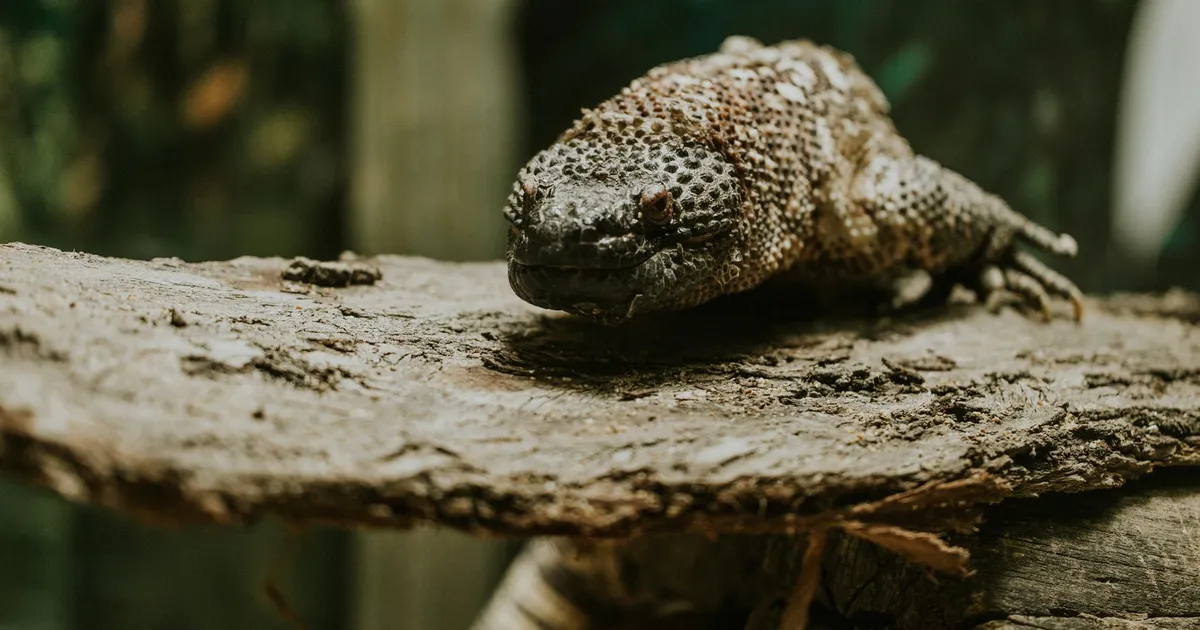

- Exenatide, the first GLP-1 drug, is a synthetic copy of a peptide from Gila monster secretions.
- Ziconotide, a cone snail toxin, relieves severe pain when opioids fail, but causes frequent neurological side effects.
- Eptifibatide came from pygmy rattlesnake venom; bivalirudin from leech saliva; captopril from a Brazilian pit viper.
- Venom peptides became drugs because they were already selective and potent, not because they were natural.
Why venom is a good place to look
A venom is not a single poison. It is a mixture of peptides and proteins, each shaped by selection to hit a specific target in another animal fast and at tiny concentrations: a sodium channel, a clotting enzyme, a hormone receptor. That is a description of what a drug does. The difference between a toxin and a medicine is often dose, route and which species is on the receiving end. Venom is also, from a chemist's point of view, a pre-screened library: the molecules in it already bind something important, which is the hardest part of finding a drug.
Several important medicines came out of this. What follows is each one's origin, and what it actually does, with its approval status as we read it.
| Drug | Came from | Status |
|---|---|---|
| Exenatide (Byetta, Bydureon) | Exendin-4, in the saliva and venom of the Gila monster | Approved 2005; all three US applications now discontinued |
| Ziconotide (Prialt) | A cone snail toxin | Approved 2004 for severe chronic pain needing intrathecal therapy |
| Eptifibatide (Integrilin) | Barbourin, from the southeastern pygmy rattlesnake | Approved 1998; brand discontinued, generics available |
| Bivalirudin (Angiomax) | Hirudin, from medicinal leech saliva | Approved 2000 as an anticoagulant in angioplasty |
| Captopril | Bradykinin-potentiating peptides from the Brazilian pit viper | A small molecule, not a peptide; the starting point was the venom peptide |
The Gila monster and the GLP-1 drugs
The best-known case is also the most consequential. Exenatide is synthetic exendin-4, a peptide originally isolated from the salivary secretions of the Gila monster, a venomous lizard of the southwestern United States and northwestern Mexico (review) 1. Exendin-4 resembles human GLP-1 closely enough to activate the same receptor, but it resists the enzyme that breaks GLP-1 down within minutes, so it lasts long enough to be a medicine.
In preclinical models exenatide enhanced glucose-dependent insulin secretion, suppressed inappropriately high glucagon, slowed gastric emptying, reduced body weight and enhanced satiety, and in trials both its formulations reduced blood glucose in type 2 diabetes with weight loss (review) 1. It was approved in the US as Byetta in April 2005 and as the weekly Bydureon in 2012, and Drugs@FDA now lists all three applications as discontinued 2. A 2026 history traces the line from that lizard to today's GLP-1 receptor agonists for obesity and metabolic disease, and notes the Gila monster's place in Navajo culture long before any of this (review) 3.
The lineage matters for how people talk about these drugs. Semaglutide and tirzepatide are not lizard peptides; they are human-sequence molecules engineered for long action, as our semaglutide guide describes. What the Gila monster supplied was the proof that a GLP-1 receptor agonist could survive in the body long enough to work.
The cone snail and a painkiller of last resort
Cone snails hunt fish with a venom containing dozens of small peptides that paralyse prey within seconds. One of them blocks N-type calcium channels, which carry pain signals in the spinal cord. Its synthetic version, ziconotide, was approved in the US in December 2004 as Prialt for severe chronic pain in adults for whom intrathecal therapy is warranted and who cannot tolerate or no longer respond to other treatment 2.
The trials show both its value and its limits. In 220 patients given slow intrathecal titration, improvement in pain scores from baseline to week three was 14.7% with ziconotide against 7.2% with placebo, with dizziness, confusion, ataxia and abnormal gait among the significant adverse events (randomised trial) 4. In a trial in non-malignant pain, the mean reduction in pain score was 31.2% against 6.0% on placebo, again with a considerable incidence of side effects during titration (randomised trial) 5.
Ziconotide has to be delivered into the spinal fluid by a pump, it is not an opioid and does not cause addiction or respiratory depression, and its side effects are neurological and dose-related. It is a different kind of analgesic, which is why it has a place despite being difficult to use. The two trials also show how much the measured benefit depended on the design: a 14.7% improvement over three weeks of slow titration in one, 31.2% in the other, both statistically significant and both well short of pain relief 4 5.
Snakes, clotting and blood pressure
Snake venoms act on blood, which made them a source for cardiovascular drugs. Eptifibatide is a heptapeptide derived from barbourin, a protein in the venom of the American southeastern pygmy rattlesnake, and it blocks the platelet receptor that fibrinogen uses to make platelets clump; tirofiban is a small molecule based on a related snake peptide (review) 6. Eptifibatide was approved in the US in May 1998 as Integrilin, now discontinued as a brand with generics available 2.
Captopril's story runs the other way, from peptide to pill. Bradykinin-potentiating peptides were found in the venom of the Brazilian pit viper Bothrops jararaca, and their discovery had a pivotal influence on the development of captopril, the first active-site-directed inhibitor of angiotensin-converting enzyme and a drug used worldwide for hypertension (review) 7. Captopril itself is not a peptide: the venom peptides showed what the target was and what binding it required, and chemists built a small molecule that did it. That one step opened an entire drug class, the ACE inhibitors, which remain among the most prescribed medicines for blood pressure and heart failure.
Leeches and thrombin
Not all of these came from venom in the strict sense. Hirudin and bivalirudin were developed from the observation that the salivary extracts of medicinal leeches prevent blood from clotting; both are bivalent direct thrombin inhibitors that bind thrombin and block its enzymatic activity (review) 8. Bivalirudin was approved in the US in December 2000 as Angiomax, for patients with unstable angina undergoing coronary angioplasty 2.
The same review records what came next: understanding the structure of thrombin allowed small-molecule inhibitors such as argatroban to be designed directly 8. That is the recurring arc. The animal peptide proves the target is druggable; chemistry then takes over.
How the Gila monster peptide was actually found
The discovery is worth telling precisely, because the popular version compresses it. Exendin-3 had been identified in the venom of the Mexican beaded lizard as a new member of the glucagon family acting on the pancreas, which prompted a search for a similar peptide in the venom of the Gila monster, Heloderma suspectum. Exendin-4 was isolated there in 1992; it differs from exendin-3 by two amino acid substitutions and is otherwise identical, and in pancreatic cells natural and synthetic exendin-4 raised cAMP from concentrations as low as 100 picomolar (laboratory study) 9.
So the order of events was: a venom peptide noticed for an effect on the pancreas, a deliberate search for relatives, isolation and sequencing, then synthesis. The resemblance to human GLP-1 and the therapeutic idea came afterwards, more than a decade before the first approval 1.
Toxins that have not become drugs
For balance, most toxin-derived candidates do not arrive. Chlorotoxin, a scorpion peptide that binds selectively to glioma cells, was used to make a fluorescent conjugate called tumour paint, intended to let surgeons see the edges of a cancer during an operation (animal study) 10. The idea is a decade and a half old, which is a reminder of how long the path from an elegant binding property to an approved product is, and how many do not finish it.
What the successes have in common
Three things stand out across these drugs. Each acts on a precisely identified target, not on a vague process. Each was isolated, sequenced and synthesised, so the medicine is a defined molecule made in a factory rather than an extract of an animal. And each was tested in trials that measured a clinical outcome: blood glucose, pain scores, cardiac events.
None of them succeeded because the source was natural. Exendin-4's advantage over human GLP-1 was resistance to an enzyme, a chemical property. Ziconotide's value is confined to a route of administration most patients will never have. Venom is a useful library precisely because evolution optimised these molecules for potency and selectivity, which is also what makes them dangerous. The same property that kills a fish in seconds is the one a medicinal chemist wants: a molecule that does one thing, hard.
Two of these are no longer sold as brands
A detail that gets lost: being first does not mean lasting. All three US applications for exenatide are listed as discontinued in Drugs@FDA, and Integrilin's brand is discontinued with generics still available 2. We did not find a regulatory statement giving reasons in either case, and a discontinuation notice records only that a company stopped marketing a product, not why.
What can be said is that both were first-in-class and both now sit behind later options: exenatide within a GLP-1 class that grew around it, which our semaglutide guide maps, and eptifibatide as a brand superseded by its own generics. A discovery story is not the whole of a drug's working life.
The marketing version of this story
The venom origin story is often borrowed to sell unapproved peptides, with the implication that a dramatic natural source implies potency or safety. It implies neither. Our melanotan II entry and manufacturing guide cover compounds with interesting origins and no approval. The drugs above are distinguished by what happened after the discovery: isolation, synthesis, trials, labels and, in two cases here, discontinuation when better options arrived.
The bottom line
A desert lizard's peptide started the GLP-1 class; a cone snail's toxin became a painkiller for people opioids cannot reach; a rattlesnake and a leech supplied cardiovascular drugs; a pit viper pointed chemists at the enzyme that captopril would block. The pattern is consistent: venom gave medicine a validated target and a starting structure, then synthesis and clinical trials did the rest.
Frequently asked questions
Is Ozempic made from Gila monster venom?
No. The first drug in the class, exenatide, is a synthetic copy of a Gila monster peptide; semaglutide is a human-sequence molecule engineered for long action.
What drug comes from cone snail venom?
Ziconotide (Prialt), approved in 2004 for severe chronic pain requiring intrathecal delivery.
Which heart drugs came from snake venom?
Eptifibatide derives from a pygmy rattlesnake peptide, tirofiban from a related one, and captopril was developed from pit viper peptides.
Is bivalirudin made from leeches?
It was developed from hirudin, found in medicinal leech saliva; the drug itself is synthesised.
Does a venom origin make a peptide safe or potent?
No. These drugs succeeded because they were isolated, synthesised and tested in trials, not because of their source.
Related on Grey Peptides
Sources
- Parkes, D. G., et al. (2013). Discovery and development of exenatide: the first antidiabetic agent to leverage the multiple benefits of the incretin hormone, GLP-1. Expert Opin Drug Discov, 8(2), 219-44. PMID: 23231438
- Grey Peptides encyclopedia entries for exenatide (Byetta NDA 021773, April 28, 2005; Bydureon NDA 022200, January 27, 2012; Bydureon BCise NDA 209210, October 20, 2017, all applications listed discontinued), ziconotide (Prialt, NDA 021060, December 28, 2004), eptifibatide (Integrilin, NDA 020718, May 18, 1998; generics) and bivalirudin (Angiomax, NDA 020873, December 15, 2000). Drugs@FDA and labels read between September 28 and October 1, 2026.
- Dyson, S., et al. (2026). From Gila Monster Venom to Dermatology: The History of GLP-1 Receptor Agonists. Clin Dermatol, . PMID: 42749027
- Rauck, R. L., et al. (2006). A randomized, double-blind, placebo-controlled study of intrathecal ziconotide in adults with severe chronic pain. J Pain Symptom Manage, 31(5), 393-406. PMID: 16716870
- Wallace, M. S., et al. (2006). Intrathecal ziconotide in the treatment of chronic nonmalignant pain: a randomized, double-blind, placebo-controlled clinical trial. Neuromodulation, 9(2), 75-86. PMID: 22151630
- Lazarovici, P., et al. (2019). From Snake Venom's Disintegrins and C-Type Lectins to Anti-Platelet Drugs. Toxins (Basel), 11(5). PMID: 31137917
- Camargo, A. C., et al. (2012). Bradykinin-potentiating peptides: beyond captopril. Toxicon, 59(4), 516-23. PMID: 21835190
- Coppens, M., et al. (2012). Translational success stories: development of direct thrombin inhibitors. Circ Res, 111(7), 920-9. PMID: 22982873
- Eng, J., et al. (1992). Isolation and characterization of exendin-4, an exendin-3 analogue, from Heloderma suspectum venom. Further evidence for an exendin receptor on dispersed acini from guinea pig pancreas. J Biol Chem, 267(11), 7402-5. PMID: 1313797
- Veiseh, M., et al. (2007). Tumor paint: a chlorotoxin:Cy5.5 bioconjugate for intraoperative visualization of cancer foci. Cancer Res, 67(14), 6882-8. PMID: 17638899
Educational information, not medical advice. Each dose in this guide names its source, an approved label or a published study. None is a recommendation for you. An unapproved compound has no established safe or effective human dose, and products sold for “research use only” are not made or tested for people. Talk to a doctor before acting on anything on this site, including before you start, stop or change any medicine or dose.
New guides and rule changes, by email
One short email when a peptide's legal status moves — an FDA or PCAC decision, a WADA list change, an enforcement action — plus new guides and tools. At most one a week, and none when nothing changes. The newsletter has not started sending yet: your first email will be its first issue.
We keep your email address and the page you signed up from, nothing else. How it works · Privacy · RSS instead