Rusfertide's VERIFY Trial Is Published: The Peer-Reviewed Results Behind Mimrylo
Published: November 3, 2026 · 3 min read · By Grey Peptides News Desk · ✓ Sourced
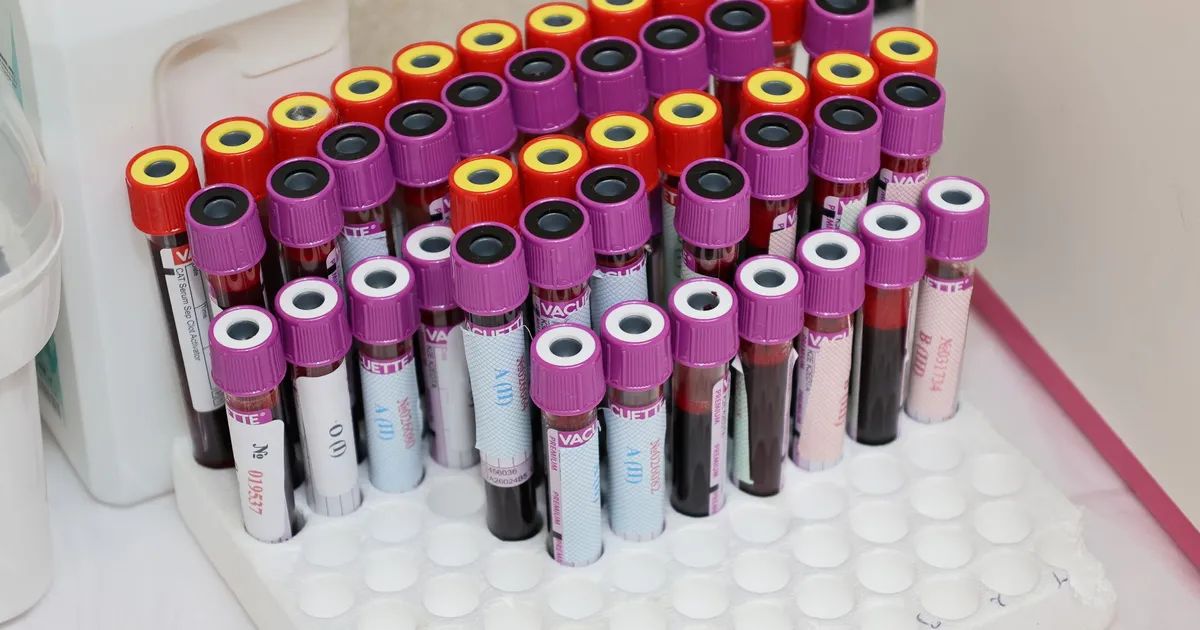
The phase 3 trial that won rusfertide its US approval as Mimrylo is now published in a peer-reviewed journal. In VERIFY, 77% of 147 people with polycythaemia vera on rusfertide had a clinical response, meaning they no longer qualified for phlebotomy between weeks 20 and 32, against 33% of 146 on placebo. The paper adds fatigue and symptom results that the approval announcement did not report.
The trial
Polycythaemia vera is a bone marrow cancer that makes too many red blood cells, which thickens the blood and raises the risk of clots. The usual treatment is phlebotomy, the regular removal of blood, often with a drug that slows the marrow. Rusfertide is a weekly injected peptide that mimics hepcidin, the hormone that controls how much iron reaches the marrow; with less iron, the marrow makes fewer red cells. FDA approved it as Mimrylo on August 28, 2026, on the strength of VERIFY.
VERIFY at a glance
- What it was: a randomised, double-blind, placebo-controlled phase 3 trial (NCT05210790). The published part, Part 1a, ran 32 weeks.
- Who took part: 293 adults with polycythaemia vera who needed frequent phlebotomy despite standard care.
- Compared with: placebo, each added to the patient's existing treatment, with or without a marrow-slowing drug.
- Primary endpoint: clinical response, meaning no longer qualifying for phlebotomy between weeks 20 and 32.
- Published: Journal of Clinical Oncology, online October 13, 2026.
What the paper reports
113 of 147 patients on rusfertide (77%) had a clinical response, against 48 of 146 on placebo (33%). Over 32 weeks, patients on rusfertide needed an average of 0.5 phlebotomies against 1.8 on placebo. 63% kept their hematocrit, the share of blood made up of red cells, below the 45% target, against 14% on placebo. Fatigue and symptom scores, measured with standard questionnaires, improved more on rusfertide than on placebo. The commonest side effects were injection-site reactions, anaemia and fatigue, and no deaths were reported.
What it means for readers
Until now the trial's results were known from the FDA's announcement and the label. Publication puts them through peer review and adds the patient-reported outcomes, which matter in a disease where tiredness is one of the main complaints. The figures agree with the label's: 76.9% against 32.9%, and 0.53 against 1.82 phlebotomies.
What is not yet known
The published results cover 32 weeks. The registry lists VERIFY as still active, with completion expected in August 2028, so whether the effect and safety hold over years is not yet reported. Its endpoints, as the abstract lists them, do not include clots or survival, so the paper cannot say whether rusfertide prevents either. Rusfertide is approved in the US only; studies in Japan and China are registered.
Related on Grey Peptides
How a hepcidin mimetic works, the label and the trials. FDA approves Mimrylo
The August 28 approval and what the label says. Peptide pipeline tracker
Rusfertide's row, with its next milestone.
Peer-reviewed paper, published online October 13, 2026; its PubMed record and abstract were read on November 3, 2026. Every figure in this post is from the paper's abstract.