LL-37: the human antimicrobial peptide up for FDA review
Last updated: October 3, 2026 · 8 min read · By the Grey Peptides Editorial Board
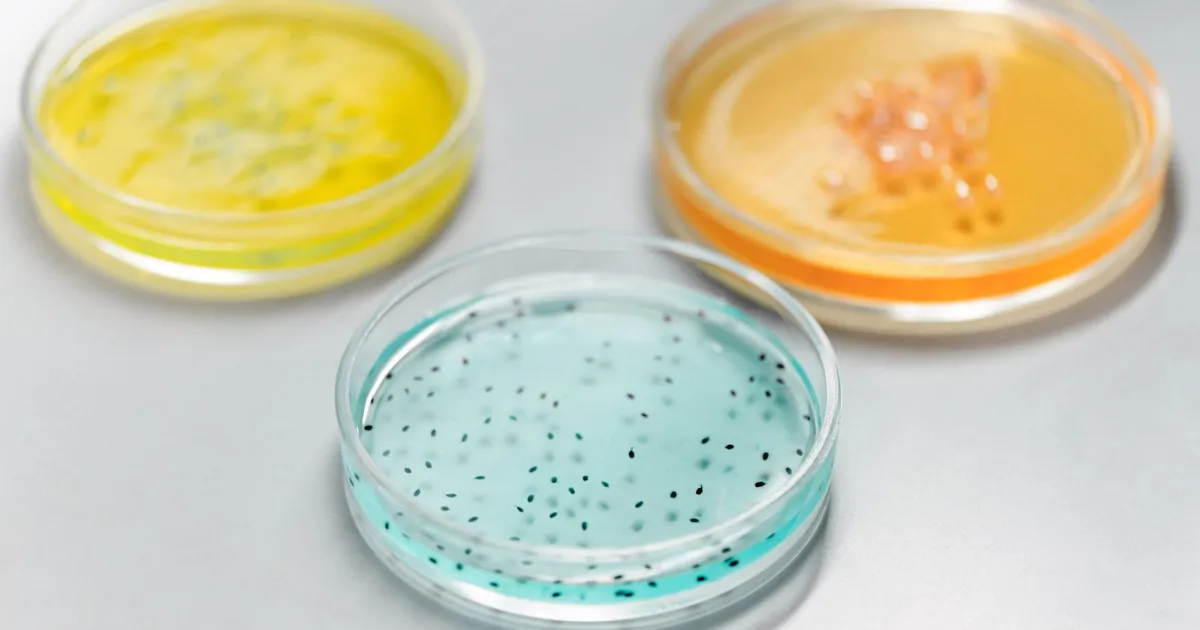

- LL-37 is the only human cathelicidin, a natural peptide that kills microbes and signals to the immune system.
- On leg ulcers, a small trial looked promising but the larger phase 2b trial did not improve healing overall.
- FDA says compounded LL-37 may provoke immune reactions, and that animal and cell findings suggest harm to male reproduction and possible tumour promotion.
- It is one of five peptides FDA plans to put before its compounding advisory committee before the end of February 2027. It is not approved.
What LL-37 is
Cathelicidins are a family of antimicrobial peptides, and LL-37 is the only one humans make, named for its 37 amino acids beginning with two leucines. A 2012 review describes it as antibacterial, antifungal and antiviral, and also as a signal that attracts immune cells, modulates immunity, promotes wound healing and new blood vessels, and affects cell death (review) 1. Its precursor, hCAP18, is found in every human organ examined, highest in the gut and brain (laboratory study) 2.
It is part of everyday defence. Cells lining the urinary tract release it within moments of contact with bacteria, and mice lacking it were less protected against urinary infection (animal and human study) 3.
The wound trials
LL-37's main clinical test has been on chronic wounds. In a 2014 trial, 34 people with hard-to-heal venous leg ulcers applied topical LL-37 at one of three strengths or placebo for four weeks; the two lower strengths healed about six and three times faster than placebo and shrank ulcers by 68% and 50%, while the highest strength did no better than placebo (randomised trial) 4.
The larger follow-up, HEAL LL-37, randomised 148 patients with the same kind of ulcers to two strengths or placebo alongside compression. Across the whole group, LL-37 did not significantly improve healing; a post hoc analysis found benefit in wounds of at least 10 cm², a subgroup result that needs its own trial (randomised trial) 5. In a trial in Jakarta in mildly infected diabetic foot ulcers, LL-37 cream improved granulation, the growth of healthy wound tissue, at every weekly check, but did not lower inflammation markers or bacterial colonisation (randomised trial) 6.
| Trial | Patients | Result |
|---|---|---|
| Phase 1/2, venous leg ulcers (2014) | 34 | Two lower strengths healed faster than placebo; the highest did not |
| HEAL LL-37, phase 2b, venous leg ulcers (2021) | 148 | No significant healing benefit overall; post hoc signal in larger wounds |
| Diabetic foot ulcers, Jakarta (2023) | Not given in abstract | Better granulation; no change in inflammation markers or bacteria |
| Oral recombinant LL-37, COVID-19 (2023) | 238, open label | Faster negative viral test (9.8 vs 14.0 days) |
The pattern is familiar: a promising small trial, then a larger one that misses, with an inverted dose response along the way, where the highest strength worked least 4.
LL-37 by mouth in COVID-19
A different product, a genetically modified Lactococcus bacterium that delivers LL-37 in the gut, was tested in 238 adults hospitalised with an Omicron variant. In an open-label study, it shortened the time to a negative viral test to 9.8 days against 14.0 with placebo, with no severe adverse events; the open-label design limits how far the result can be trusted (randomised, open-label trial) 7. That product is not what is sold online as LL-37 powder, and its result says nothing about injecting synthetic LL-37.
When more LL-37 is not better
Because LL-37 is a powerful immune signal, too much of it, or the wrong form, can cause harm. People with rosacea have abnormally high cathelicidin in their facial skin, processed into different fragments than in healthy skin; injecting those fragments into mouse skin increased inflammation, and mice lacking the gene confirmed its role (human tissue and animal study) 8. In 109 breast cancers, LL-37's precursor tracked a growth receptor and lymph-node spread, and LL-37 increased breast cancer cell migration in the laboratory, with overexpression promoting metastasis in mice (laboratory and animal study) 9. In cultured brain immune cells, it triggered release of inflammatory signals (laboratory study) 2.
Not every finding points one way: in rats with heat stroke, LL-37 reduced gut injury and system-wide inflammation (animal study) 10. The point is that LL-37's effects depend heavily on context, which is why dosing it outside a trial is a gamble.
LL-37 and autoimmunity: the psoriasis story
LL-37's strongest link to disease runs through psoriasis. A 2007 study in Nature found that LL-37 is the key factor that lets a type of immune cell, the plasmacytoid dendritic cell, react to the body's own DNA: LL-37 binds self-DNA into condensed aggregates that these cells take up and mistake for a viral signal, triggering interferon production, a mechanism the authors linked to breaking tolerance in psoriasis (laboratory study with patient samples) 11.
LL-37 is now counted among the autoantigens of psoriasis. A 2020 review lists cathelicidin LL-37 as one of four psoriasis autoantigens discovered since 2014, with self-reactive T cells against it found in a number of patients with moderate-to-severe plaque psoriasis, and autoantibodies against it strongly associated with psoriatic arthritis (review) 12. That is a specific reason for caution with any product that adds more LL-37 to the body, particularly by injection, and it gives concrete shape to FDA's general immunogenicity concern 13.
What FDA says, as of October 3, 2026
FDA's list of bulk substances that may present significant safety risks in compounding includes cathelicidin LL-37. FDA says compounded drugs containing it may pose a risk of immunogenicity for certain routes of administration and may have complexities with peptide-related impurities and characterisation of the active ingredient; that it lacks sufficient safety information to know whether the drug would cause harm in humans; and that nonclinical findings suggest detrimental effects on male reproduction and that it can promote tumours in some tissues 13.
LL-37 is not on FDA's Category 2 list; FDA records it as no longer under active Category 2 status 13. On April 15, 2026, FDA announced that its Pharmacy Compounding Advisory Committee would review five more peptides, LL-37 among them with GHK-Cu, dihexa acetate, melanotan II and pegylated mechano growth factor, at a meeting before the end of February 2027 14. As of early October 2026, trade coverage reported no meeting date had been published 15. An advisory vote is not approval: any change to the compounding list would still need FDA rulemaking, as our PCAC hub explains for the July 2026 votes.
The other four peptides in the review
LL-37 shares the coming review with four very different compounds: GHK-Cu, a copper-binding tripeptide; dihexa acetate, an angiotensin-derived compound; melanotan II, a tanning and sexual-function melanocortin agonist; and pegylated mechano growth factor 14. Our pages cover three of them in depth: the GHK-Cu entry and injectable GHK-Cu guide, the dihexa safety article, and the melanotan II entry. Trade coverage has noted that dihexa and LL-37 come to the committee with even less clinical data than the July slate had 15.
What to watch for at the meeting
When the meeting is scheduled, FDA's briefing documents will set out its review of the evidence. For LL-37, the questions FDA has already raised give a guide to what will matter: whether the route proposed, topical or injected, changes the immunogenicity risk; whether impurities and characterisation can be controlled; and how to weigh the nonclinical male-reproduction and tumour-promotion findings against the modest human wound data 13. We will cover the briefing and any vote on our PCAC hub and in the Wire.
Why immunogenicity matters for a human peptide
It may seem odd that a peptide the body already makes could provoke an immune reaction. But a synthetic version can carry impurities, aggregates or modified forms that the immune system has never seen, and the route matters: a peptide normally present on skin and mucosa behaves differently when injected. Our guide to how peptides are made explains how impurities arise and why they can be immunogenic, the concern FDA raises for LL-37 13.
LL-37 and vitamin D
LL-37 often appears in discussions of vitamin D and infection. The human data are not simple: in serum from 95 patients with tuberculosis, 86% had insufficient vitamin D, but vitamin D status did not correlate with LL-37 levels, and higher LL-37 went with more severe disease markers (observational study) 16. Measuring or raising LL-37 is not an established way to prevent infection.
Status and sport
LL-37 is not approved anywhere 17. For athletes, it falls under WADA's S0 by inference as an unapproved substance 17. Our WADA hub explains S0.
Questions to ask before using LL-37
- Has it been tested in people for what I want to use it for? Its best evidence, on leg ulcers, missed its main goal in the larger trial.
- Is the product topical or injectable? FDA's immunogenicity concern is route-dependent.
- Do I have rosacea, psoriasis or psoriatic arthritis, or a history of cancer? Laboratory and tissue findings warrant caution.
- What is actually in the vial, and has it been tested for impurities?
- Am I subject to anti-doping rules?
The bottom line
LL-37 is a genuinely important part of human defence against infection. As a drug, it has one positive small trial, one larger trial that missed, a foot-ulcer study with mixed outcomes and an open-label COVID-19 result with a different product. FDA has flagged immunogenicity, impurity, male-reproduction and tumour-promotion concerns, and it will be reviewed by the compounding advisory committee before the end of February 2027. Until then, and after, it is not an approved medicine.
Frequently asked questions
What is LL-37?
The only human cathelicidin, a 37-amino-acid antimicrobial peptide made by skin, gut and other tissues that kills microbes and signals to the immune system.
Does LL-37 heal wounds?
A 34-patient leg-ulcer trial was promising, but the 148-patient HEAL LL-37 trial did not significantly improve healing overall. A diabetic foot ulcer trial reported better granulation.
Is LL-37 FDA-approved?
No. FDA lists safety concerns for compounded LL-37 and plans a compounding advisory committee review before the end of February 2027.
What are LL-37's risks?
FDA cites possible immunogenicity, impurity complexities and nonclinical findings suggesting harm to male reproduction and tumour promotion. Excess cathelicidin also drives rosacea inflammation.
When is the PCAC meeting on LL-37?
FDA said it would be held before the end of February 2027; as of early October 2026 no date had been published.
Related on Grey Peptides
Sources
- Vandamme, D., et al. (2012). A comprehensive summary of LL-37, the factotum human cathelicidin peptide. Cell Immunol, 280(1), 22-35. PMID: 23246832
- Lee, M., et al. (2015). Human antimicrobial peptide LL-37 induces glial-mediated neuroinflammation. Biochem Pharmacol, 94(2), 130-41. PMID: 25686659
- Chromek, M., et al. (2006). The antimicrobial peptide cathelicidin protects the urinary tract against invasive bacterial infection. Nat Med, 12(6), 636-41. PMID: 16751768
- Grönberg, A., et al. (2014). Treatment with LL-37 is safe and effective in enhancing healing of hard-to-heal venous leg ulcers: a randomized, placebo-controlled clinical trial. Wound Repair Regen, 22(5), 613-21. PMID: 25041740
- Mahlapuu, M., et al. (2021). Evaluation of LL-37 in healing of hard-to-heal venous leg ulcers: A multicentric prospective randomized placebo-controlled clinical trial. Wound Repair Regen, 29(6), 938-950. PMID: 34687253
- Miranda, E., et al. (2023). Efficacy of LL-37 cream in enhancing healing of diabetic foot ulcer: a randomized double-blind controlled trial. Arch Dermatol Res, 315(9), 2623-2633. PMID: 37480520
- Zhao, Y., et al. (2023). Efficacy and safety of Oral LL-37 against the Omicron BA.5.1.3 variant of SARS-COV-2: A randomized trial. J Med Virol, 95(8), e29035. PMID: 37605995
- Yamasaki, K., et al. (2007). Increased serine protease activity and cathelicidin promotes skin inflammation in rosacea. Nat Med, 13(8), 975-80. PMID: 17676051
- Weber, G., et al. (2009). Human antimicrobial protein hCAP18/LL-37 promotes a metastatic phenotype in breast cancer. Breast Cancer Res, 11(1), R6. PMID: 19183447
- Shih, C. C., et al. (2023). Antimicrobial peptide cathelicidin LL-37 preserves intestinal barrier and organ function in rats with heat stroke. Biomed Pharmacother, 161, 114565. PMID: 36958193
- Lande, R., et al. (2007). Plasmacytoid dendritic cells sense self-DNA coupled with antimicrobial peptide. Nature, 449(7162), 564-9. PMID: 17873860
- Ten Bergen, L. L., et al. (2020). Current knowledge on autoantigens and autoantibodies in psoriasis. Scand J Immunol, 92(4), e12945. PMID: 32697368
- U.S. Food and Drug Administration. Certain Bulk Drug Substances for Use in Compounding that May Present Significant Safety Risks (cathelicidin LL-37 entry). Content current as of April 22, 2026; read October 1, 2026. FDA
- Hyman, Phelps & McNamara, FDA Law Blog. FDA's Pep(tide) Rally! What Compounders and Industry Need to Know (summarising FDA's April 15, 2026 announcement). April 2026; read October 3, 2026.
- Trade coverage of the second PCAC peptide review (no meeting date published), late September 2026; read October 3, 2026.
- Yamshchikov, A. V., et al. (2010). Vitamin D status and antimicrobial peptide cathelicidin (LL-37) concentrations in patients with active pulmonary tuberculosis. Am J Clin Nutr, 92(3), 603-11. PMID: 20610636
- Grey Peptides encyclopedia entry for LL-37 (not approved; WADA S0 inferred). Read October 3, 2026.
Educational information, not medical advice. Each dose in this guide names its source, an approved label or a published study. None is a recommendation for you. An unapproved compound has no established safe or effective human dose, and products sold for “research use only” are not made or tested for people. Talk to a doctor before acting on anything on this site, including before you start, stop or change any medicine or dose.
New guides and rule changes, by email
One short email when a peptide's legal status moves — an FDA or PCAC decision, a WADA list change, an enforcement action — plus new guides and tools. At most one a week, and none when nothing changes. The newsletter has not started sending yet: your first email will be its first issue.
We keep your email address and the page you signed up from, nothing else. How it works · Privacy · RSS instead