BPC-157 for dogs: veterinary use is surging with no veterinary trials
Last updated: October 3, 2026 · 8 min read · By the Grey Peptides Editorial Board
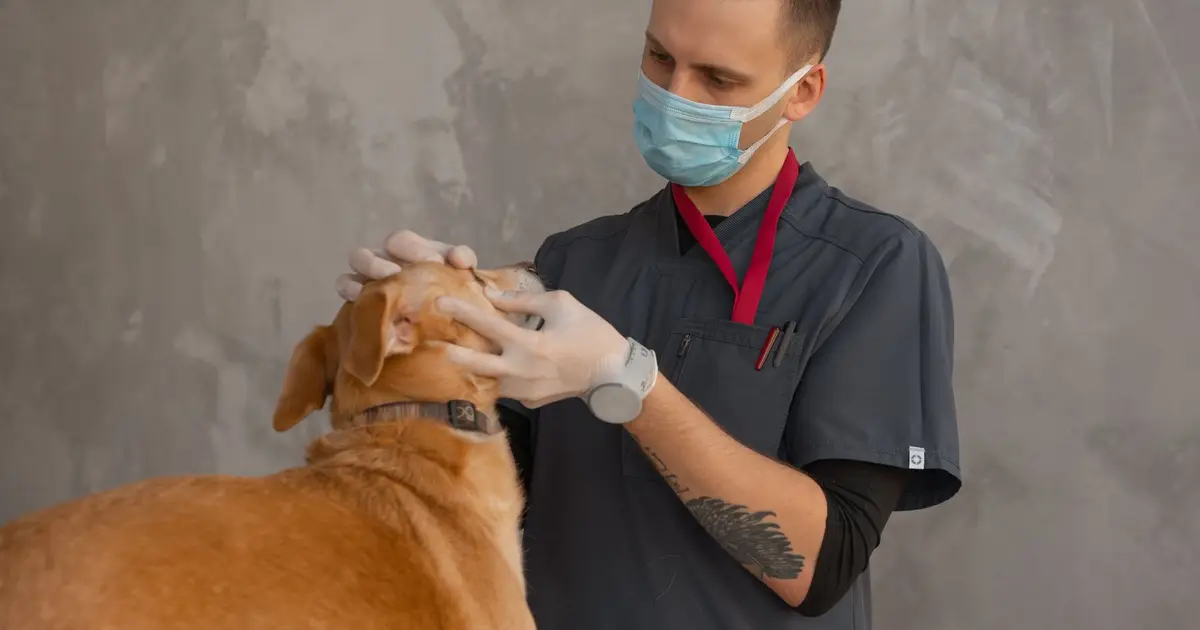

- No study has tested whether BPC-157 helps dogs or is safe for them. The only published dog data is a 2022 study measuring how fast beagles cleared it.
- There is no veterinary label and no dog dose. Weight-based dose charts sold online scale up numbers from rat studies, which is not how safe doses are set.
- Dogs with arthritis have approved options with trial evidence: veterinary anti-inflammatories, the monthly antibody injection bedinvetmab (Librela), weight control and exercise. Each has known side effects a vet can monitor.
Why peptides are being sold for dogs
The human craze for BPC-157 and its blends has spread to pets. Owners of older dogs with stiff joints, or young dogs with torn ligaments, see claims of faster healing and fewer side effects than standard medicines, and the same research-labelled vials sold for people are marketed with pet dose charts. Search demand shows the pattern: questions about BPC-157 for dogs, dog doses by weight, and peptides for dog joints. This article sets out what is actually known, as of October 3, 2026.
What is known about BPC-157 in dogs
One published study gave BPC-157 to dogs, and it was not a treatment study. In 2022, researchers who had developed a synthetic BPC-157 for possible clinical use measured its pharmacokinetics in rats and beagle dogs. After intravenous or intramuscular injection, the intact peptide had an elimination half-life of under 30 minutes in both species, its exposure rose in proportion to dose, and about 45% to 51% of an intramuscular dose reached the bloodstream in dogs, against 14% to 19% in rats. It was rapidly broken down into small fragments and amino acids, excreted mainly in urine and bile 1.
That study shows how dogs handle the peptide over a few hours. It does not show that BPC-157 relieves arthritis, heals ligaments or is safe to give repeatedly to dogs, because it did not test any of those things. We found no published trial of BPC-157 in dogs with any injury or disease, and no veterinary case series. The healing evidence that sellers cite is from rats and mice, and even in people, BPC-157 has only a two-person safety pilot and an uncontrolled 16-patient knee chart review 2 3. A 2025 orthopaedic systematic review found 35 of its 36 studies were preclinical 4.
Why there is no dog dose
Many listings offer BPC-157 dose charts for dogs by body weight. They have no veterinary basis. No dog dose has been established in any study, and no veterinary label exists. The charts are typically produced by scaling doses used in rat studies, but a dose that produced an effect in a rat injury model is not a safe or effective dose in a dog: species differ in how they absorb, distribute and clear drugs, which the beagle study itself showed, with intramuscular bioavailability roughly three times higher in dogs than in rats 1. Safe veterinary doses come from dose-finding and safety studies in the target species, followed by field trials. None has been done for BPC-157, so we do not give, convert or endorse any dose. Our methodology explains our dosing source standard.
TB-500, GHK-Cu and blends for pets
The other peptides sold for dogs have even less. We found no published study of TB-500, GHK-Cu or the healing blends in dogs. TB-500's human evidence is for its parent protein, thymosin beta-4, not the fragment sold, and none of it involves animals as patients. Blends add the problems of a fixed ratio and unknown interactions; our blends hub explains why none has been studied as sold, in any species.
The regulatory picture for pet owners
In the United States, drugs for animals are regulated by FDA's Center for Veterinary Medicine. BPC-157 is not an approved animal drug, and it is not approved for people either. Products labelled 'for research use only' are not made, tested or labelled for administration to any animal, and nothing on the label tells an owner about purity, sterility or dose. A veterinarian may in some circumstances prescribe drugs outside their labelled use, but that requires a veterinary relationship and a product made to pharmaceutical standards, not a research vial ordered online. If you are considering any peptide for a pet, talk to your vet first, and tell them about anything you have already given.
What vets use for arthritis instead
Osteoarthritis is common in older dogs, and veterinary medicine has approved treatments with trial evidence, set out in international consensus guidelines from the COAST Development Group that tailor treatment to the stage of disease 5. Typical elements include weight management, controlled exercise and physiotherapy, diets enriched in omega-3 fatty acids, and pain medicines.
| Option for a dog with arthritis pain | Regulatory status (US) | Evidence in dogs |
|---|---|---|
| BPC-157 | Not an approved animal drug | One pharmacokinetic study in beagles; no trial of effect or safety |
| TB-500, GHK-Cu, blends | Not approved animal drugs | No published dog studies |
| Bedinvetmab (Librela), monthly injection | FDA-approved May 2023 (NADA 141-562); label updated February 2025 with post-approval adverse reactions | Two placebo-controlled field trials and comparisons with meloxicam and grapiprant |
| Veterinary NSAIDs (such as meloxicam) | FDA-approved for dogs | The long-standing mainstay, with known side effects to monitor |
| Weight control, exercise, omega-3-rich diets | Not drugs | Recommended in international guidelines; a randomised diet trial showed owner-reported gains |
Veterinary non-steroidal anti-inflammatory drugs, such as meloxicam, have long been the mainstay for arthritis pain, and they work, but they need monitoring for gut, kidney and liver side effects. Bedinvetmab, sold as Librela, is a canine antibody against nerve growth factor, given as a monthly injection. In a European placebo-controlled trial of 287 dogs, 43.5% achieved owner-assessed treatment success at day 28 on bedinvetmab against 16.9% on placebo 6. In the trial run to support US approval, 272 dogs, success at day 28 was 47.4% against 36.6%, with the gap widening with continued monthly dosing 7. A 2025 open-label comparison with meloxicam found both reduced orthopaedic scores, with a larger but not statistically significant reduction on bedinvetmab 8.
Bedinvetmab has its own safety story. After approval in May 2023, FDA's Center for Veterinary Medicine reviewed adverse event reports and in December 2024 sent a 'Dear Veterinarian' letter describing reported events including loss of coordination, seizures and other neurological signs, increased thirst and urination, and deaths in some cases 9. The label was updated in February 2025 with a post-approval experience section and advice to discuss possible adverse events with owners before treatment 10. That is how an approved drug is meant to work: its benefits were measured in trials, and its rare side effects are being tracked and disclosed.
Another approved option, grapiprant, is a pill that blocks one of the receptors through which prostaglandins cause pain, rather than blocking prostaglandin production as NSAIDs do. In a 2026 double-blind trial in 32 large dogs with hip or knee arthritis, using force-plate measurements of how much weight the dogs put on their legs, bedinvetmab was non-inferior to grapiprant, with success rates of 68.8% and 56.3% at six weeks, and owners reported improvement with both 11. The point is not that one is best for every dog; it is that these options have been measured in dogs, with objective outcomes, and a vet can choose among them.
Diet matters too. In a randomised, double-blinded trial of 127 dogs with osteoarthritis, a food very high in omega-3 fatty acids improved owners' ratings of their dogs' ability to rise and play at 6 weeks and to walk at 12 and 24 weeks, compared with a typical commercial food 12.
Ligament injuries in dogs
Many owners searching for peptides have a dog with a torn cranial cruciate ligament, the canine equivalent of a torn anterior cruciate ligament in people. In dogs, as in people, a fully torn ligament does not heal back together, and treatment is usually surgical stabilisation or careful conservative management, followed by rehabilitation and weight control. No peptide has been tested in dogs with this injury. Our article on peptides for tendon and ligament injuries in people shows how thin the human evidence is; for dogs it does not exist.
Questions to ask your vet
- What is causing my dog's lameness or pain, and what stage is it at?
- Which approved treatments suit my dog, given its age, weight, kidney and liver function and other medicines?
- Would weight loss, a change of diet, physiotherapy or controlled exercise help, and what would a plan look like?
- What side effects should I watch for with the treatment we choose, and how will we monitor them?
- I have read about BPC-157 or other peptides. Is there any evidence for them in dogs, and could they interfere with treatment?
The risks of trying it anyway
Giving an untested injectable to a dog carries risks that are easy to overlook. The product may not contain what the label says, may be contaminated, or may not be sterile, and injection-site infections in animals can be serious. Because no one has studied repeated dosing in dogs, side effects are unknown; dogs cannot report how they feel, so problems may be noticed late. And a peptide given in place of an effective treatment can leave a dog in pain longer. If an owner does give something, their vet needs to know, so that it can be considered if the dog becomes unwell.
The bottom line
As of October 3, 2026, there is no evidence that BPC-157 or any research peptide helps dogs, no evidence that it is safe for them, and no dog dose. The one dog study measured how quickly beagles cleared it. Dogs with arthritis or injuries have approved treatments with trial evidence and known side effects, and a vet can tailor them to the dog. If the research changes, with a properly designed dog trial of BPC-157, we will update this page. Nothing on this page is veterinary advice or a dose; talk to your veterinarian.
Frequently asked questions
Is BPC-157 safe for dogs?
That is unknown. No study has tested its safety or effect in dogs; the only dog study measured how quickly beagles cleared it. It is not an approved animal drug.
What is the BPC-157 dosage for dogs by weight?
There is none. No dog dose has been established in any study and no veterinary label exists. Weight-based charts online are extrapolated from rat studies, which is not how safe doses are set.
Do peptides help dogs' joints?
No peptide has been tested in dogs with arthritis. Approved options with trial evidence include veterinary anti-inflammatories, the monthly injection bedinvetmab (Librela), weight control, exercise and omega-3-rich diets.
Is Librela safe?
It beat placebo in field trials and is FDA-approved. After approval, FDA reviewed reports of adverse events including neurological signs, and the label was updated in February 2025. Discuss the benefits and risks with your vet.
Related on Grey Peptides
Sources
- He, L., et al. (2022). Pharmacokinetics, distribution, metabolism, and excretion of body-protective compound 157, a potential drug for treating various wounds, in rats and dogs. Front Pharmacol, 13, 1026182. PMID: 36588717
- Lee, E., et al. (2025). Safety of Intravenous Infusion of BPC157 in Humans: A Pilot Study. Altern Ther Health Med, 31(5), 20-24. PMID: 40131143
- Lee, E., et al. (2021). Intra-Articular Injection of BPC 157 for Multiple Types of Knee Pain. Altern Ther Health Med, 27(4), 8-13. PMID: 34324435
- Vasireddi, N., et al. (2025). Emerging Use of BPC-157 in Orthopaedic Sports Medicine: A Systematic Review. HSS J, 21(4), 485-495. PMID: 40756949
- Cachon, T., et al. (2023). COAST Development Group's international consensus guidelines for the treatment of canine osteoarthritis. Front Vet Sci, 10, 1137888. PMID: 37601753
- Corral, M. J., et al. (2021). A prospective, randomized, blinded, placebo-controlled multisite clinical study of bedinvetmab, a canine monoclonal antibody targeting nerve growth factor, in dogs with osteoarthritis. Vet Anaesth Analg, 48(6), 943-955. PMID: 34565678
- Michels, G. M., et al. (2023). A prospective, randomized, double-blind, placebo-controlled multisite, parallel-group field study in dogs with osteoarthritis conducted in the United States of America evaluating bedinvetmab, a canine anti-nerve growth factor monoclonal antibody. Vet Anaesth Analg, 50(5), 446-458. PMID: 37541934
- Innes, J. F., et al. (2025). A randomised, parallel-group clinical trial comparing bedinvetmab to meloxicam for the management of canine osteoarthritis. Front Vet Sci, 12, 1502218. PMID: 40196808
- American Animal Hospital Association. FDA publishes evaluation of adverse effects reported for canine OA treatment Librela (FDA Center for Veterinary Medicine Dear Veterinarian letter, December 16, 2024). Read October 3, 2026.
- Society of Veterinary Hospital Pharmacists (vetmeds.org). Labeling update alert: Librela (bedinvetmab injection), NADA 141-562, label updated February 18, 2025. Read October 3, 2026.
- Enomoto, M., et al. (2026). A noninferiority trial evaluating the efficacy of bedinvetmab compared to grapiprant for osteoarthritis-pain in dogs using force plate gait analysis. Sci Rep, 16(1). PMID: 41667566
- Roush, J. K., et al. (2010). Multicenter veterinary practice assessment of the effects of omega-3 fatty acids on osteoarthritis in dogs. J Am Vet Med Assoc, 236(1), 59-66. PMID: 20043800
Educational information, not medical advice. Each dose in this guide names its source, an approved label or a published study. None is a recommendation for you. An unapproved compound has no established safe or effective human dose, and products sold for “research use only” are not made or tested for people. Talk to a doctor before acting on anything on this site, including before you start, stop or change any medicine or dose.
New guides and rule changes, by email
One short email when a peptide's legal status moves — an FDA or PCAC decision, a WADA list change, an enforcement action — plus new guides and tools. At most one a week, and none when nothing changes. The newsletter has not started sending yet: your first email will be its first issue.
We keep your email address and the page you signed up from, nothing else. How it works · Privacy · RSS instead