Peptide skincare after microneedling and lasers: what's studied, what's risky
Last updated: October 3, 2026 · 8 min read · By the Grey Peptides Editorial Board
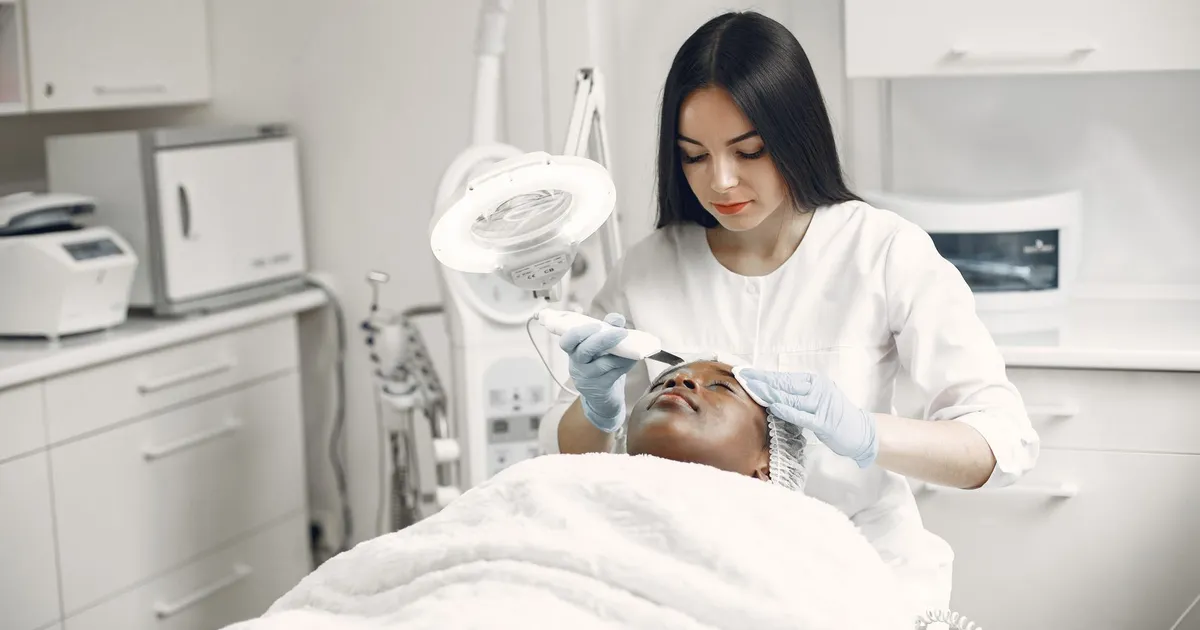

- Microneedling and fractional lasers create channels that carry whatever you apply into deeper skin, which can cause granulomas with products not made for that.
- The human evidence that peptide serums speed healing after procedures is limited to a few small trials, with mixed results.
- One small trial of copper peptide (GHK-Cu) after laser found no faster fading of redness.
- After a procedure, follow your clinician's aftercare; apply only products intended for that use.
Why skin after a procedure is different
Microneedling punctures the skin with many fine needles to trigger repair; fractional lasers create columns of controlled injury. Both leave the skin barrier open for a period, which is the point for some treatments: microneedling is also used to push topical medicines deeper. A 2014 report in JAMA Dermatology made the consequence explicit: applying cosmetic products before or during microneedling results in intradermal tattooing of the product (case series) 1.
That changes the risk of anything applied. A serum that is harmless on intact skin is being delivered into living tissue, where the immune system reacts to foreign material differently. The healing process itself also runs in phases, inflammation, then new tissue, then remodelling, and adding active ingredients during the first days interacts with all three.
Granulomas: when a serum ends up in the skin
The 2014 case series described three women in their 40s to 60s who developed facial granulomas after microneedling for skin rejuvenation; two had the same topical vitamin C serum applied during the procedure, biopsies showed foreign-body-type granulomas, cultures were negative, and the first two had positive patch tests to the serum (case series) 1. It was not a peptide product, but the mechanism applies to any topical not designed to enter the dermis.
A 2021 systematic review of 85 articles on microneedling safety found that most adverse effects are transient, such as redness, swelling, pain and dryness lasting up to a week, but that persistent serious effects included post-inflammatory hyperpigmentation, tram-track scarring and granulomatous reactions. It identified active infection, darker skin and metal allergies as risk factors and advised caution when microneedling is combined with products not approved for intradermal use (systematic review) 2.
Infection risk
Breaking the skin also opens a route for infection. A 2018 review of cutaneous mycobacterial infections describes these hard-to-treat bacteria as a recognised complication of skin procedures and contaminated products (review) 3. Our guide to injection-site reactions covers outbreaks linked to cosmetic injections. A product opened repeatedly, kept warm or diluted at home is a greater risk on freshly treated skin than on intact skin.
What the peptide trials show
The human evidence for peptides after procedures is small. The most direct test of copper peptide was a randomised trial of post-laser skin care with or without GHK-Cu: among 13 patients who completed it, computer analysis and blinded evaluators found no faster fading of redness and no difference in wrinkles; on a questionnaire, patients using GHK-Cu rated their skin quality higher, a subjective result that the objective measures did not support (randomised trial) 4. A 2026 systematic review of GHK-Cu found that despite decades of laboratory work, human trials are small, mostly of facial creams, and that microneedle delivery of GHK-Cu has not been evaluated in a single registered, adequately powered human randomised trial (systematic review) 5.
A split-face trial in 20 people applied a tripeptide/hexapeptide serum to one side of the face and a bland moisturiser to the other, from two weeks before until 60 days after two sessions of nonablative fractional laser; both sides improved, the serum side somewhat more on most measures, with no significant adverse events (randomised split-face trial) 6. A similar split-face design tested a vitamin C, E and ferulic acid serum applied within minutes of ablative laser to see whether it shortened recovery (randomised split-face trial) 7. These are small, short, single-product studies; they show what one formula did, not that peptides in general help healing. None of these trials followed people for longer than a few months, so lasting benefit or harm from repeated use after many procedures has not been measured.
| Ingredient or approach | Post-procedure human evidence |
|---|---|
| GHK-Cu (copper peptide) | One small post-laser trial: no faster fading of redness, no difference in wrinkles |
| Tripeptide/hexapeptide serum | One 20-person split-face trial with nonablative laser: better clinical scores |
| Epidermal growth factor (EGF), a protein | Two split-face trials after CO2 laser: one found no faster healing and no less pigmentation; one found better scar scores at three months |
| Vitamin C, E and ferulic acid serum | One 15-person split-face trial after ablative laser: aimed at faster recovery |
| GHK-Cu delivered by microneedle | No registered, adequately powered human trial published, per a 2026 systematic review |
| Any product not made for injection, applied during microneedling | Case reports of granulomas; reviews advise caution |
Growth factors: the closest relatives
Larger signalling proteins, growth factors, have been tested more than small peptides after lasers, and their results illustrate how mixed this field is. In a split-face trial in 19 people after fractional carbon dioxide laser, an epidermal growth factor (EGF) ointment did no better than petrolatum on scab shedding, redness, skin water loss or pigmentation; post-inflammatory hyperpigmentation occurred in 52.6% of EGF-treated sides against 57.9% with petrolatum, not a significant difference (randomised split-face trial) 8. In another split-face trial in 21 people with acne scars, EGF applied for a week after each of three laser sessions gave better scar scores at three months, without faster wound healing (randomised split-face trial) 9. A multi-growth-factor cream after ablative fractional laser shrank microcrusts and edema faster than a control cream in 20 people (randomised split-face trial) 10.
Plain petrolatum, in other words, was a hard comparator to beat in the cleanest of these trials 8. That is a useful benchmark for any post-procedure product claim.
What does have better evidence: PRP with microneedling for acne scars
The add-on with the most consistent evidence alongside microneedling is not a peptide serum but platelet-rich plasma (PRP), made from the patient's own blood, used for acne scars. A 2021 meta-analysis of 14 studies with 472 patients found that combining microneedling with PRP increased the odds of more than 50% clinical improvement about threefold compared with microneedling alone, with higher patient satisfaction; most of the included studies were split-face and non-randomised (meta-analysis) 11. PRP is a procedure performed in a clinic with sterile handling, which is a different proposition from a cosmetic serum applied at home.
Darker skin and pigmentation
Post-inflammatory hyperpigmentation, darkening after the skin is injured, is the side effect most likely to last. The microneedling safety review lists darker skin as a risk factor for adverse events 2, and in the EGF trial, whose participants were mostly of skin phototypes III to V, hyperpigmentation developed on more than half of treated sides with or without the growth factor 8. None of the peptide or growth factor trials above showed that a product prevents it, so people with darker skin should raise pigmentation risk with their clinician before the procedure rather than rely on an aftercare serum.
Timing and the healing phases
Because the skin is open and inflamed in the first days, timing matters. The trial designs show the range of approaches: the nonablative laser study started its peptide serum two weeks before treatment and continued it afterwards 6, while the ablative laser study applied its serum immediately after, within the open-channel window, on purpose 7. Neither established a general rule, and a product's own instructions and your clinician's aftercare plan should decide timing. Applying a serum during microneedling itself is the step most clearly linked to granulomas 1 2.
Ingredient by ingredient
Common cosmetic peptides differ in what is known about them on intact skin, let alone after procedures. Our skin and hair hub grades each one: GHK-Cu has small facial-cream trials and the null post-laser result above 4; palmitoyl pentapeptide-4 and argireline have small cosmetic studies on intact skin and no post-procedure trials in what we read. Our serum label decoder explains the names on the bottle, and our guide to mixing copper peptides with vitamin C, retinol and acids covers combinations.
Injectable peptides are a different risk again
Some clinics and sellers offer injectable GHK-Cu or other peptides alongside or after skin procedures. That moves from cosmetic use to injecting an unapproved substance. Our injectable GHK-Cu guide sets out the copper arithmetic and the regulatory warnings, and the granuloma and infection risks above apply with greater force to anything injected.
What the evidence supports, in short
Putting the studies together gives a few practical points. Do not apply products during microneedling unless they are made for intradermal use, because that is the step linked to granulomas 1 2. In the first days afterwards, a bland protective product is a strong default: petrolatum matched an EGF ointment on healing and pigmentation in a controlled comparison 8. Peptide serums may be reasonable later as cosmetics, but expect modest effects at best, as in the one positive split-face trial 6, and do not expect a copper peptide to speed healing 4. Watch for signs of infection or a lasting lump, and report them promptly to the clinic that treated you 3.
Questions to ask your clinician
- What exactly will be applied to my skin during the procedure, and is it made for that use?
- When can I restart my usual products, including peptides, vitamin C or retinoids?
- What signs of infection or a lasting reaction should make me call you?
- Do I have risk factors, such as darker skin, a metal allergy or an active skin infection?
The bottom line
Microneedling and lasers open the skin, which turns ordinary topicals into something closer to an injection. Products not made for that have caused granulomas, and infections are a known risk. The trials of peptide serums after procedures are few and small: one copper-peptide trial found no faster healing, and one company-linked serum trial found modest gains. Bland aftercare, products intended for post-procedure use and your clinician's timing are the evidence-backed approach.
Frequently asked questions
Can I use peptides after microneedling?
Follow your clinician's aftercare. The evidence that peptide serums speed healing is limited to a few small trials, and products not made for intradermal use have caused granulomas when applied during microneedling.
Is GHK-Cu good after laser treatment?
One small randomised trial of GHK-Cu after laser found no faster fading of redness and no difference in wrinkles.
What is a microneedling granuloma?
A lasting inflammatory lump where the immune system walls off foreign material; a 2014 case series linked facial granulomas to a topical serum applied during microneedling.
When can I go back to my normal skincare after microneedling?
Timing depends on the procedure and product; ask your clinician. Reviews advise caution with products not approved for intradermal use.
Are injectable peptides safe after skin procedures?
Injecting unapproved peptides carries the granuloma and infection risks of procedures with added regulatory and quality concerns; we found no trials supporting it.
Related on Grey Peptides
Sources
- Soltani-Arabshahi, R., et al. (2014). Facial allergic granulomatous reaction and systemic hypersensitivity associated with microneedle therapy for skin rejuvenation. JAMA Dermatol, 150(1), 68-72. PMID: 24258303
- Chu, S., et al. (2021). Safety Profile for Microneedling: A Systematic Review. Dermatol Surg, 47(9), 1249-1254. PMID: 34448760
- Franco-Paredes, C., et al. (2018). Cutaneous Mycobacterial Infections. Clin Microbiol Rev, 32(1). PMID: 30429139
- Miller, T. R., et al. (2006). Effects of topical copper tripeptide complex on CO2 laser-resurfaced skin. Arch Facial Plast Surg, 8(4), 252-9. PMID: 16847171
- Najafi, N., et al. (2026). A Systematic Review of the Mechanisms and Therapeutic Applications of GHK-Cu (Glycyl-L-Histidyl-L-Lysine-Copper Complex) in Topical Microneedle Delivery: A Case for Expanded Clinical Trials. Arch Intern Med Res, 9(3), 269-293. PMID: 42787770
- Wang, J. V., et al. (2020). Tripeptide and hexapeptide topical as adjunct to nonablative fractional resurfacing for photodamage: A randomized split-face trial. J Cosmet Dermatol, 19(12), 3245-3250. PMID: 33051975
- Waibel, J. S., et al. (2016). Laser-assisted delivery of vitamin C, vitamin E, and ferulic acid formula serum decreases fractional laser postoperative recovery by increased beta fibroblast growth factor expression. Lasers Surg Med, 48(3), 238-44. PMID: 26612341
- Techapichetvanich, T., et al. (2018). The effects of recombinant human epidermal growth factor containing ointment on wound healing and post inflammatory hyperpigmentation prevention after fractional ablative skin resurfacing: A split-face randomized controlled study. J Cosmet Dermatol, 17(5), 756-761. PMID: 29956440
- Ratanapokasatit, Y., et al. (2022). The Efficacy and Safety of Epidermal Growth Factor Combined with Fractional Carbon Dioxide Laser for Acne Scar Treatment: A Split-Face Trial. J Clin Aesthet Dermatol, 15(7), 44-48. PMID: 35942017
- Shin, S., et al. (2017). The effects of a multigrowth factor-containing cream on recovery after laser treatment: a double-blinded, randomized, split-face controlled study. J Cosmet Dermatol, 16(1), 76-83. PMID: 27633651
- Kang, C., et al. (2021). Combined Effect of Microneedling and Platelet-Rich Plasma for the Treatment of Acne Scars: A Meta-Analysis. Front Med (Lausanne), 8, 788754. PMID: 35237616
Educational information, not medical advice. Each dose in this guide names its source, an approved label or a published study. None is a recommendation for you. An unapproved compound has no established safe or effective human dose, and products sold for “research use only” are not made or tested for people. Talk to a doctor before acting on anything on this site, including before you start, stop or change any medicine or dose.
New guides and rule changes, by email
One short email when a peptide's legal status moves — an FDA or PCAC decision, a WADA list change, an enforcement action — plus new guides and tools. At most one a week, and none when nothing changes. The newsletter has not started sending yet: your first email will be its first issue.
We keep your email address and the page you signed up from, nothing else. How it works · Privacy · RSS instead